
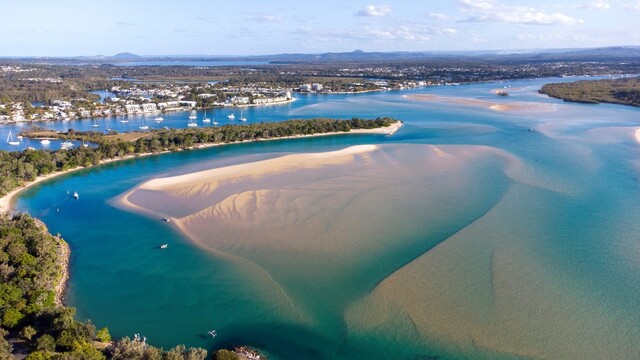
Despite recent social media posts of plastics found washed up on eastern beaches, CSIRO research across six metropolitan regions including the Sunshine Coast shows there has been a decrease in plastic pollution by more than a third over the past decade.
The study found, however, that on the Sunshine Coast cigarette butts were the most found items in the environment with polystyrene the second most common item across the regions.
Researchers surveyed inland, riverine, and coastal habitats across six metropolitan regions across Australia including Hobart in Tasmania, Newcastle in New South Wales, Perth in Western Australia, Port Augusta in South Australia, Sunshine Coast in Queensland, and Alice Springs in the Northern Territory.
CSIRO senior research scientist and research co-author, Dr Denise Hardesty said with up to 53 million metric tonnes of plastic waste estimated to enter aquatic ecosystems by 2030, it was heartening to see a significant decrease in plastic pollution on Australian beaches and coasts.
“Three-quarters of the rubbish we find on our beaches is plastic, and flexible plastics, such as food packaging, are the most harmful to wildlife,” Dr Hardesty said.
“Along with a 39 per cent reduction in plastic waste in coastal areas, we also saw a 16 per cent increase in areas we surveyed with no plastic debris at all.
“Decreases of plastic pollution in the coastal environment were observed in Newcastle, Perth, and the Sunshine Coast, with increases in Hobart and Port Augusta.
“Although there are still areas for concern, it’s exciting to see a significant decrease in plastic pollution as people around the country are becoming more aware of the harmful effects of plastic waste on people, communities and wildlife.”
A total of 8383 debris items were recorded across 1907 surveys within a 100-kilometre radius of each city.
Generally polystyrene (24 per cent) and cigarette butts (20 per cent) were the most found items, followed by food wrappers, bottle lids and caps. Plastic fragments were also commonly recorded.
CSIRO research scientist and co-author Dr Steph Brodie said the surveys help to identify debris hotspots, understand how land use influences debris in the environment, and how waste ends up on our coastlines.
“We found that areas with intensive land use and socio-economically disadvantaged areas tended to have higher levels of debris,” Dr Brodie said.
“Understanding the types and amount of plastic pollution in our environment provides critical data to develop strategies to stop it ending up there in the first place.
“These results will help to inform waste management and can be used to evaluate and measure the effectiveness of plastic waste policies, practices and education campaigns to reduce debris in metropolitan regions.”
The paper, “Drivers of environmental debris in metropolitan areas: a continental scale assessment,” published in Marine Pollution Bulletin, compares data from surveys conducted a decade ago and builds on previous work that showed a 29 per cent reduction in plastic waste across all of Australia.
It is part of CSIRO’s research to end plastic waste, with a goal of an 80 per cent reduction in plastic waste entering the environment by 2030.
This research received funding from the Department of Climate Change, Environment, Energy and Water, with the comparable data from 2011-2014 funded by Shell Australia.