PRECEDE
The year has thrown some surprises at us but also the unpredictability of not knowing what’s next. ERLE LEVEY looks at some of the highlights of 2025 that brought delight, innovation and memorable experiences.
BREAKOUT QUOTE
“Learning this stuff is simple – yet our mind makes it seem complex. We overthink it.”
It has been a strange year, an unusual year … unpredictable and at the same time surprising.
One in which people have shown they are open to change, learning about new ways and ideas.
Overshadowing it though has been a sense of understanding that if we don’t learn from history it will only repeat itself.
That played out this month with the mass shootings at Bondi Beach.
Overwhelmingly though, it has been heroic acts of good, everday people who have, in the face of adversity, shown that love and human compassion can rise above all else.
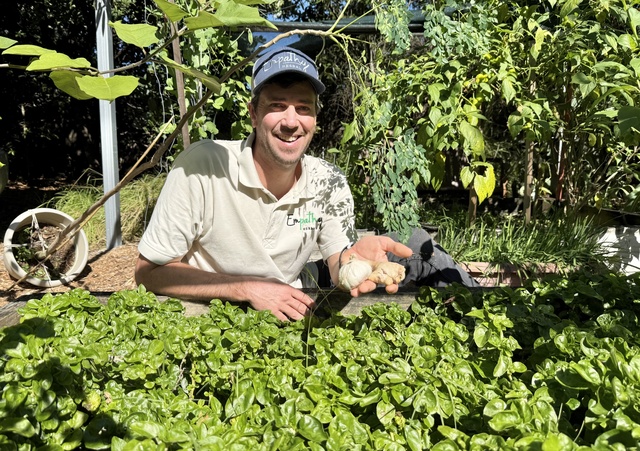
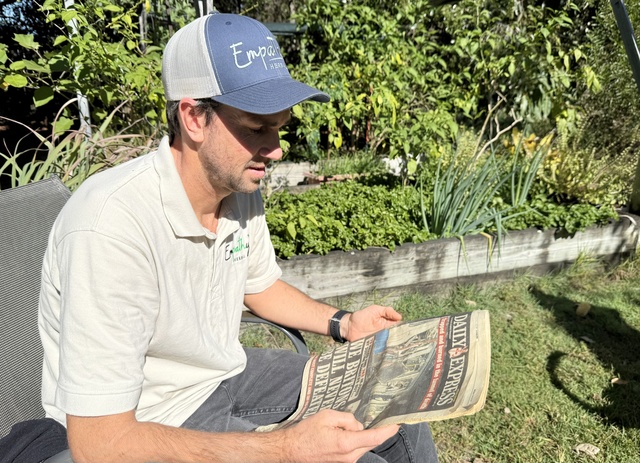
Earlier in the year, one of the most confronting and at the same time inspiring interviews was with Rainbow Beach herb seller and remedial therapist Jim Hancock of Empathy Herbal.
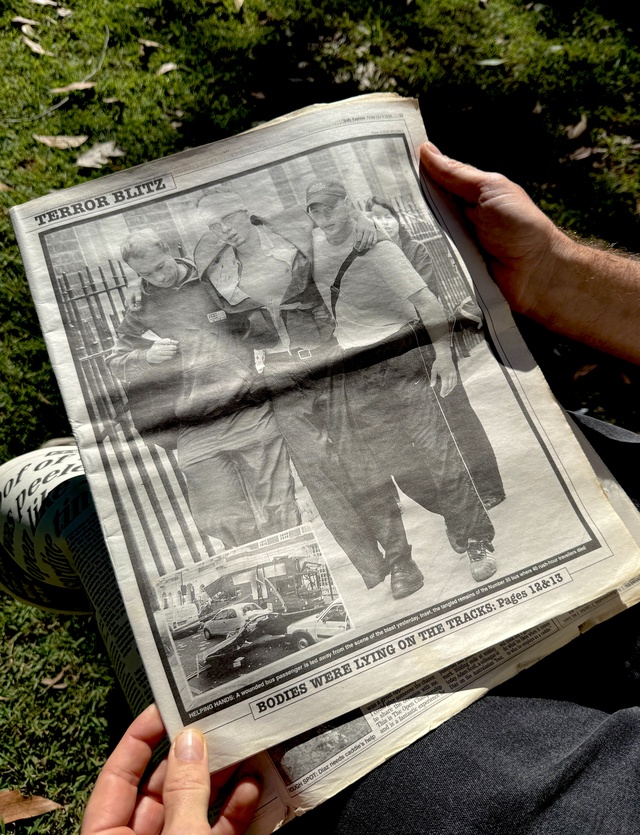
A surfer and tour guide who had been in London less than a week in July 2005, he became an accidental first responder to the deadliest bombings in London since the air raids of World War Two.
Jim thought nothing of being one of the first to go down to the scene of the bombing at Russell Square underground station on July 7.
It was one of four suicide bombings as part of London 7/7 that took 52 lives, with the injured numbering more than 770.
It was something you just did, Jim told me at his home this year – on a sunny winters day that was so different to the scene that met him at the London Underground station 20 years ago.
For Jim, the Russell Square station decision to help was a real sliding doors moment, one that changed his life and stays with him to this day.
In the wake of that and his personal recovery it led to a sense of healing and purpose.
This year Jim was preparing to go back to the UK for the 20-year commemoration and to find some closure on the ordeal.
During those years his travels through Indonesia opened up an understanding of the benefits herbs and spices can bring to our well-being.
Jim now grows and prepares herbs and vegetables such as black garlic to help others overcome the stress, strains and illnesses caused by trauma and inflammation.
Herbs and spices such as ginger, galangal and turmeric.
Empathy Herbal was created five years ago, – a business dedicated to helping others improve their health through anti-inflammatory living, drawing on the skills he had developed in meditation, breathwork, exercise, and nutrition during his own recovery.
Empathy and compassion … they are the attributes that guide him in his aim to help people improve their health and quality of life through diet, exercise and mindfulness practices.
Jim’s immediate reaction to the bombing was not remarkable in itself – it was something that was ingrained in his spirit from his love of surfing and experience as a tour guide.
“You would just go straight into this response. I mean you are overwhelmed with what you see – you react under some sort of autopilot.
“That compassionate feeling takes over and you just want to help people.’’
That was shown in an extraordinary way at Bondi this month.
So many people dropped what they were doing and reacted to the shootings in whatever way they could – police, ambulance and paramedics, doctors, surf lifesavers and the community at large responded in an amazing way.
It showed that as a nation we are better when standing together.
COMMUNITY SPIRIT SHOWS THROUGH
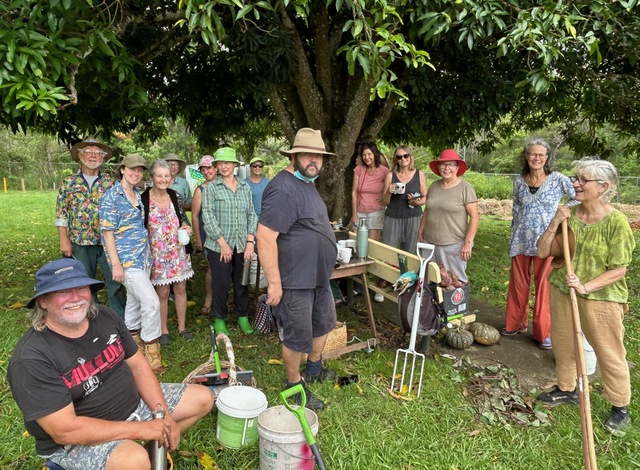
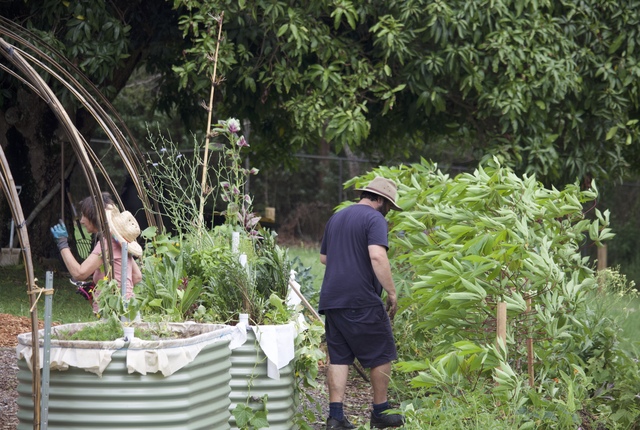
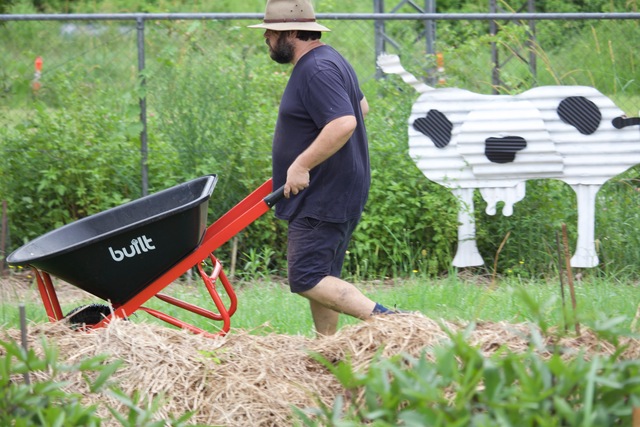
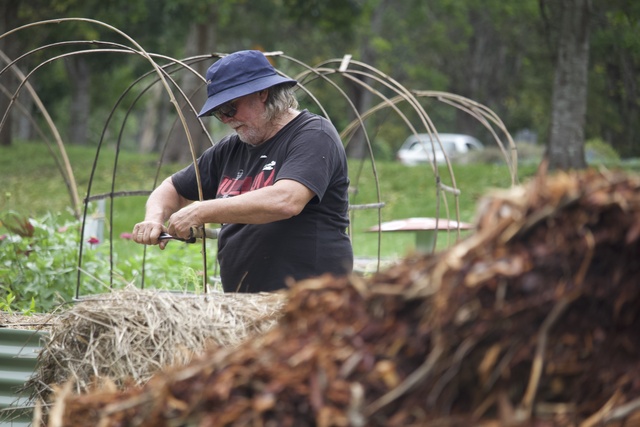
When a community works together it can achieve some amazing things. The Cooran Organic Garden is positively blooming after finding a home at the top of King St.
There were setbacks, with a break-in of the tool shed but Slow Food Noosa and Pomona Hardware responded with replacements and since then things have gone from strength to strength.
It’s a gathering point, a place to share ideas, food and friendships, and through that improve the soil and environment.
Not only do they get to to use but preserve a precious little corner of the hinterland village.
Secretary Ann Sinclair said everyone comes to work and picks some herbs and vegetables … it’s good social interaction.
The Covid pandemic reminded people what communities were like – neighbours getting to know each other and the benefits of the town, the region and the state.
“We had that little bubble that we lived in,’’ Ann said. “We looked in and looked after each other, to see what was going on around us.’’
That led Lance Pearce, as president, to put forward the idea of a community garden.
“We came together in 2017,’’ Ann said, “and worked with the Lock The Gate movement against the renewal of a coal exploration permit that sat on the whole ridge of Arthy’s Road.’’
Lance said Covid again was a great reminder of the basics of life such as growing your own food.
“It was a reality check of what was important. More than anything this garden feeds the soul, and it feeds the heart.
“It brings so many people together who wouldn’t have otherwise touched one another.
“There are some people who have gone through some pretty traumatic times. That has brought them into a group situation when normally they would have steered clear.
“You’re in a group, but you can work side-by-side. You can work by yourself. You just go and do what you want to do. There is a list of things.
“It’s amazing. It’s working,’’ Lance said. “We’ve had drought, we’ve had floods … so you need to plan for what’s ahead.
“The terracing, the contour banks and the swales, are part of that … it slows the run-off.’’
Lance is experienced in water-sensitive urban design – reducing the amount of sediment leaving the site, and reducing the amount of nitrogen phosphorous.
“This, in a way, will benefit the water quality. The land was bare grass but we are slowing the run-off, using the run-off and filtering the run-off.’’
That’s an indication of the sense of community – a village known for its Tall Trees Art Exhibition in September, and its monthly Cooran Acoustic Music nights.
“We’re fitting in with the community,’’ Lance said, “… not competing with anyone.
“It will keep growing, and flowering.’’
The group is about being humble. They regard each other as small achievers and remind you that small achievers can do great things.
BRINGING HEALTH BACK INTO THE SOIL
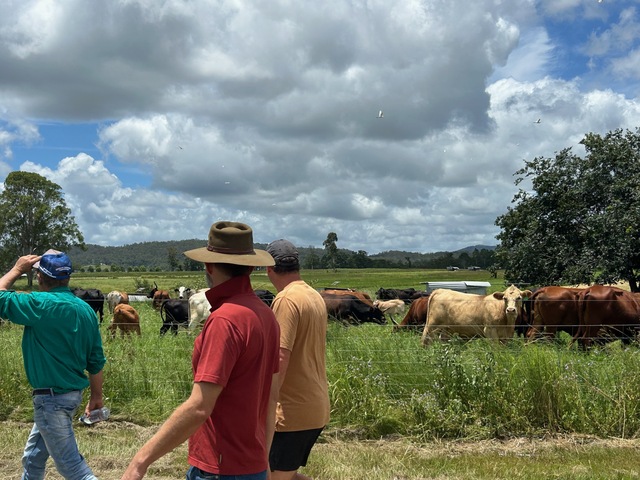
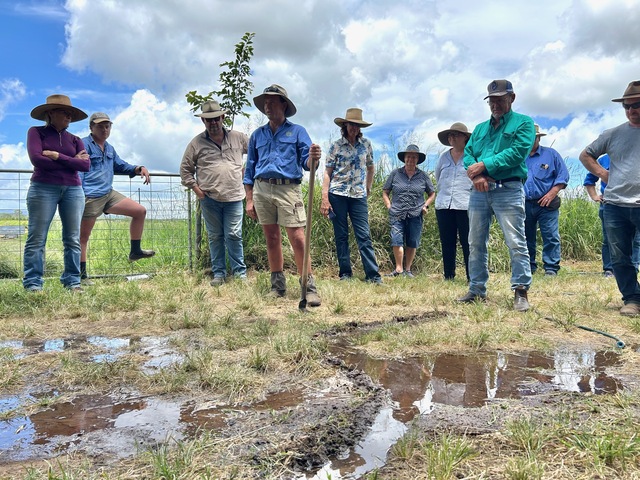
In February, Gympie Beef Group teamed up with Stuart Andrews from Natural Sequence Farming for a free information day on how to improve soil and retain water in a more productive way.
It was to promote regenerative agriculture, restoring natural water cycles and soil health, to build resilient, nutrient-dense food systems.
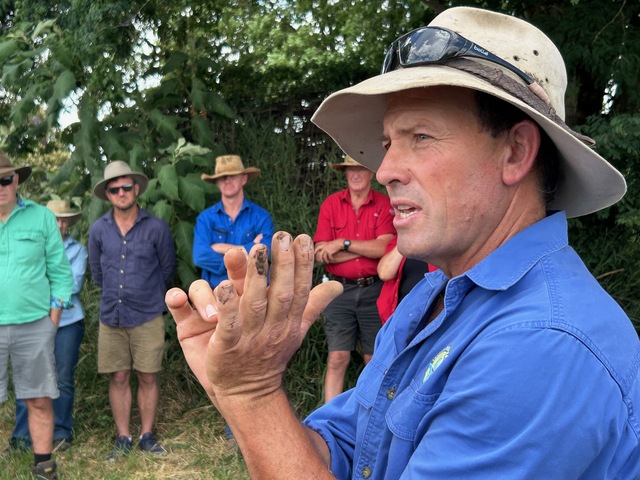
Stuart Andrews, founder of Tarwyn Park Training, talked through how it was possible to transform a degraded landscape back into a thriving eco-system.
Keep it simple – that was the underlying message. There is no need to mess with nature … it’s a matter of observing the environment and making informed decisions as a result of that.
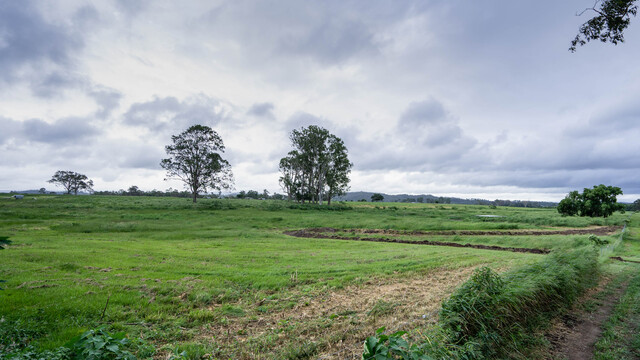
Retaining water on the land for longer is one aspect, letting it find its true level is another.
This is in order for the water to do the most good – in what is generally regarded as a dry landscape here in Australia.
Stuart ran the workshop while eldest son Hamish joined him for the farm walk to give a practical demonstration on how the correct application of this method leads to better use of water and improvements in soil biodiversity.
About 75 cattle breeders attended this field day, which was about changing attitudes.
The benefits spoke for themselves, judging by the amount of interest shown, the seeking of further information on how to improve the land and seeing a resulting rise in productivity.
While those who attended were across a broad range of farming interests and age demographics, there was a common thread of taking care of the land.
The younger generation has helped bring about this desire to be more open to new ideas and techniques.
Not that it is in any way a new technique.
Stuart Andrews is carrying on much of what he learnt 40 years ago from his father Peter Andrews, who has been a leader in natural sequence farming from his base in the Upper Hunter of New South Wales.
Formed in 1982, the Gympie District Beef Liaison Group is one of the largest and longest serving Independent beef industry groups in Queensland.
It has a diverse membership of about 300 family and business members, drawn largely from the broader Gympie region, which encompasses the Wide Bay, South Burnett, Sunshine Coast and Brisbane Valley Districts.
“Learning this stuff is simple – yet our mind makes it seem complex,’’ Stuart said at the start of the workshop. “We overthink it.
“What are we most likely to do next? Nothing. The more complex the subject, the less likely we are to do anything about it.
“Today is really about making it simple, but there is a lot of information that makes it complex. It’s a matter of picking the bits that are important to you.
“Ask questions, that’s how you learn.’’
When Peter Andrews set up Tarwyn Park Training in the Upper Hunter in 1974, the work he was doing ostensibly upset a lot of others in the valley.
His ideas on better use of water, of planting trees and cover crops, meant they thought it would decrease the amount of water available.
Yet putting water into the soil by simple means of weirs and contours, of putting plant matter back into it, he was able to show that instead of getting less they actually get more in the soil by slowing the run-off.
“We have been changing the hydrology, increasing animal diversity, and undertaking better grazing management,’’ Hamish said.
“The number of paddocks have been increased but their size has decreased.’’
This to be more responsive to animal demands but also environmental conditions. Internal fences are more moveable while the perimeter fencing is permanent.
While the cattle are moved regularly for grazing, temporary fences are erected for the pasture-raised chickens as they are being continually rotated. They eat the grass, aerate the soil, and spread manure which helps with the biodiversity.
“We are building resilience into the landscape,’’ Stuart said, “because it has been flooded many, many times – and not just over the 230-odd years of European settlement.
“We have got it to a situation where it can be flooded for a short period of time and then it responds. The land needs plants with resilience to respond.
“It’s been a matter of learning from issues. We were already resilient.’’
Loss of diversity through clearing of trees, bushfires and drought changes the eco-system. However, the selection of plants can do as much as a firebreak in containing or minimising bushfires.
The wrong plants – and this can include eucalypts – can create a landscape that must burn. Not can burn, but must burn.
“If you graze cattle in one place, you lose diversity,’’ Stuart said. “Yet if you move them around it works better.
“It’s the same with fire … we need to maintain diversity, otherwise we lose soil life and end up with erosion.
“The diversity is what is holding the structure in the soil.’’
What we don’t always see is the plant matter that is holding the soil together.
Lose it and the tiny soil particles dissolve in times of heavy rainfall and are carried away, Stuart said.
“You recognise it through the amount of dirty water. That’s your landscape dissolving in front of you.’’
LOOKING FORWARD, LOOKING BACK
It was like spaceman spiff out of a Calvin and Hobbes cartoon landing on a futuristic planet filled with rainforest and dinosaurs.
Primeval yet also futuristic … a living, beating organism standing there, like nothing I had ever quite seen before.
This encounter with a plant of an unusual kind highlighted the wonder of nature and the timelessness of our world – that something so special can come from untouched rainforests of South-east Asia.
Yet it also reminds us that the same rainforests are under threat in so many ways.
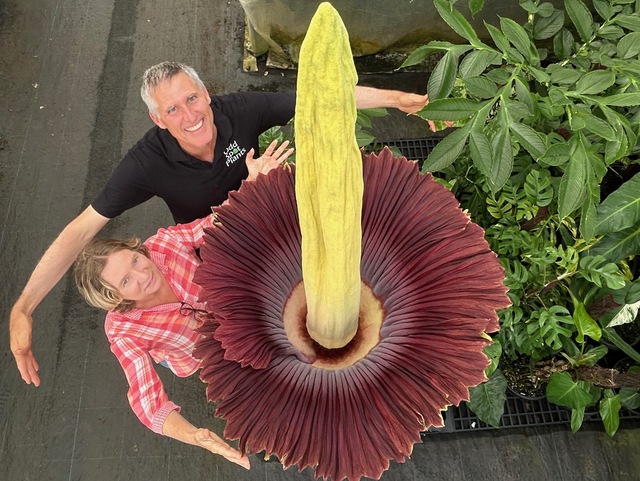
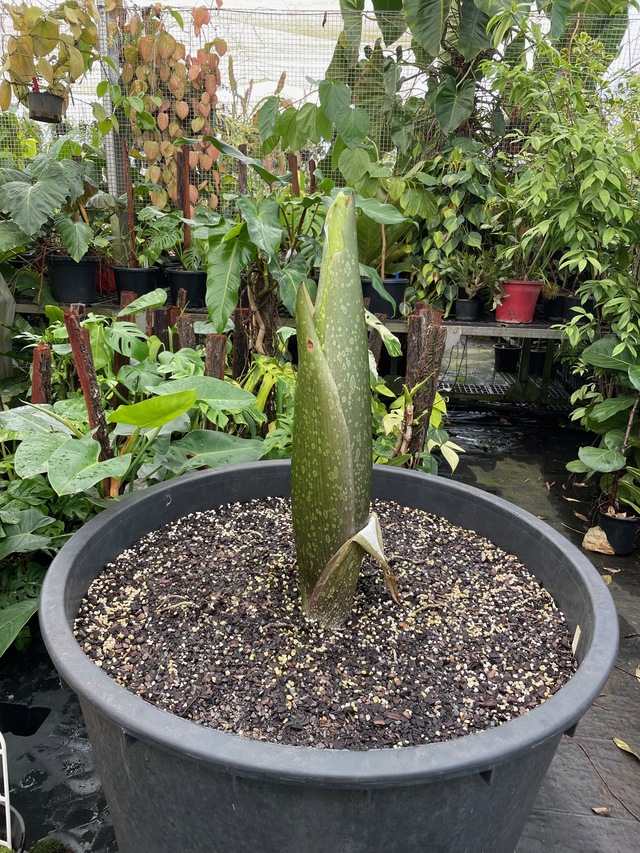
In early January I was with Neil and Lisa Paterson at Odd Spot Plants in Goomboorian.
They have some rare and unusual plants at their nursery but few as interesting as the Titan Arum or Corpse Flower.
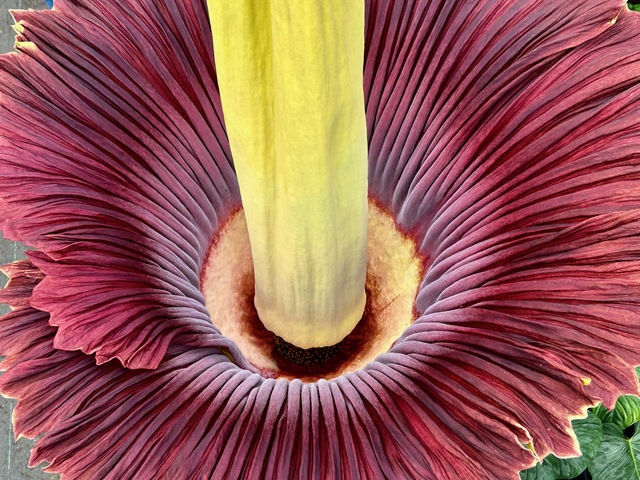
It had taken five years to flower and stayed open for one night.
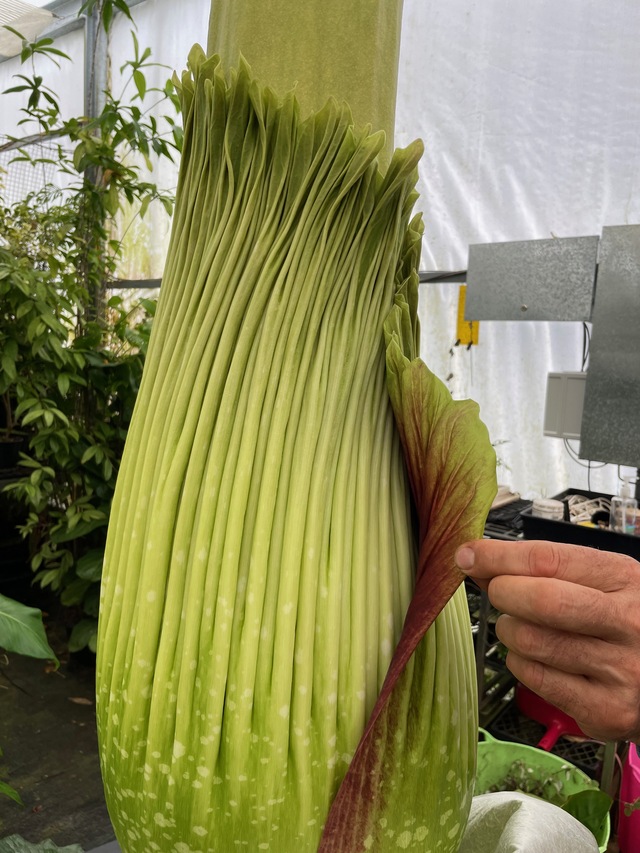
With its unique flesh-like, deep red petals and pungent rotting carcass aroma, the flower attracts pollen-transporting insects.
The plant is native to South-east Asia so frozen pollen was needed, and Neil painted it on the female flowers with a watercolour brush.
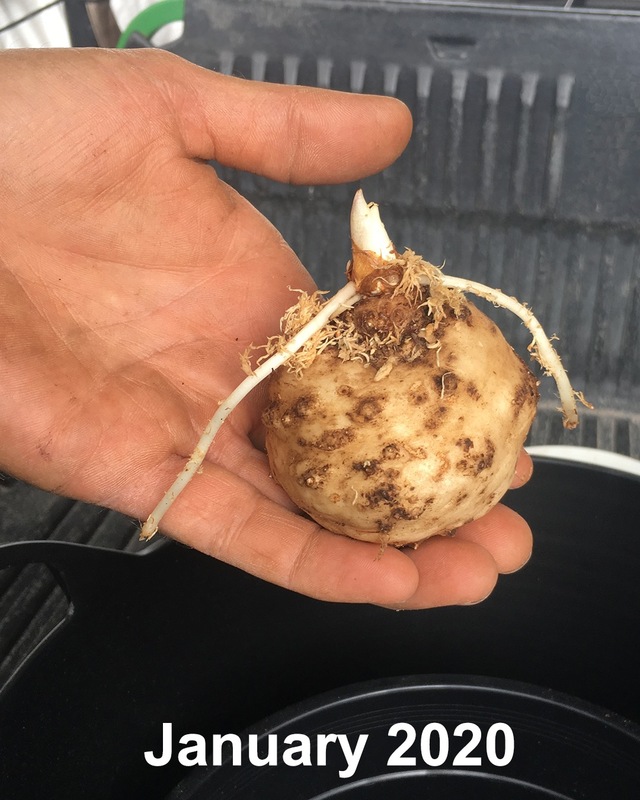
It is the most spectacular plant, having grown from a bulb the size of an onion to 2.2 m tall, and two grown men together could barely reach around it.
Named Xena, after The Warrior Princess, its parents Neil and Lisa could not have been more proud.
To see this plant flower bears testament to the passion and dedication they have.
You can see photos on the internet of the plant but you don’t get a true sense of proportion or presence.
“It smells like a dirty fish tank,’’ one visitor described the aroma.
“Like rotting cabbage,’’ another suggested. For me, it was like my running shoes left on the laundry floor.
It was a matter of following the flowering process for the best part of a week. Then to see it with the colours was fascinating – the bright green at the bottom, where Neil became somewhat of a brain surgeon to undertake an incision and pollinate the female flowers.
Neil grew up in a plant-loving family. His father Bill Paterson was a teacher at Gympie High School for 35 years.
On top of that, he was an orchid judge for years and set up the Tropical Orchid Council on the Sunshine Coast.
Neil’s mother, Margaret, was awarded an Order of Australia Medal for her contribution to horticulture for growing bromeliads.
So even as a young child, Neil and his brother grew plants. They even grew gloxinias in their teens to pay for a greenhouse.
Deciding to make a career out of his passion, Neil studied a four-year Degree in Horticulture at the University of Queensland and has been hands-on involved in horticulture ever since.
A total plantsman, he loves all types of plants, and enjoys the breeding and more intricate components of the industry.
Lisa, on the other hand, grew up on a farm in a family of animal lovers.
Deciding to study agriculture of the animal kind, she did have a few subjects about plants.
That is how Neil and Lisa met.
And so started her long education into the world of green.
As they say: “We are a plant-crazy couple and both love the rare, unusual and quirky of the botanical world.’’
That is many ways seems to sum up the year.
A bit zany but with shafts of brilliance, moments of clarity and inspiration – of good people caring for each other and the environment shining through.