
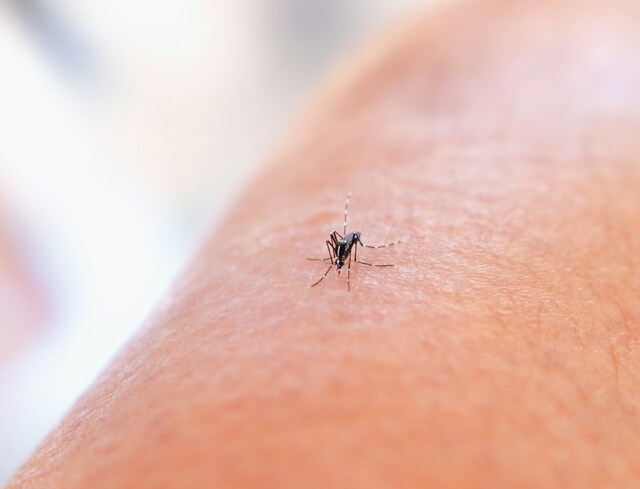
Noosa residents are being urged to step up protection against mosquito bites this summer, with new research showing warmer temperatures significantly increase the risk of Ross River virus outbreaks — particularly in coastal and river land regions such as Queensland.
The national scoping review, led by the University of Adelaide and published in the Australian and New Zealand Journal of Public Health, analysed 30 Australian studies examining the relationship between temperature and mosquito-borne disease. It found that Ross River virus risk consistently rises as temperatures increase, although the pattern varies by region.
Ross River virus is one of Australia’s most common mosquito-borne diseases, with about 3000 cases reported each year. Spread by more than 40 mosquito species, the virus can be carried by animals including kangaroos, wallabies, bats, horses and dogs. Symptoms can include rash, fever and joint pain, with some sufferers experiencing lingering joint pain that affects quality of life.
Lead author Christina Mary Varghese, from the University of Adelaide’s School of Public Health, said maximum temperatures were strongly linked to higher case numbers in coastal Australia — including Queensland centres such as Brisbane, Cairns, Townsville, Mackay, Gladstone, Bundaberg, Redland and the Darling Downs.
“Some studies also found minimum temperatures increased the risk of Ross River virus infections in Darwin and in parts of inland South Australia, Victoria and Queensland,” Ms Varghese said.
Researchers found infections were more likely when temperatures sat between 17 and 31 degrees, peaking at around 26 degrees — conditions commonly experienced across coastal Queensland during summer.
“It’s very hard to predict outbreaks because risk is influenced by many factors, including rainfall, humidity and stagnant water,” Ms Varghese said. “But warmer temperatures clearly increase the likelihood of transmission, which is why mosquito bite prevention is especially important over the Christmas and New Year period.”
The review also examined Barmah Forest virus, another mosquito-borne illness, finding its risk was linked to minimum temperatures in both coastal and inland areas.
Senior author Professor Peng Bi said the research revealed major gaps in understanding, particularly for inland Australia and Queensland.
“There has been no Australian-based study assessing healthcare costs or projecting future disease burden under climate change scenarios,” Professor Bi said. “We need to better understand how our changing climate will influence risk in different regions over time.”
Public Health Association of Australia chief executive Terry Slevin said the issue would be closely monitored by Australia’s new Centre for Disease Control, launching in January.
“As Australia warms due to climate change, more regions are likely to be exposed to mosquito-borne diseases like Ross River and Barmah Forest viruses,” Mr Slevin said.
Health experts recommend wearing light-coloured clothing, using mosquito repellent on exposed skin, and avoiding outdoor activity at peak mosquito times, particularly when camping, fishing or spending time near waterways.