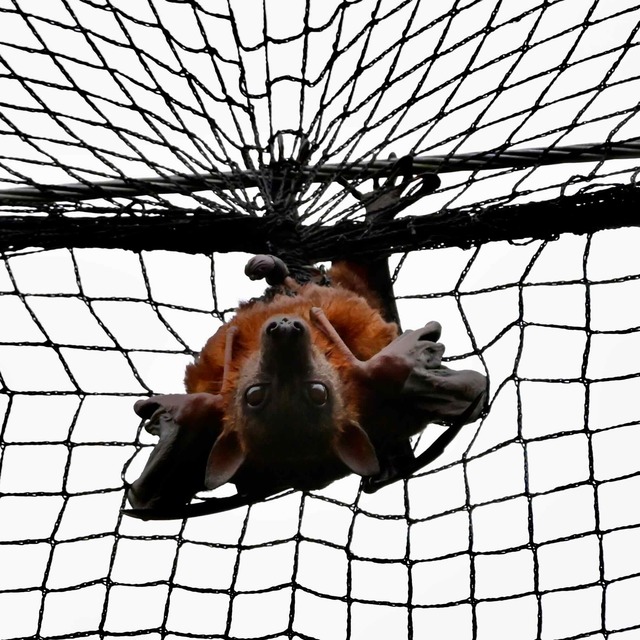
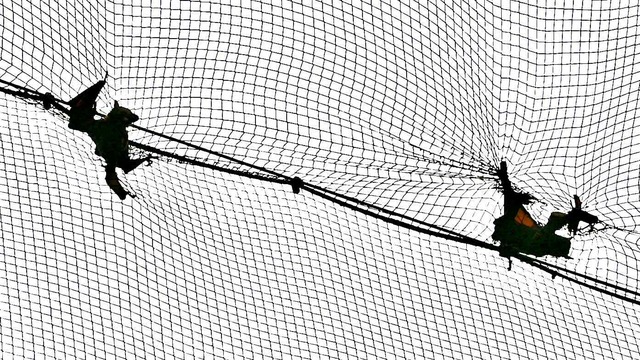
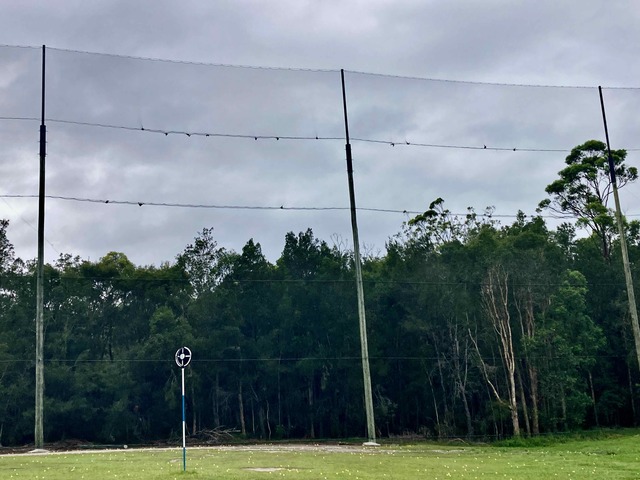
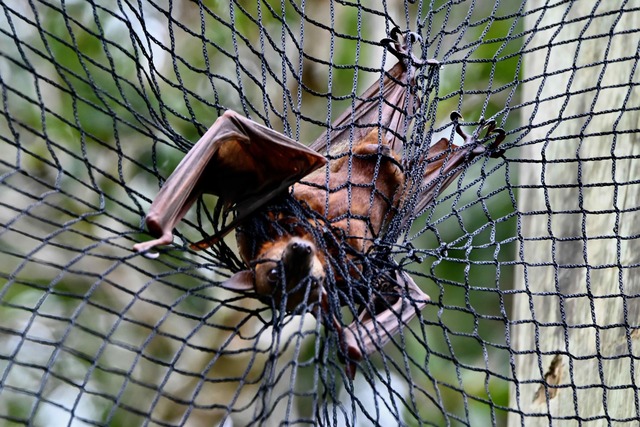
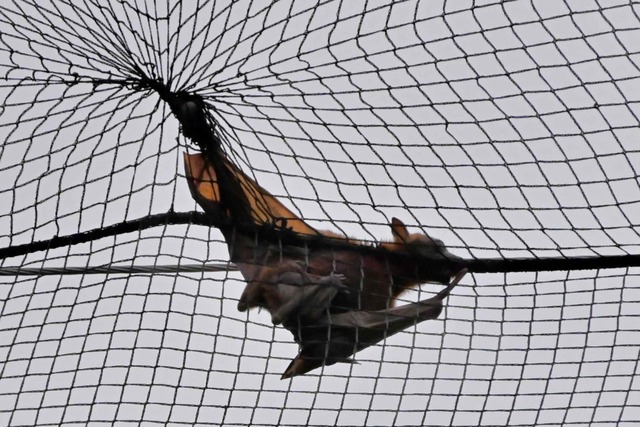
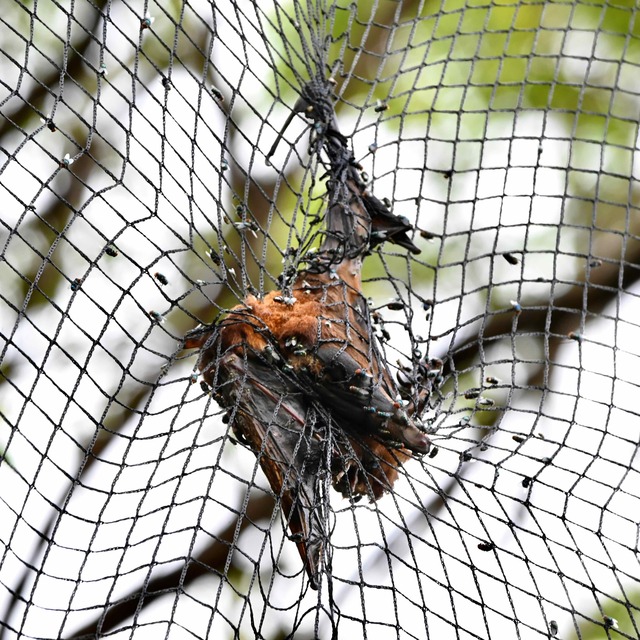
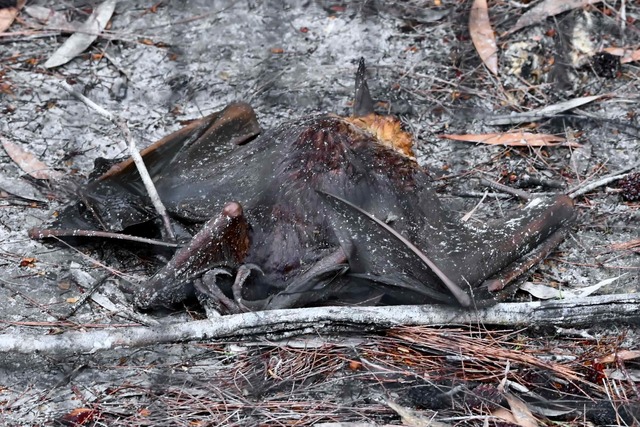
Wildlife rescuers raced to Noosa Golf Club on Tuesday in a frantic effort to save the lives of more than 50 little red flying foxes that were caught in driving range nets.
Tamara Giles of Noosa Golf Club said the club notified wildlife rescuers on Tuesday morning after discovering the flying foxes entangled in the nets. She said one flying fox was caught in the nets a week earlier and the club notified wildlife rescuers.
Wildlife Noosa’s William Watson and Bernard Jean worked for hours on Tuesday to untangle the flying foxes, calling in a crane to reach the animals with most trapped in the higher reaches of the net.
By mid afternoon Bernard said they had rescued 10 flying foxes and hoped they could retrieve another five or six but the others had perished.
“It’s an awful sight and it’s going to happen the following nights if the nets are still on their flying path,” he said.
Terrie Ridgeway of Bat Rescue Inc said the little red flying foxes were Australia’s most important pollinators and seed dispersers and vital to the health and regeneration of native forests due to their transportation of pollen and seeds over large distances.
Terrie, who cared for the flying fox captured a week earlier, said there was a general lack of understanding of flying foxes and their importance in the ecosystem.
She described their capture in the nets as a dreadful situation in which the animals could have suffered dehydration, heat stroke, broken bones, concussions. “It’s horrible,” she said.
Terrie said she had notified both RSPCA and the Department of Environment Tourism Science and Innovation (DETSI) about the situation.
An RSPCA spokesperson said they received a rescue call out about this situation Tuesday morning and requested Australia Zoo to attend.
A DETSI spokesperson confirmed they had received a report today of flying foxes in nets at the Noosa Golf Club in Tewantin and a DETSI wildlife officer would attend the site to provide advice.
Little Red Flying-foxes are regular visitors to Noosa as they seasonally migrate to Southeast Queensland coinciding with the annual blossoming of bloodwoods and other eucalypt species.
Typically, they arrive from late Spring and can establish roosts in any location. In Autumn they tend to vacate the shire, often overnight, to inland and northern Australia.
Flying-foxes and their roosts are protected under the Queensland Nature Conservation Act 1992 and the Commonwealth Environment Protection and Biodiversity Conservation Act 1999 (EPBC Act).
Members of the public can report wildlife incidents on 1300 130 372.