This is the second ZEN article on EV chargers in Noosa. The first (published 16 January) looked at what infrastructure already exists. Now we are exploring options to better meet both current and future needs.
It’s predicted that the number of EVs in Noosa will overtake the number of internal combustion engine cars around 2041, with a forecasted 44,000 EVs in Noosa. This growth will require a corresponding growth in EV charging infrastructure.
How, where and when these 44,000 EVs will charge will depend on a range of driver habits and preferences. Cars are sitting idle for most of the day so there is plenty of time to charge; so it’s not surprising that at present over 90% of EV owners charge at home. This currently tends to be done overnight when the car is parked for 8 hours or more. While convenient, the overnight electricity (at present) is largely coal powered. Charging during the day, where possible, is better because, even if the driver doesn’t have their own solar panels, the grid is drawing in a lot of rooftop and farmed solar. At night, the grid relies more on coal because the storage options of batteries and hydro aren’t at capacity yet. The other consideration for EV drivers is cost – home charging is cheaper than public charging.
People living in strata units and people without off street parking are the most challenged. Extension cords across walkways are not a viable or safe solution. While Councils in urban areas such as the Inner West of Sydney are installing kerbside chargers, these chargers may be less suited to the Noosa context.
Some people living in strata complexes in Noosa have been frustrated by their Body Corporates’ rejection of requests to install charging points in the car parks. But safe, reliable options exist including 10-amp power points that can meter the kWh used and then bill the appropriate car owner.
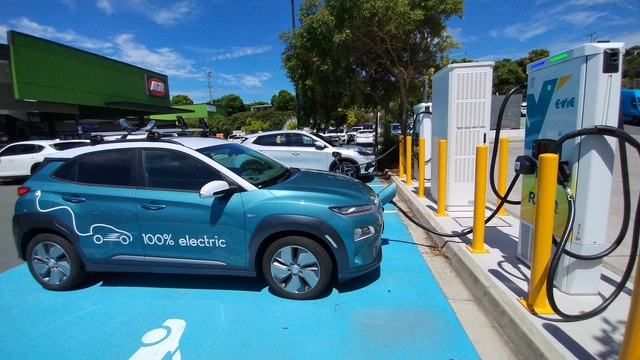
Enabling drivers to plug their EVs in at their workplace would also be a game changer, as cars are usually parked for several hours during the sunniest times of the day. For a minimal cost, employers can provide Level 2 charging points in their car parks for employees. This is a more cost-effective solution than installing the faster but more expensive Level 3 chargers and it means cars are charging using solar power during the day.
Other businesses can also benefit. We’re already seeing resorts offering chargers for their guests. Any business where they want guests or customers to stay for a period of time could consider installing Level 2 or Level 3 chargers. Somewhere like Bunnings, Noosa Civic or Noosa Junction with space and a high turnover of visitors are examples of ideal locations.
Council’s role in increasing the number of charging facilities in the Shire would largely be to create awareness and incentives for businesses to take these easy steps, and as necessary set aside council parking bays to commercial chargers. Another creative solution that Council could take is Park and Ride facilities co-located with EV chargers. This would reduce congestion by offering tourists free parking and regular buses. If tourists are going to be away from the carpark for several hours then Level 2 or 3 chargers, powered by solar, could be recharging their EVs while they enjoy our beaches and cafes.
To explore a wide range of EV options and to talk to private owners and salespeople, come along to Zero Emissions Noosa’s annual EV and Electrify Everything Expo on 21 June at Noosa Junction www.noosaevexpo.com.au.