It was an emergency.
Floodwaters had cut off the North Shore ferry. A woman was in labour. Paramedics couldn’t get across. And time was running out.
That’s when the State Emergency Service stepped in.
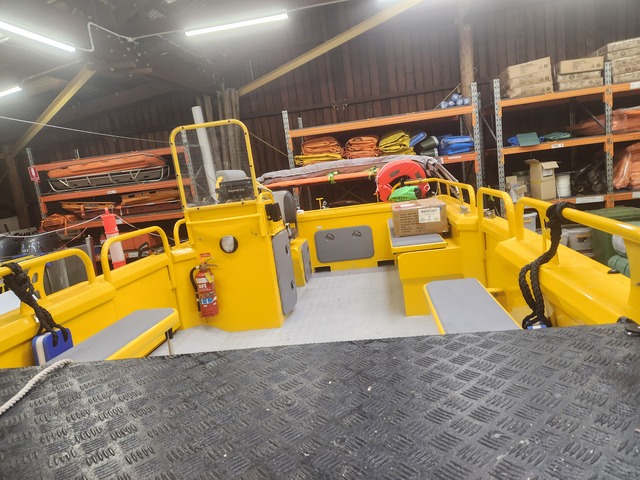
Using their barge, SES Noosa volunteers ferried paramedics through rising waters to reach the expectant mother, then safely transported her across to waiting ambulance crews. She gave birth soon after at hospital.
“Moments like that remind you why you do what you do,” says SES Noosa Local Controller Warren Kuskopf.
When disaster strikes, the familiar orange uniforms of the SES are often the first sign that help has arrived.
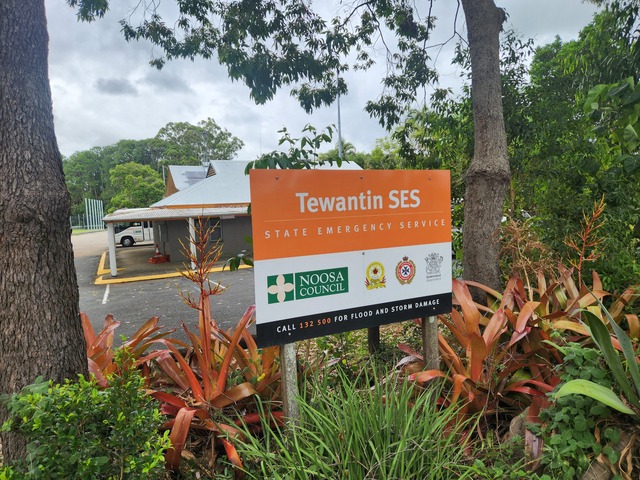
In the Noosa region, that help comes from a dedicated force of 110 volunteers, spread across four local groups — Tewantin, Pomona, Cooroy and Boreen Point – all led by Warren and united by a shared commitment to community safety.
“We’ve got a really diverse and committed team,” Warren says.
“Our youngest member is 16 and our oldest is 86. Every single one of them gives their time purely to help others.”
That’s the heart of the SES – ordinary people doing extraordinary things.
Volunteers come from all walks of life, including tradies, teachers, retirees, professionals and university students.
“It’s a fantastic balance,” Warren explains.
“About 60 per cent of our members are men and 40 per cent are women. Everyone brings something different to the table.”
The workload is significant. “Already, we’ve had around 30 callouts just in January 2026,” Warren says.
“In 2025, we responded to more than 300 jobs relating to trees down, structural damage and flooding – plus another 82 search, rescue and forensic support tasks.”
Storm season is the busiest period. “From about October through to the end of January, it’s non-stop,” Warren says.
“Then from January to May, we’re dealing with weather depressions and cyclones. Cyclone Alfred was one of our biggest challenges in recent years.”
When the weather turns severe, SES volunteers run toward danger while others seek shelter. “You’ve really got to manage fatigue,” Warren says.
“We leave the safety of our own homes to assist others during crises. It’s an impressive effort.”
During Cyclone Alfred alone, the Noosa SES produced 40,000 sandbags in a single week, powered by a machine capable of filling one bag every seven seconds. “We usually keep about 5,000 on standby,” Warren says.
“But when a storm’s coming, we ramp things right up.”
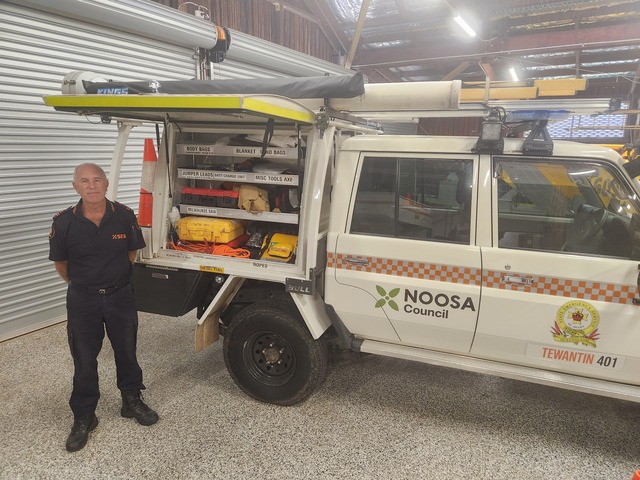
The unit operates four Land Cruiser first responder vehicles, six larger trucks, a bus and four rescue boats, all supported through a strong partnership with Noosa Council and Queensland Police. “The support from Council and QPS is outstanding,” Warren says.
Beyond emergency response, training and education are central to the SES mission.
Volunteers train continuously and actively recruit new members aged 16 and over.
Warren is also passionate about building long-term community resilience.
For the past four years, SES Noosa has partnered with Noosa Council and other agencies to deliver the Get Ready Queensland Schools Program to Year 5 students – reaching nearly 10,000 children.
“I’m 120 per cent convinced these sessions are vital,” Warren says.
“If we can prepare the next generation, we’re building resilience before disasters even happen.”
“Whether it’s a cyclone, flood or storm, we’ll always be there to help,” he says. “But the best outcome is a community that’s ready before we’re needed.”
To learn more about volunteering with the State Emergency Service, visit the Queensland SES website.