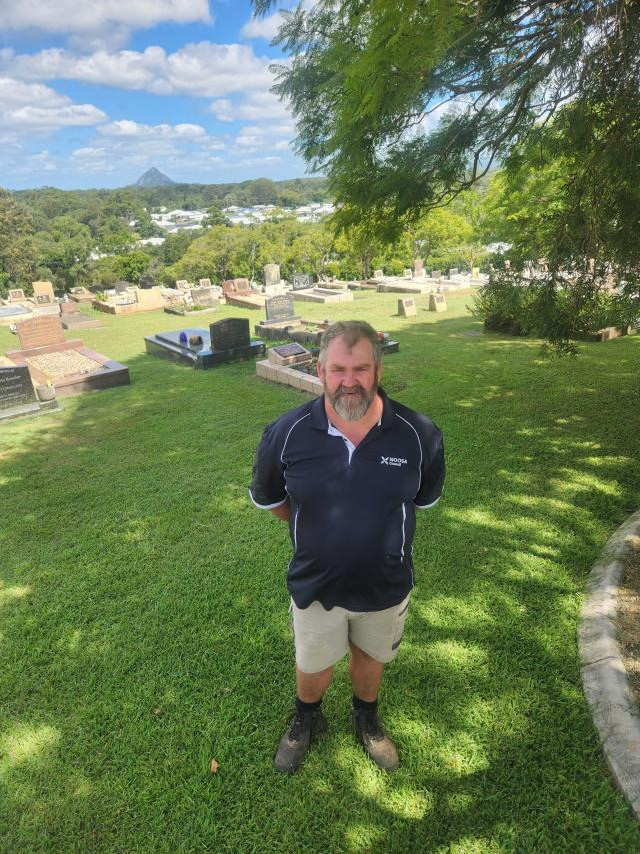
Troy Andreassen has literally been working the graveyard shift for more than 32 years.
Troy looks after Noosa’s cemeteries in Cooroy, Tewantin and Pomona, helping families honour loved ones and preserving spaces that mean a great deal to the local community.
It’s not your average job, but it is an important one – carried out with care, patience and compassion.
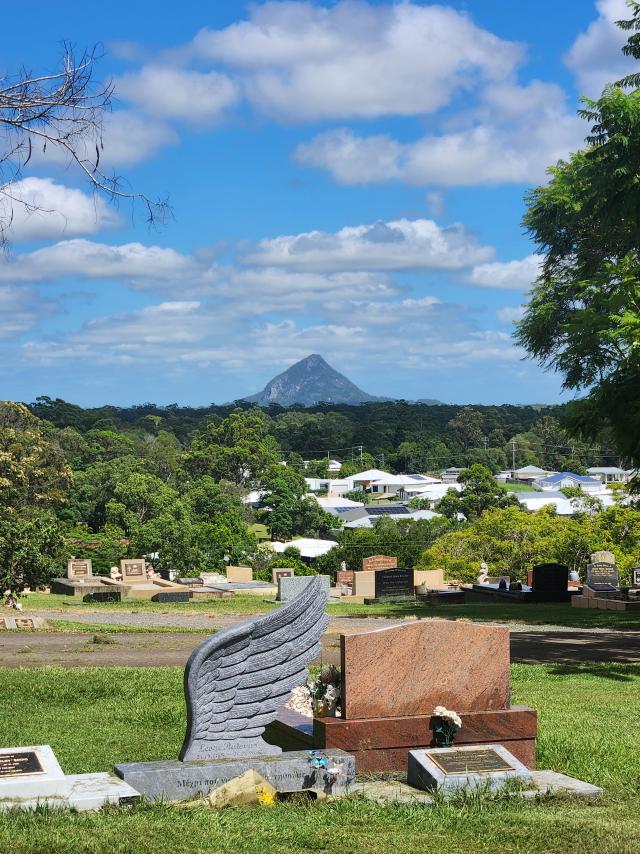
High in the Sunshine Coast hinterland, the Cooroy Cemetery unfolds in sweeping green lawns beneath the watchful presence of Mount Cooroy, rising more than 400 metres above the township.
The cemetery sits within volcanic, tree-covered country, framed by nearby Black Mountain and offering a sense of calm that is immediately felt.
For Troy, the work is as varied as it is meaningful.
“There’s no ordinary day – it’s always different,” he said. “This morning I was laying turf at Tewantin, then I’ll do some bookwork.”
While the role includes grounds maintenance, preparation of graves and administrative tasks, Troy says the most important part of his job is working with grieving families.
“You’re helping them at the worst time of their life,” he told Noosa Today. “You’ve got to be respectful, patient and understanding.”
Noosa Council manager Alison Hamblin said Troy’s contribution goes far beyond his job description.
“Troy is so humble and amazing,” she said. “He’s one of the most compassionate people you could meet. The care he shows families is extraordinary.”
Each of the three cemeteries Troy oversees carries deep historical significance. The first recorded burial at Cooroy Cemetery took place on Tuesday, 7 March 1911, when five-year-old Carl Fenwick, the eldest child of George and Mrs Fenwick, died from bronchial pneumonia.
Tewantin Cemetery contains the oldest known burial in the region, believed to be that of Mary Hill in 1876, before the cemetery reserve was officially gazetted.
Pomona Cemetery remains an active cemetery and continues to operate as a Crown reserve, with Noosa Council acting as trustee.
Across the shire, Noosa Council conducts around 50 burials each year, not including ashes.
At Cooroy Cemetery, approximately 800 to 900 burial sites are still available.
Looking to the future, Noosa Council is exploring more environmentally sustainable burial options, including natural or “green” burials.
These involve no embalming fluids, biodegradable shrouds or containers, and no concrete or metal vaults, allowing the body to return naturally to the earth.
Sites are typically located in bushland or meadow settings, often without visible markers.
Arborists are currently assessing the three existing cemetery sites to identify suitable locations, carefully considering trees and root systems.
Council is also developing a new Cemetery Plan, expected to be finalised later this year.
The plan will guide how it manages and delivers cemetery services in Noosa over the next 10 years, making sure they stay accessible, sustainable and responsive to the community’s needs.
Additional services, such as gravestone cleaning, are also being offered to support families who may not be able to visit regularly.
For Troy, it’s all part of the role – one he has no plans to step away from.
With Mount Cooroy standing quietly in the background, the sun filtering across the lawns and a deep sense of peace in the air, Cooroy Cemetery offers a place of rest that reflects the care behind it.
And behind that care is Troy Andreassen – still working the graveyard shift, still serving the community.
For more information about the cemeteries and services, go to: www.noosa.qld.gov.au/Services-and-Facilities/Cemeteries