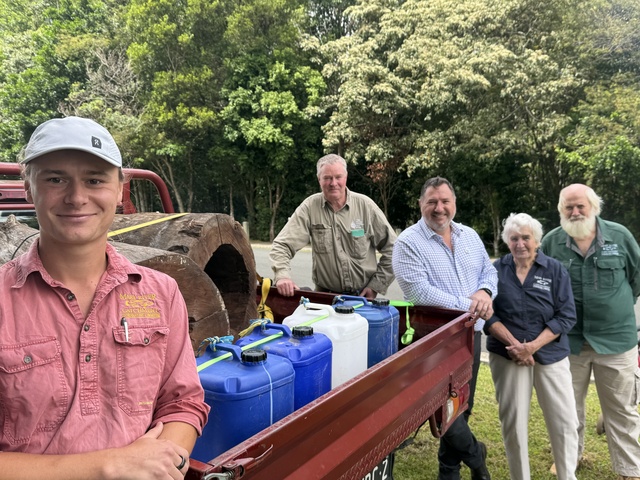
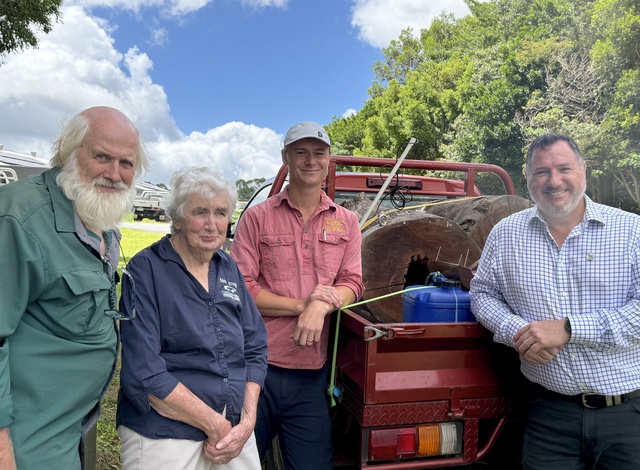
A native fish that has been faced with extinction is set to play a role in a much-wider effort to save the health of a river.
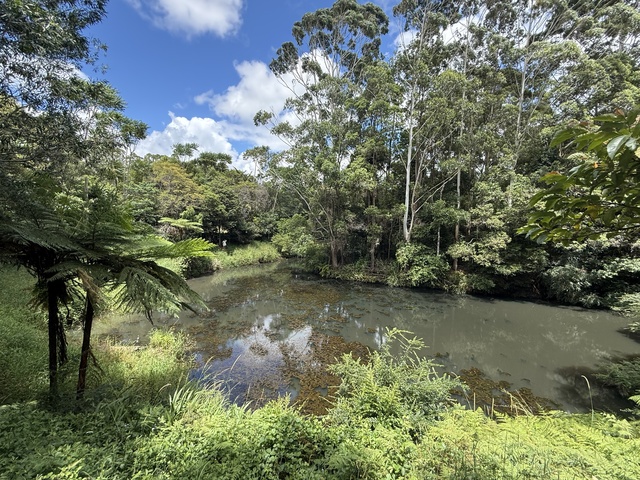
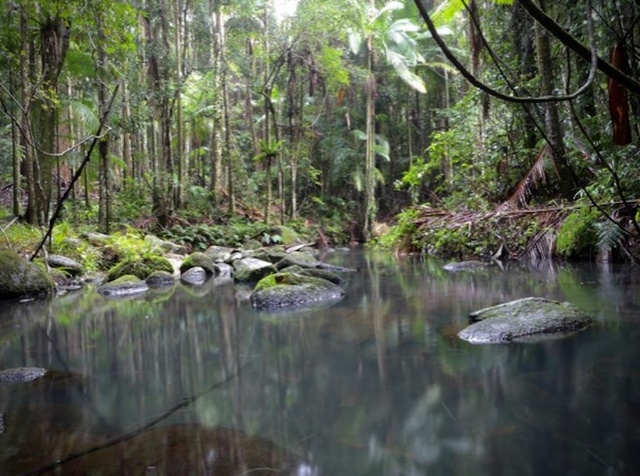
The Mary River – or Moocooboola in Gubbi Gubbi language – is like a snake, weaving its way through the landscape in South-East Queensland. From the ranges at Maleny down through the farmlands of Gympie to the sea at Maryborough.
It flows not just through country but the lands of three indigenous groups. In doing so, it connects them as much as it connects the land.
The Mary connects the people, the economies and the environment.
The river is the lifeblood of the catchment – one of the most diverse in Queensland. It covers 9595 square kilometres from Maleny to K’gari and contains a population of over 200,000 people, both on the land and in urban areas and rural subdivisions.
Without a healthy river, communities become at risk … just like the wildlife. They lose vital fresh drinking water, ecosystems collapse, biodiversity plummets (affecting fish, birds, frogs), economies suffer (agriculture, tourism, fishing), and cultural connections are severed.
This leads to polluted water, unusable floodplains, and increased costs for water treatment and disaster management, ultimately threatening human life and nature’s ability to sustain itself.
Critical habitats for threatened species in the catchment have been given a much-needed boost thanks to more than $2 million in joint funding from the Federal and Queensland governments.
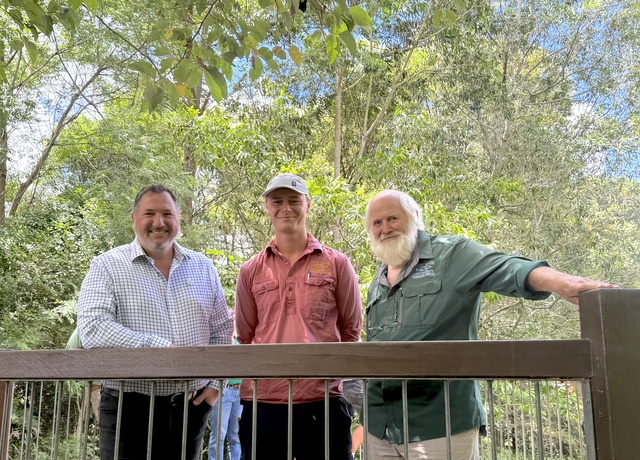
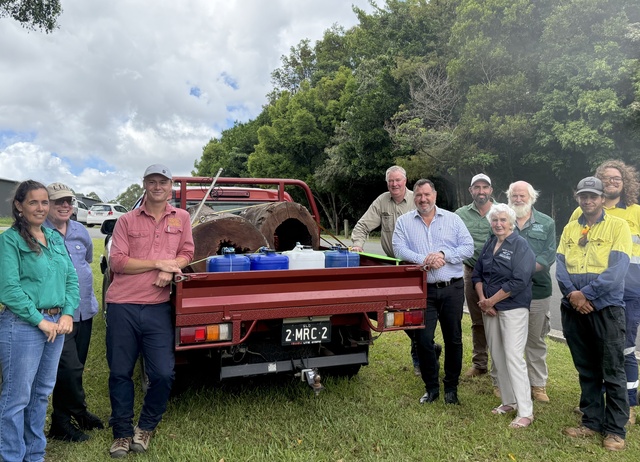
At an inspection tour of the upper reaches of the river system, it was pointed out that protecting critical habitats for threatened species and improving water quality were at the heart of integrated projects designed to build resilience in the Mary River and her catchments.
To help drive the Mary River Integrated Project (MRIP), the Mary River Catchment Coordination Committee (MRCCC) has been awarded more than $2 million in funding.
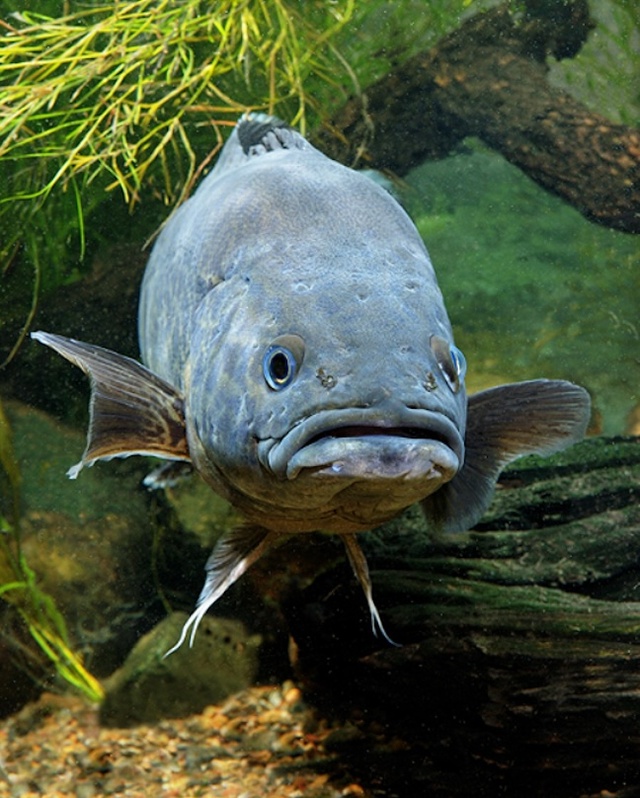
The MRCCC has received more than $550,000 in joint funding from the Albanese and Crisafulli Governments under Disaster Recovery Funding Arrangements (DRFA) to improve and extend key habitat areas for the Australian lungfish, Mary River turtle, white-throated snapping turtle, and Mary River cod.
They were also awarded $1.5 million through the Queensland Government’s $5.5 million Reef Place-Based Integrated Projects initiative which focuses on a collaborative, localised approach to projects that improve water quality and reduce pollution.
The projects include key partnerships with Griffith University, Tiaro Landcare, Burnett Mary Regional Group (BMRG), Kabi Kabi Traditional Owners, Jinibara People Aboriginal Corporation, local councils, and other stakeholders.
MRCCC chairman Ian Mackay welcomed the collaborative approach on the project.
Mary River cod numbers were as low as 600 individuals in the wild a few years ago, he said, and they’d like to see the population made far more secure.
“The thing with cod is they need a place to nest. The male will find a location – it could be an undercut bank or a log.
“They will set up a ‘turf’ and protect that location, then the female will come in and lay the eggs. The male then protects the eggs.
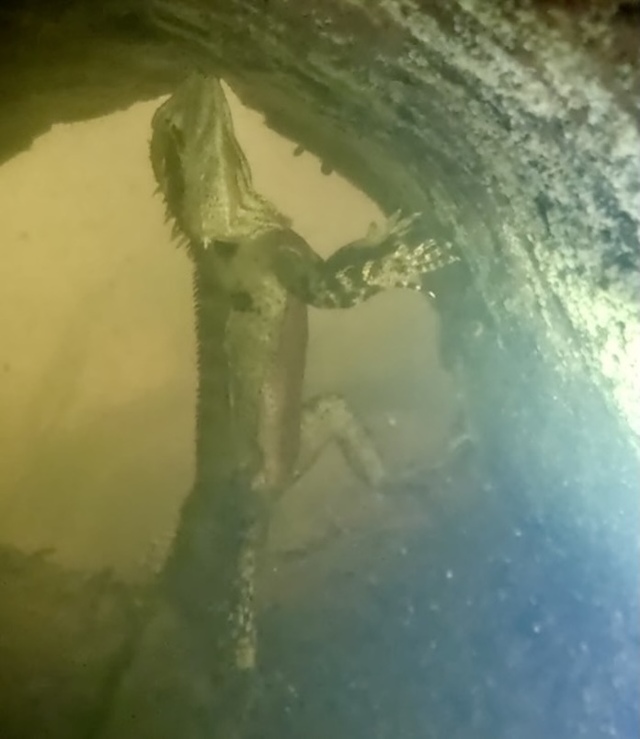
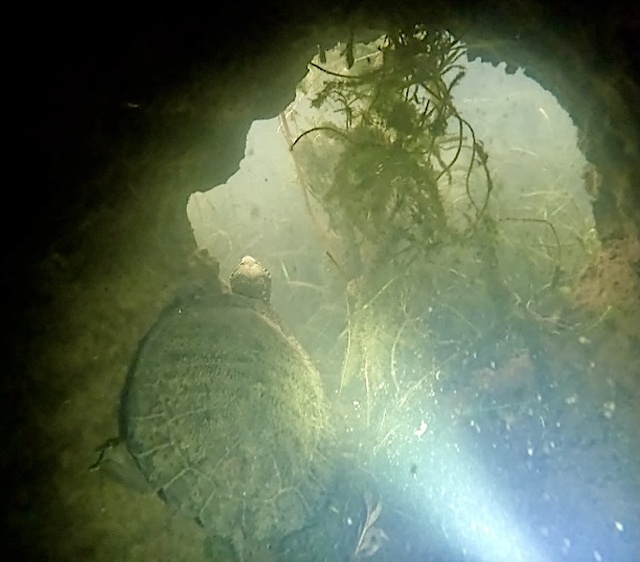
“What we found was a lot of different species use the logs – turtles, eastern water dragons, saw shell turtles and eels are all using cod logs.”
Queensland Minister for the Environment and Tourism Andrew Powell said community-led recovery initiatives were vital to protecting Queensland’s unique biodiversity and building future resilience for the Great Barrier Reef.
MRCCC’s recovery efforts for the Mary River and catchment include:
Installing submerged timber structures known as ‘cod logs’ to support Mary River cod spawning.
Rehabilitating aquatic plant beds for Australian lungfish food and breeding.
Protecting turtle nesting banks, controlling predators and designing and installing turtle hatchling habitat structures.
A Dairy Farmer Network Program and Small Grazier Program encourages practices to improve water quality and farm practices by providing information, training, and support to implement more sustainable and efficient farming techniques. This includes collaborating with Seqwater and James Cook University.
The Jinibara Water Quality Monitoring Program has resulted in the building of capacity for Jinibara Rangers to carry out water quality monitoring and catchment management.
Partnering with HQ Plantations, dairy farmers, and ANU Enterprise in an effort to reduce sediment runoff from rural roads and laneways.
Riparian Zone Management includes restoring and protecting Mary River banks in partnership with Noosa Landcare and community groups to enhance ecosystem health and connectivity.
Federal Minister for Emergency Management Kristy McBain said recovery efforts in the Mary River and its catchments were critical.
“The Albanese Government is working closely with the Crisafulli Government to ensure that recovery efforts towards the Mary River Catchments result in the improvement of water quality and habitats occupied by marine wildlife,” Minister McBain said.
Minister Powell said it was a matter of protecting the iconic Great Barrier Reef through genuine environmental action, which includes stakeholder partnerships to reduce run-off and improve water quality.
“This program tackles nutrient and sediment pollution in the Upper and Lower Mary River through five targeted sub-projects.
“In the Mary River catchment, our partnerships are boosting conservation outcomes for threatened species of fish and turtles.
“With more than 25 years of conservation experience, the MRCCC fosters trust and long-term engagement through community-driven, co-designed projects.
“We’re building on the MRCCC’s successes, and these projects showcase the power of partnerships to deliver catchment-wide benefits for the environment and the community.”
The Dairy Farmers Network is aimed at learning more about how to care for the river and improving water quality by reducing the runoff of nutrients, such as nitrogen and phosphorus, as well as sediment.
This can include funding of fencing to keep stock away from riverbanks and the risk of erosion.
Through the network farmers can share experiences, learn from experts, and connect with other industry stakeholders.
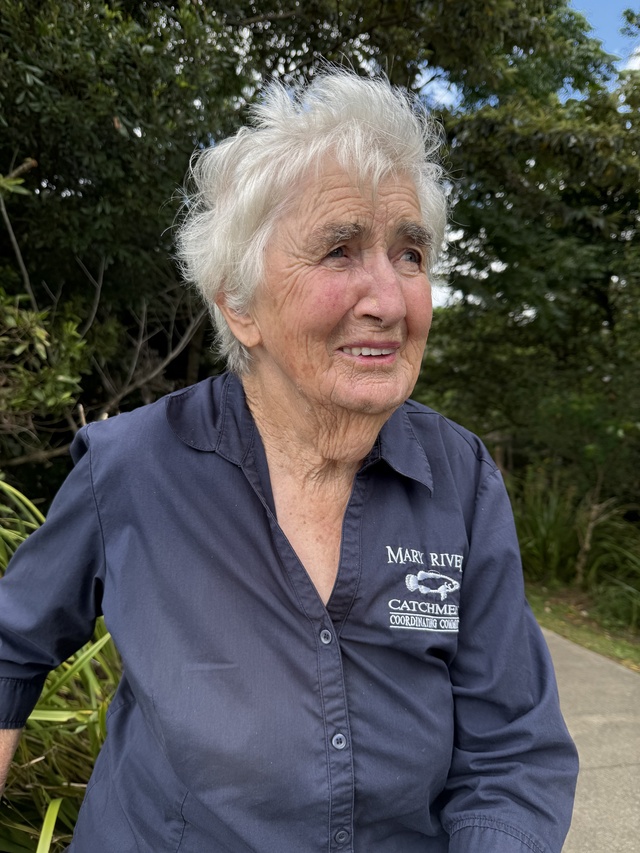
For 87-year-old Margaret Thompson, whose family have been on the land at Maleny since 1903, it was more a case of farmers not knowing about proper care for the waterways in the past.
Farmers were acting on advice, Margaret said. But that has changed in recent years.
The advice given to early settlers was to de-snag waterways, removing the hollow logs and log-jams so crucial for cod nesting, as well as other native species.
River and creek banks were stripped of trees that stabilised soils, shading and cooling the water. Erosion has filled what were once deep waterholes.
Margaret’s grandfather ACK Cook took up a property in 1903 and was on various boards throughout the region.
With her late husband Mal Thompson she was part of the Barung Landcare founding group.
Margaret has also been on the Landcare Australia board. That gave her the opportunity to see many places throughout Australia and what they were doing.
“I guess somewhere along the line the love of farming has spread into us.
“We’ve always been conscious of looking up to the environment, and being innovative in what we do.”
In 2019 a decision was made to install a total fishing ban during August, September and October in the upper Mary River and its tributaries to better prevent protected cod being accidentally caught during their breeding season.
To slow water flow during floods, the Mary River Catchment Coordinating Committee (MRCCC) and BMRG have helped landowners install pile fields at some of the Mary River’s worst erosion sites.
Riverbanks have been reshaped and replanted to prevent huge chunks of land from being washed away.
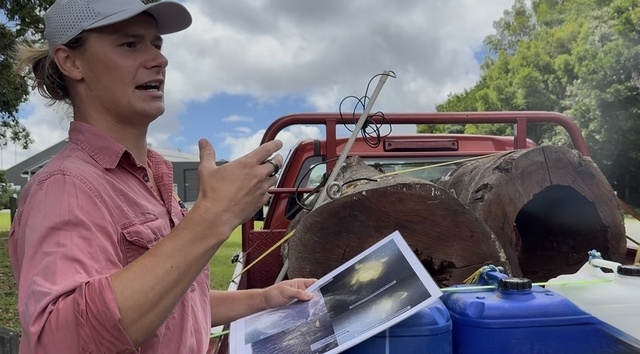
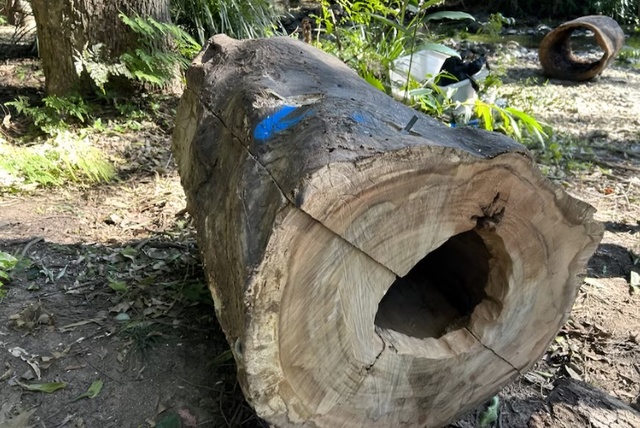
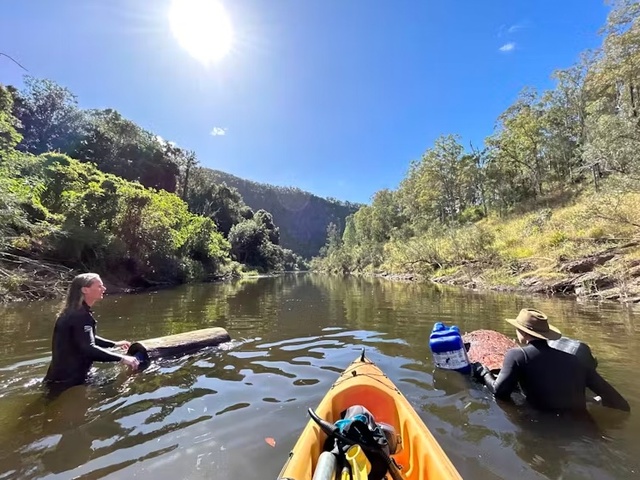
A cod logs program involves logs being placed back in the river to give fish a safe place to shelter.
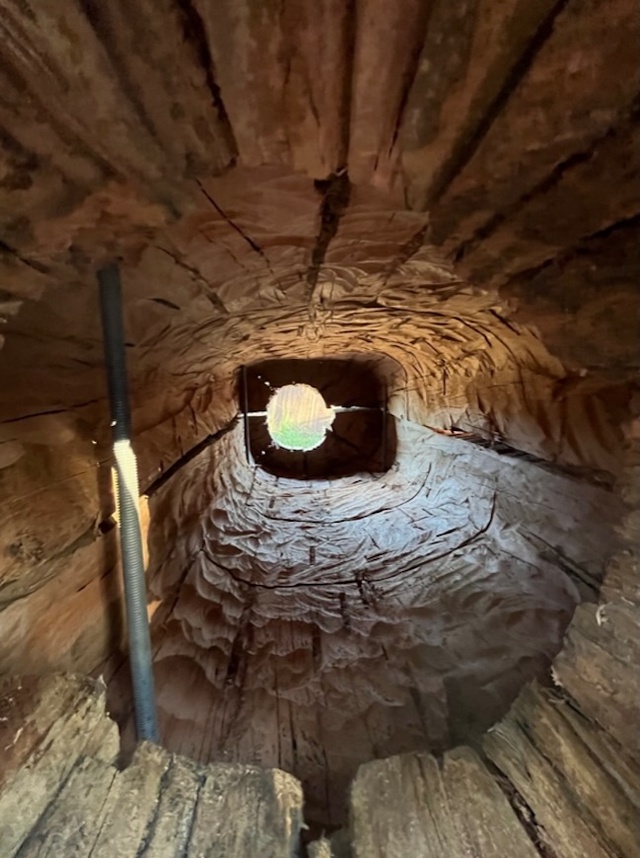
The logs are halved and carved out by chainsaws before being reassembled.
The Mary River cod, that can grow to one metre, then utilise the logs as a safe haven to lay and fertilise their eggs, hopefully growing into fingerlings and later to become a dominant species – one that can impact introduced threats such as tilapia and carp.
Tilapia are also considered a major environmental pest in warm habitats throughout Australia, due to their rapid reproduction and threat to native fish. Originating from Africa and the Middle East, they thrive in warm waters, are hardy, and can become invasive, disrupting ecosystems by outcompeting native species and altering habitats.
The MRCCC has identified some remaining cod habitat areas but for a number of years have been re-stocking the river with fingerlings.
That process has been largely successful yet they want cod to be using the spawning structures.
Sediment and toxic run-off control is another project being undertaken to safeguard not only the Mary River but the Great Barrier Reef.
The 291 kilometre Mary River is the fourth-highest contributor of sediment to the Great Barrier Reef.
Economic activities in the Mary River catchment range from dairying, beef, forestry, fishing, horticulture, mining, sugar, farm forestry, tourism, sand and gravel extraction and small industries.
The record floods in 2022 severely impacted on riparian and aquatic species habitat in the waterways.
With the MRCCC teaming up with the Jinibara Peoples Aboriginal Corporation, Griffith University and the Burnett Mary Regional Group and gaining expert advice from the Noosa Hinterland Hatchery and NSW Fisheries, a plan was developed which would test the cod’s preferences for various structures for refuge and spawning.
Developing a resilience intervention that ensured post-flooding recovery, a number of ideas were floated, from concrete pipes to timber ply triangular nesting boxes.
Another aim was to give landholders, like-minded individuals and community organisations the tools to replicate the project work; particularly following a flood event. These structures can be added in-stream at any time.
The final cod hollow design was light enough to transport and could be created by one person with a chainsaw.
Arborists split 1300mm long by 700-800mm diameter logs into two pieces and carve each of the split pieces of log into the required internal dimensions, these halves are then bolted back together, thus creating an artificial hollow log. These logs are then moved onto the banks of various creeks on properties where landholders have been supportive throughout the catchment.
The installations first took place in late July 2024 with water temperatures sitting from 9.5-11.5 degrees. Several weeks later, in one of the hollows in the upper Mary, a large male cod was filmed fanning a substantial number of eggs.
Since then, a number of cod and many other species have been documented using the cod hollows.
The Mary River is 310 km long and water quality varies from fresh through to saline in the estuarine areas where the river flows into the Ramsar-listed wetlands of the Great Sandy Strait, home to dugongs, migrating whales and migratory birds.
Ramsar is the city on the Caspian Sea that lent its name to a convention on protected wetlands in 1971.
The Mary River catchment is subject to high intensity cyclonic rainfall on very steep slopes and is experiencing major changes in land use, increased competition for water resources, and rapid population growth from being adjacent to the Sunshine Coast and Hervey Bay.
The catchment provides habitat for a suite of threatened aquatic species including the critically endangered white-throated snapping turtle, and the endangered Mary River cod and Mary River turtle.
The giant barred frog and Australian lungfish are both classified as vulnerable to extinction.
These species survive in isolated pockets where water quality is healthy, the river is shaded and cool, and riparian vegetation is intact.
In the early ’90s the Mary River was described as one of the most degraded river systems on the east coast of Australia.
Ian Mackay said the committee actively supports the adoption of best management practices in farming systems to achieve sustainable agricultural production.
He said the committee has been around for 30 and a bit years, and through the Office of the Great Barrier Reef (OGBR) there’s been a collaborative approach to work on the water quality in different sections of the river.
“Probably in Maleny you don’t get to hear as much about us as we’re based in Gympie but have delegates from all over – such as our treasurer and life member Margaret Thompson, as well as the platypus whisperer Neil Anderson.
“It’s important for other areas to see what’s going on. People in Maleny think of the OGBR as somewhere in the distance, but the Obi Obi Creek is the main tributary of the Mary, and Baroon Pocket is a very important place for the people around here.”
Mr Mackay paid tribute to the number of different organisations and landholders working in collaboration in the catchment area.
He welcomed the work being done by Barung Landcare over the years – especially the plantings undertaken on the riperian areas.
To this extent the Find a Frog in February program has recorded the giant bard frogs being seen again, along with the platypus.
“It’s great to see these things coming back.”
Logs are being supplied by the various councils and Department of Main Roads as a result of engineering works.
It can take so many years for the trees that have hollows to fall into the river. This just speeds up the process.
Other places have done it with plywood boxes but we are utilising the natural materials.
This way a farmer could create the cod log with a chainsaw and then drop it in.
Mr Mackay reminded the health of the river was about a lot of things working together.
The cod logs are part of a three-pronged approach that includes stocking the waterways with fingerlings for a number of years, and wanting to enhance the numbers of those that are living in the river.
Another approach that’s been important has been the closed season of fishing during August, September and October – that’s at a stage of the year when nesting is going on.
The presence of tilapia in the waters has become very important to get the cod – the apex predator – back into the system. This is in addition to shading of the river.
For Margaret Thompson, it’s a matter of utilising what you’ve got.
“I’ve been with the MRCCC since it started, as a deputy for dairy farmers and then moved on as a true delegate.
“Many of the things done previously by farmers was done on advice, such as taking logs out of the river.
“It made sense at the time and now it’s been proven wrong, so sometimes we should be careful about that.
“In the old days if you didn’t clear your land, then you lost it.
“Now we’re looking at the importance of bringing trees back to improve the soil, and create riparian zones and wildlife corridors.”
Margaret said it is important to utilise what is available.
“I don’t want my children to miss out on things.
“It’s a matter of teaching them the responsibility that goes with it.
“Great grandchildren bring another perspective.
“You have to be open all of the time … curiosity is a wonderful thing.”
UNDERSTANDING THE ISSUES
The MRCCC aims to improve information delivery to landholders and industry on farm management within the variable SEQ climate through several objectives:
Establishing credible information on water quality in the catchment as a basis for decision-making;
Making water quality an issue – identifying and reducing diffuse sources of pollution in the catchment;
Developing broad scale awareness of riparian areas in the catchment, and seeking community participation in developing solutions to prevent further degradation;
Reducing negative impacts of grazing and other activities on riverbanks, with landholder participation;
Providing support for those attempting to address riverbank erosion;
Understanding the extent and condition of habitat for threatened species;
Improving the habitat condition for threatened species;
Eliminating, reducing or controlling weed impacts to the catchment by encouraging rural and urban users to be responsible for them.