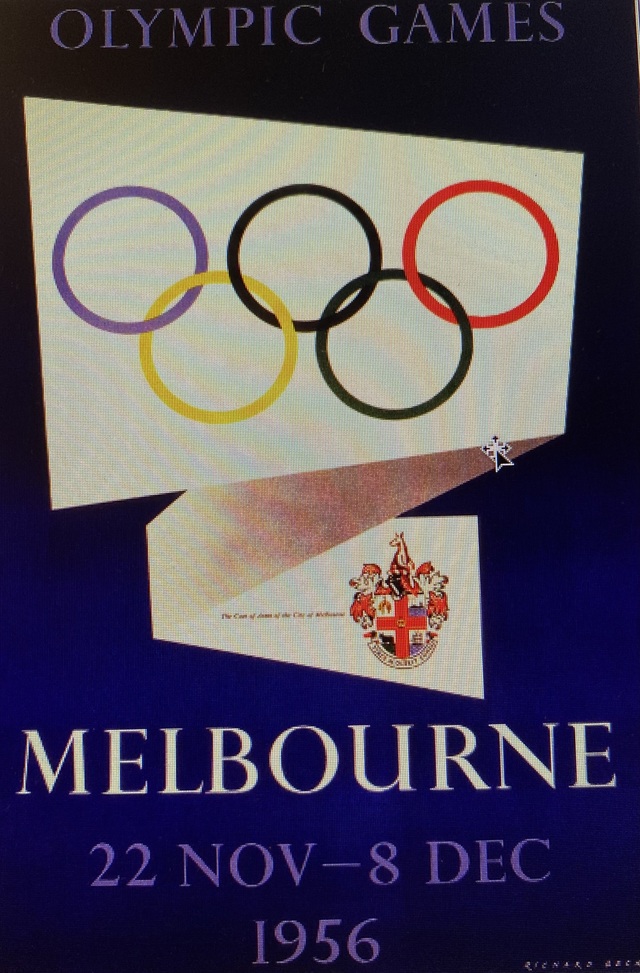
Triple gold medallist Dawn Fraser and fellow Olympians from the Sunshine Coast will be among those celebrating the 70th anniversary of the 1956 Melbourne Olympic Games at the Sunshine Beach Surf Club on Thursday 12 March.
Star athletes who were with Dawn at the Games, like canoeist Bryan Harper, who at 99 is Australia’s second oldest Olympian, and water polo player Ted Pierce, will be at the event which is being organised by the Sunshine Coast 2032 Olympic and Paralympic Legacy Taskforce, with the support of Aria Property Group.
The function is open to all sports lovers and will take place in the club’s Ocean View Room from 4pm to 7 pm.
With the 2026 Winter Olympic Games concluding earlier this week in Milano-Cortina, Italy, it is of interest to recall an unusual proposal for Australia to host the Winter Olympics that was put forward as part of the formal invitation to the IOC for Melbourne to host the 1956 Summer Olympics.
The Melbourne Age suggested on January 24, 1948, that the Winter Olympics Games, which are always held independently of the Summer Games, “could be conducted at Mt. Buffalo, Hotham or Kosciusko (sic)”. Obviously, this proposal was not supported.
In 1946, however, the Victorian Olympic Council (VOC) had financial reserves of just £6 7s 10d (about $14) when it met for its first meeting in seven years because of WWII. There was much laughter when a motion was moved for the VOC to apply for Melbourne to host the 1956 Olympic Games. The motion, however, was accepted unanimously and the proposal was forwarded to the Australian Olympic Federation (AOF) in July 1946.
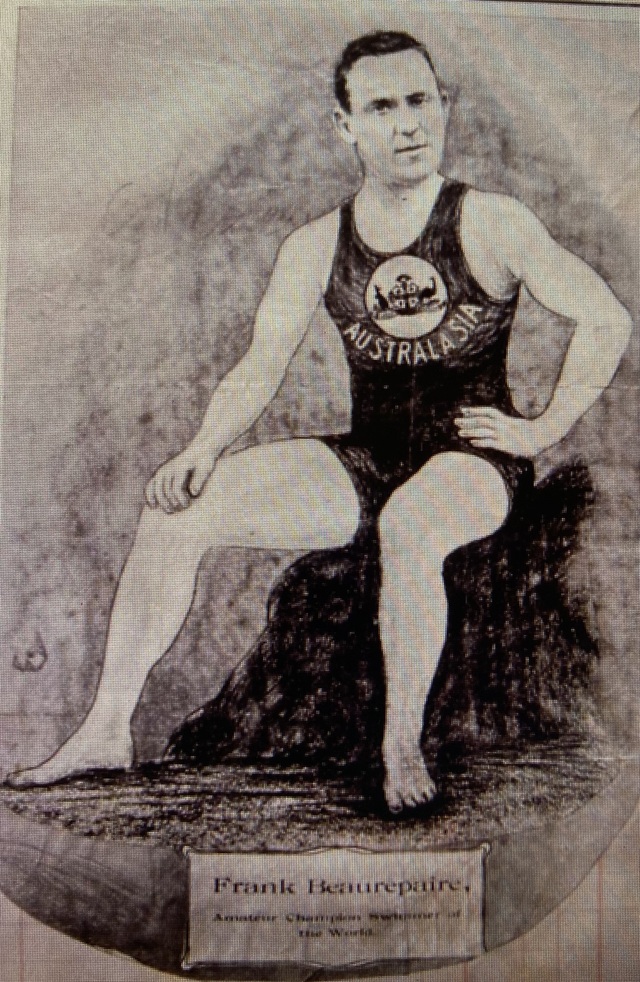
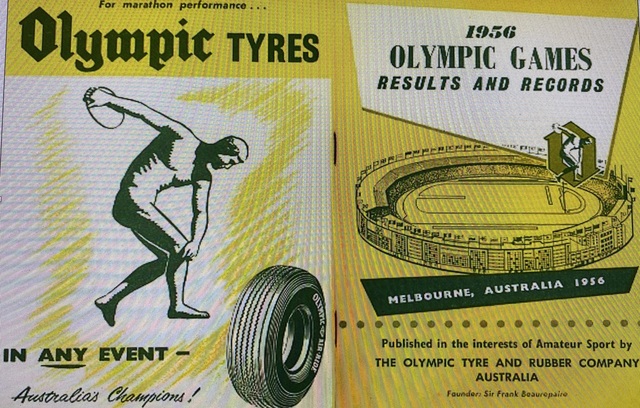
Former Lord Mayor of Melbourne Sir Frank Beaurepaire had a public profile in Australia and in the international Olympic Movement. Beaurepaire had won three silver and three bronze medals at Olympic Games (1908, 1920 and 1924), and had been an official at the 1932 Los Angeles Olympics.
He was also successful in business, having developed his motor tyre business utilising the brand name ‘Olympic’. It is currently known as ‘Beaurepaire Tyres’.
Beaurepaire assumed the presidency of the VOC in May 1947 and soon after the Lord Mayor of Melbourne Sir James Connelly announced a bid would be made to the IOC to host XVI Olympiad in Melbourne.
Copies of an extravagant Invitation book (with some copies bound in either suede or Australian merino lamb wool) were sent to IOC members and international sports administrators. The book outlined reasons why Melbourne should become an Olympic Games host city: Australia was only one of four nations to attend every Summer Olympics; if the Olympics were truly ‘world’ Games, it was time for them to be held in the Southern Hemisphere; and, with the development of pressurised aircraft, the thirty hours travel to Melbourne was comparable with other venues. (Note: That is 30 hours in the air – not ‘Travel Time’.)
To counter the criticism that Northern Hemisphere athletes would be competing ‘out of season’, it was suggested that this was normal situation for Southern Hemisphere athletes.
IOC President Sigfrid Edstrom commented that he had been impressed by the vigour and capacity of Australians when he visited that country and agreed he would meet with the Melbourne bid organising committee during the 1948 London Olympic Games. By October 1948, Beaurepaire quoted the ‘betting odds’ as: “Melbourne – even money; Buenos Aires 6/4 against; Detroit 2/l; All others Buckley’s chance”.
Largely through the efforts of Beaurepaire, a delivery of Australian food and wine to the London Lord Mayor’s Banquet in April 1949 was arranged. This was much appreciated in post-war food rationing.
Although it was expected the IOC would decide which city would host the 1956 Olympic Games at the 1948 London Games, the decision was postponed until the IOC Congress in Rome the following year.
Beaurepaire, respected among IOC members as an athlete-businessmen, and the other members of the Melbourne delegation were the last to present their city’s case to the IOC. Six United States cities were bidding, with Detroit and Los Angeles the main contenders. Other bidding cities were Buenos Aires, and Mexico City. Melbourne won narrowly with 21 votes to the 20 secured by Buenos Aires. ‘Melbourne Gets the Games’ was front page news on 30 April 1949 in the Australian press.
This should have completed the story of the Melbourne bid, but another headline in the Age that day read ‘Site for Games not yet settled’ foretold a possibility that Melbourne subsequently came close to having the Games taken from them. Yes, there was much excitement about hosting the Games, but there were many rumblings, especially in relation to the desperate shortage of housing in Victoria at that time.
A letter to the editor of The Age perhaps expressed the positive element in society at the time:
… re The London 1948 Olympics … Despite the shortages, despite the austerity, the war-weary island and its people welcomed the sportsmen (sic) of the world. Can we not do likewise in the same spirit … There is time before the 1956 Games to overcome our chronic housing shortages if we catch the same spirit as Britain and look ahead and reach just a little for the stars.
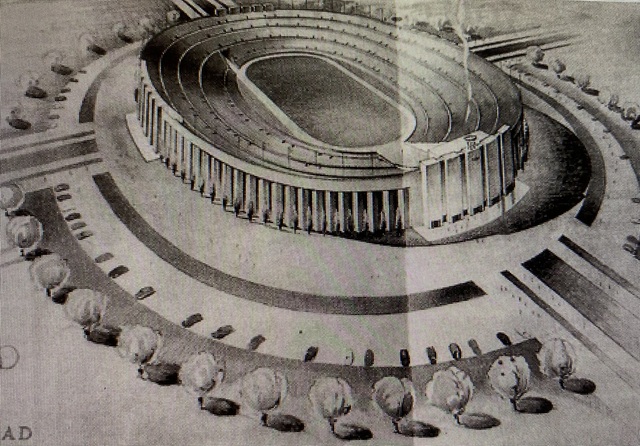
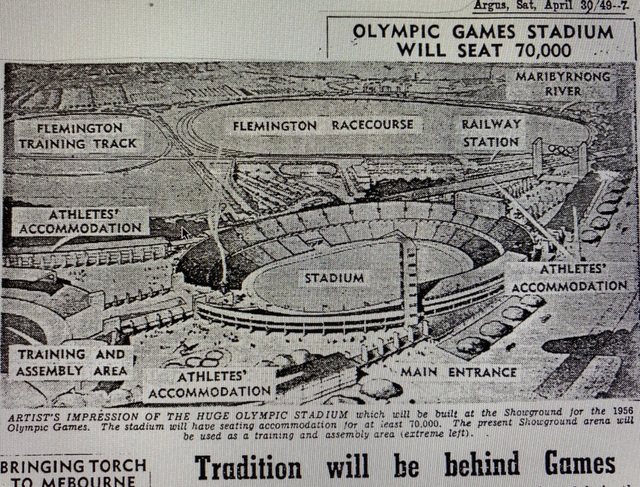
The strategy of the Melbourne Invitation Committee before ‘decision day’ had been to proceed with anything likely to persuade the IOC to award the Games to Melbourne. The extravagant plans for a new Olympic Stadium and Swimming Pool complex were two examples. There was vacillation over the site of the Main Stadium – would it be Olympic Park, Princes Park, the Showgrounds or the Melbourne Cricket Ground (MCG)?
On the day IOC President Avery Brundage visited the MCG in April 1955 (20 months away from the Opening Ceremony on 22 November 1956) there were only 6 workers on site trying to do the work of 100 men because of an industrial dispute. Brundage lamented that in the six years since Melbourne had been awarded the Games in Rome in 1949 there had been “nothing but squabbling, changes of management and bickering”.
At the end of his six-day inspection tour Brundage was quoted as stating that the IOC had made a serious mistake in allocating the Games to Melbourne, intimating that even at that late stage, several other cities would be prepared to stage the 1956 Games. His scathing criticism galvanised action.
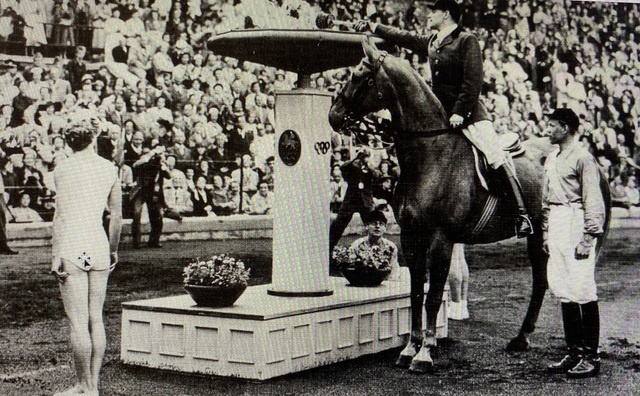
Another problem was the revelation that Australia’s strict quarantine laws would prevent equestrian events being staged in Melbourne in 1956. They were held in Stockholm, Sweden instead.
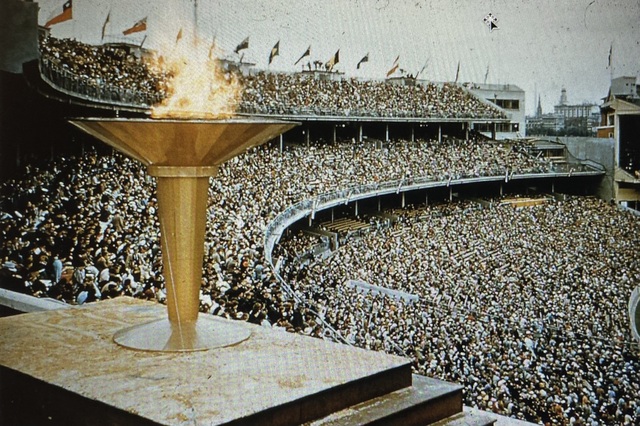
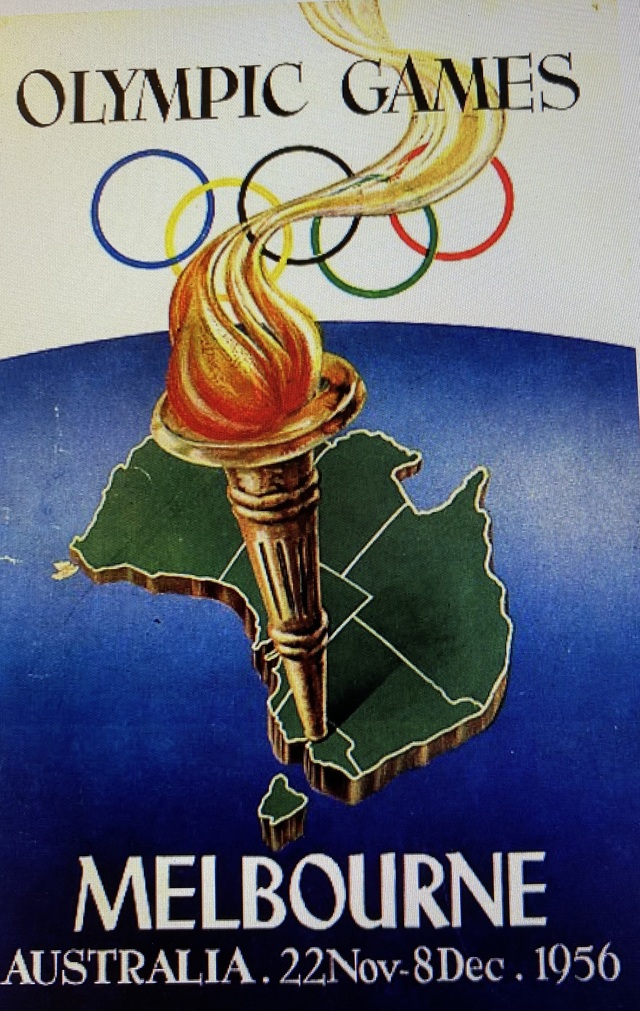
In spite of the difficulties and controversies, the Games of the XVI Olympiad was staged most successfully and have been heralded as ‘The Friendly Games’ ever since.
Next week: Highlights of the Melbourne Olympics and their impact on sport in Australia.
[Dr Ian Jobling is Founding Director of the University of Queensland Centre of Olympic Studies, and now Honorary Patron of the Queensland Centre of Olympic and Paralympic Studies. He attended the 1956 Games when a schoolboy]