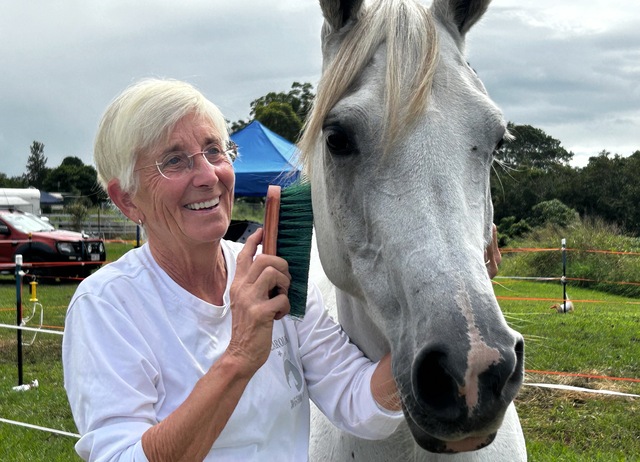
At one point Pam Karner was lying on the ground, crying to herself in pain.
Her horse was above her. That was when she realised the need to dig deep.
You do endurance riding for a sense of knowing … knowing that you can complete this ride as an individual and as a team, with other riders and with your horse.
It’s knowing that you have the knowledge, training and resilience needed at the time.
The question is: Are you ready to step up? Do have the built-in resilience?
With endurance horse riding it’s just a matter of digging deep enough and finding it.
It’s true grit – a matter of belief in yourself, your horse and the world around you.
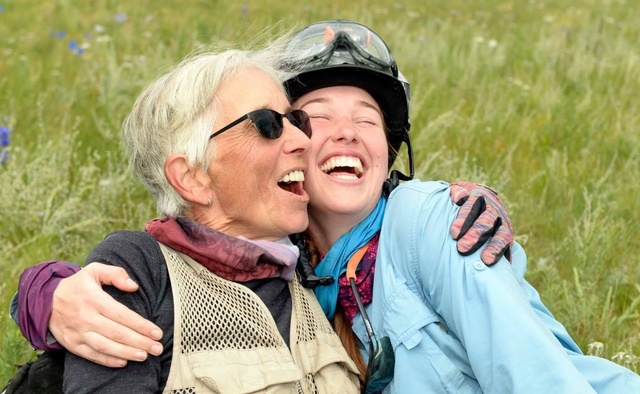
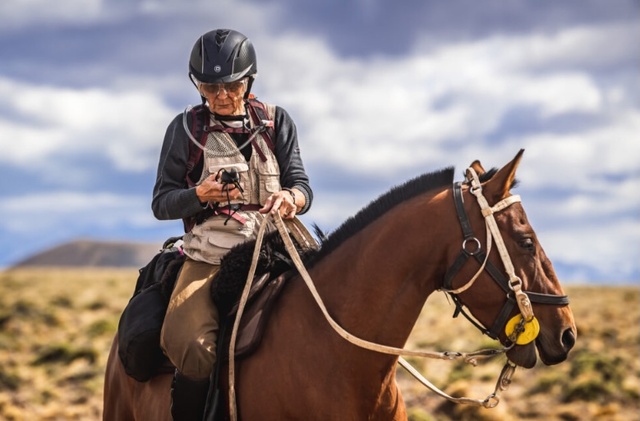
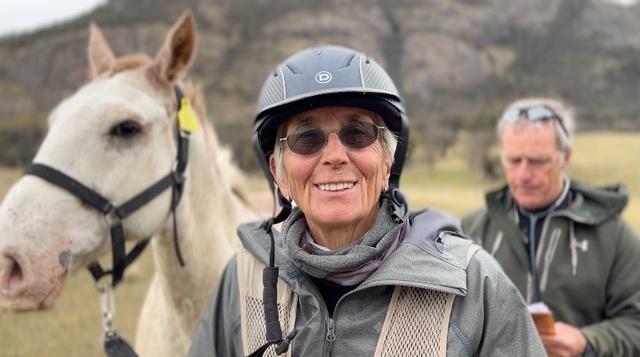
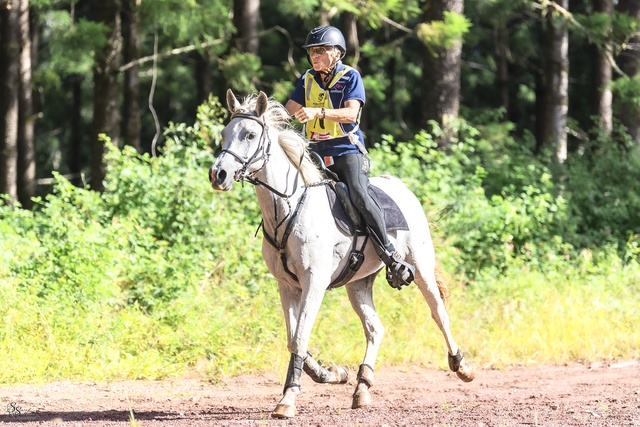
From Bellingen on the Mid North Coast of New South Wales and now in her early 70s, Pam Karner has completed the most extreme horse rides in the world.
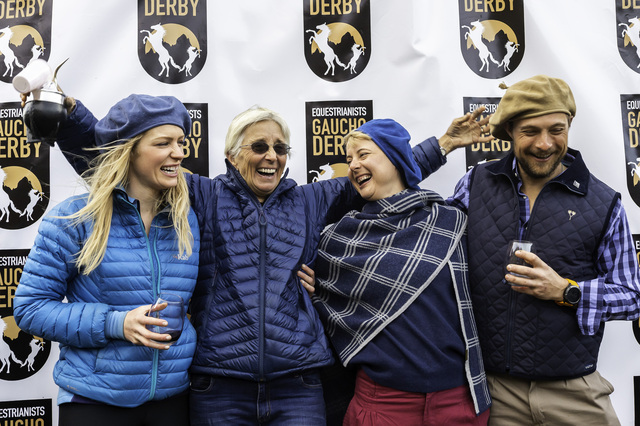
These have included the Mongol Derby in Asia and the Gaucho Derby in South America.
Pam is in Africa at the moment, participating in another exciting endurance ride – through the Maasai Mara of Kenya’s highlands.
This time her ride is with professional guides, experiencing wildlife encounters, and with the backdrop of one of Africa’s most iconic landscapes – the endless and beautiful savannah.
Riders are expected to encounter elephants, buffalos, giraffes and often big cats such as lions and cheetahs while on horseback.
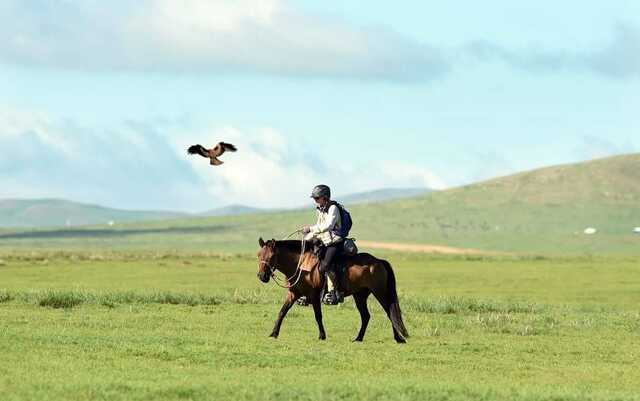
The Mongol Derby, the world’s longest at 1000km, sees riders using semi-wild horses and survival skills for the 10 days.
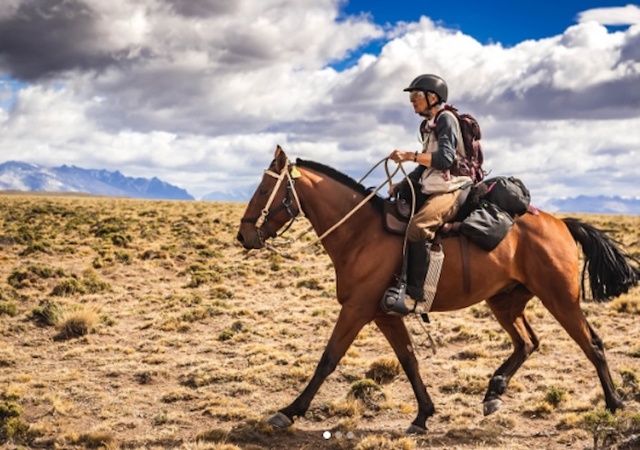
The Gaucho Derby, a 500km ride across the rugged wilderness of Patagonia in Argentina, involves switching the native horses at check-points (veterinary stations) to ensure the welfare of the animals.
Pam has also completed the Tevis Cup in the US, which is considered the toughest 100-mile ride (160km) due to its severe Sierra Nevada terrain, high altitude, and extreme temperatures.
Australia’s Tom Quilty Gold Cup, held throughout some of the more challenging Outback conditions, is among the other notoriously tough rides.
Being based at Bellingen, Pam can select a number of New South Wales rides as well as Queensland, and regularly makes the eight-hour drive to the Mary Valley.
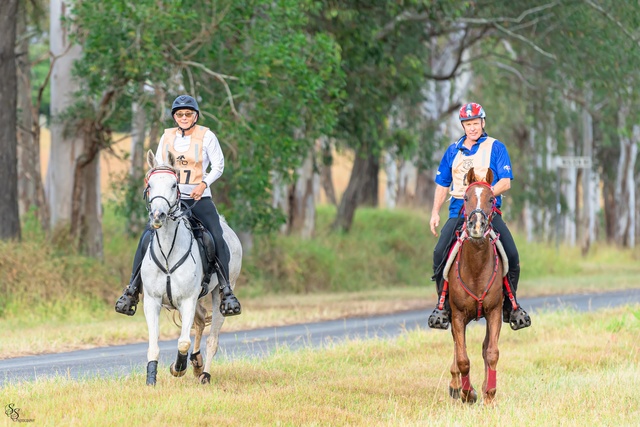
Pam chooses to start the season slowly. She attended the Stirling’s Crossing Education Weekend at Imbil at the end of January, that included some light rides.
It was at Imbil that Pam told me endurance riding gives intimacy with the horse, and the people that you meet.
“All of that. Last night, as difficult as it was after the ride, and as worried as I was about the heart rate of my horse, the water I was cooling her with was as warm as the air temperature.
“On the ride, I never once had to ask her to go forward. She found her way.
“We walked up and down every hill. I got off for some of the downhills.
“Endurance is my life … I really like horses as a species. I also like cows but horses have given me an opportunity to intimately get to know mine.
“I always have one special horse and another that’s semi retired. I get to know them.
“It’s better to get to know or do something well rather than settle for mediocrity.
“Attention to detail is the difference.”
Born in the US state of New Jersey, no-one in Pam’s family was into farming.
Her father was a painting contractor, her sister an opera singer, and her mother worked in insurance.
“No-one could figure out where my desire for farming came from.
“I saved all my money for horse-riding lessons, and went to uni in Boston, worked for a bit, then attended Cornell Uni in New York for a degree in quantitative genetics.
“There, I discovered extra courses could be taken to apply for veterinary school.”
At the University of Pennsylvania, Pam met and married an Australian, Timothy Willsallen, who was giving lectures on sheep.
Unlike Australia where most vets virtually do everything, Pam was determined to specialise as a large animal veterinarian.
“I take my small animals to a vet,” she said. “I was determined to do cattle and horses.
“We bought a property at Ithaca, in New York – just outside of Cornell.
“Tim had grown up on a property near Jugiong in southern NSW.
“We built the practice. Tim was a sheep farmer and I was a large animal vet for 35 years.
“His parents died and and we already had been farming in the US. Due to our age we didn’t want to take the family farm on, so we bought a place at Bellingen.”
Pam got into horses in the US, but didn’t start competing until their youngest son was at an age she could go off for a weekend.
Clients had told her that she would like competitive trail riding – similar to endurance but it’s a distance course.
“I had a really fast horse, and a friend said that’s an endurance horse.
“It opened up a whole new sport. I take it very seriously. My only close friends are people that ride.
“I have other friends from other parts of my life but I take it very seriously.
“I go away as the chances present.”
Most rides in South-east Queensland need an eight-hour drive and it’s a matter of taking time to keep the horse comfortable.
That has seen Pam complete her first Tom Quilty ride in 2022 – at Tooraweenah, in Central Western New South Wales and at the foothills of the Warrumbungle National Park.
As well as earning a Tom Quilty belt buckle for completing the ride, Pam won the lightweight division and her horse Flemingo Sapphire was awarded best conditioned for that division.
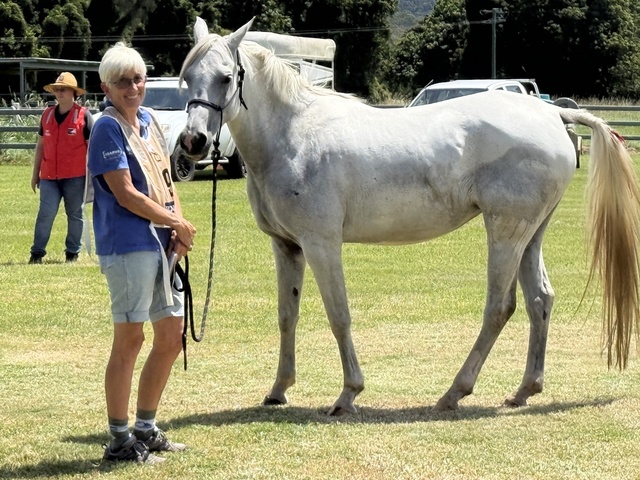
Bought as a five-year-old, Flemingo Sapphire is now nine and has carried Pam to division wins at Imbil in recent years – first lightweight in the 100km Stirling’s Classic event in 2023, and the same result in the 2024 Far-A-Way Easter Carnival 83km ride.
Pam admits she likes adventure and when the Mongol Derby came up in 2018 she grabbed the opportunity.
It was the 10th ride in the history of the event, and featured 18 men and 26 women from 12 countries, who rode across the Mongolian steppes.
“It was a big year. They are vast spaces.
“Growing up, my mother would take us to museums and we would see pictures of Mongolia. I was really drawn to it.
“I don’t do social media but somehow the ride crossed my vision and I looked at it and said: ‘That’s me, I’m going.’
“So I got interviewed and accepted.”
The herders still lead a semi-nomadic lifestyle and follow the vegetation for their livestock.
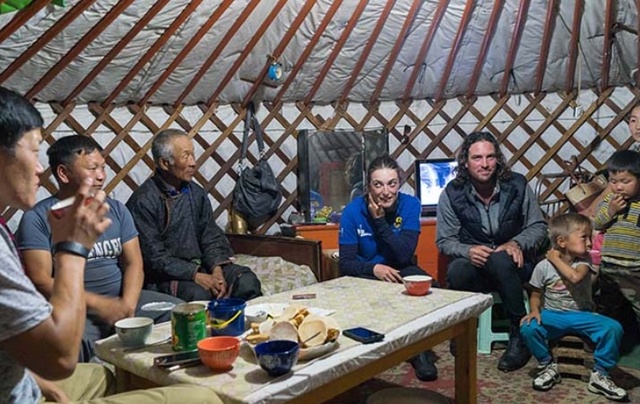
The international riders were fed a lot of Mongol food that had been cooked by the wives.
“We stayed in gers each night – the traditional Mongolian tents.
“We averaged 120km a day, for eight and a half days. Getting through was my challenge.
“At one point I was lying on ground, crying to myself in pain.
“The horse was above me. That was when I needed to dig deep.
“I’m here,” I thought. ‘I have to do this.’
“It was a combination of things and took a long time to process.”
Back in the US, Pam took the time waiting for a bus in Times Square, New York, to take her home to Ithaca, to write down her thoughts about those few weeks in Mongolia.
“The Mongolian Steppe is absolutely stunning. I cannot adequately describe the beauty of the vast plains, rivers, mountains, sky. The pungent smells and colours of wild flowers. The sharp clicking of grasshoppers the size of mice.
“On the horizon, a band of wild horses – they gallop off as you approach. Hundreds of goats part as you thunder through, often being chased by their owner’s dogs.
“All at a full gallop, all at full attention, all at maximum consciousness.
“We travelled along rivers, through rivers … deep and fast moving, through bogs like quicksand. Always forcing forward.
“There were dirt tracks in part – but one had to keep the distant mountain peak you had chosen on the horizon in sight or you were soon off course.
“Never let the tracks lull you into even a moment’s complacency.
“There were mountain passes so beautiful that at one point I found myself in The Sound of Music, escaping Austria with the von Trapp family. And I sang. And yes the hills were alive.”
Imagine a full gallop right out of the horse station and off into the general direction of the next one. You are on a semi-feral horse holding the reins and the short “goat” lead in the left hand, at the same time reading the GPS in the out-stretched right hand.
“The horses were a phenomenon,” Pam said. “They are fiercely strong and independent.
“They negotiated holes, jumped crevices, and managed to fast-trot through grassland with bizarre ridges and dirt lumps every stride for miles.
“Trust in my horse, each and every one, was a given and a must.”
Yes, Pam had a bolter and a bucker and a slow poke, and even a few just downright naughty horses.
Yet she also had exceptional animals, one of which will be a part of her soul forever.
“It is not hard to understand how the Mongolians came to conquer a third of the planet with these magnificent creatures.
“My mentors said that whatever you are worried about, that would not be your problem. They were correct.
“I did learn to navigate quite well. However, by about day five I realised that due to the stomach pain – said to be because the gluten was different – all of my competitive energy would need to be focused on just getting across the finish line.”
Pam lost between four and five kilograms during the ride.
“We all helped and encouraged each other. The human spirit is a wonderful thing.
“I was given food people thought I could digest from their precious supplies.”
Pam ponied horses – to lead one or more horses while riding another – chased horses, and untangled horses from slipped saddles and reins that had wrapped around feet.
“The very best moment for me was when my friend’s horse dumped him, bolted full tilt, really full tilt, back in the direction of the last horse station.
“Then I was able to get my slightly inferior horse to gallop so fast as to catch up to him and I leaned out of my saddle and caught the son of a gun.
“It felt like I was riding in an episode of Bonanza.”
The herders and their families were generous and gracious. Riders were treated as honoured guests and each horse station was like a mini rodeo.
“Usually three herders had brought their horses. You would pick one, he would help you saddle up and then almost without exception he would ride it first for you.”
The weather did not disappoint. From a nasty hailstorm on Day 1 creating hypothermia in several riders, to rain and wind on Day 8 – so strong the ponies could barely move forward, and the rain felt like a leather lash as it whipped onto skin.
As suddenly as that storm appeared, a bright horizon and sun followed. How joyous both riders and horses felt.
The nights were really cold – that meant wearing both a down coat and all clothes when you got into the sleeping bag.
The days were often hot. Lips cracked and skin peeled.
“Mongolian weather would never be called subtle.”
Pam’s ego was finding it a bit difficult being at the very back of the pack at the finish. Yet at the awards her unofficial placing was 26 of 44 starting.
This was due to penalties being subtracted after the finish for other riders.
Pam was most proud at having ridden the entire derby and being the “oldest” rider to complete.
To take part, riders needed to raise funds through donations and sponsorships and when completed Pam’s share was: Doctors Without Borders received over US$4000 and close to 500 British pounds for Cool Earth – a charity that protects the largest rainforests in the world by supporting the indigenous people who live there.
THE WILDS OF PATAGONIA
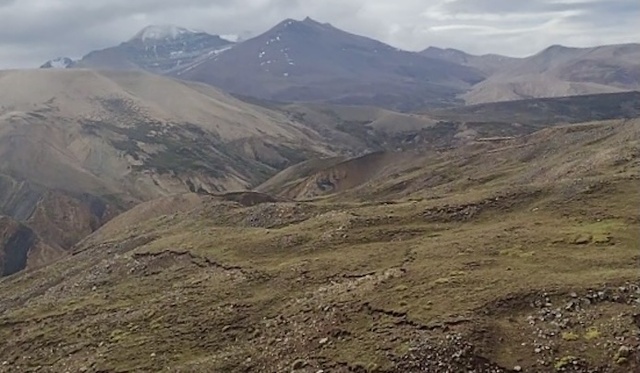
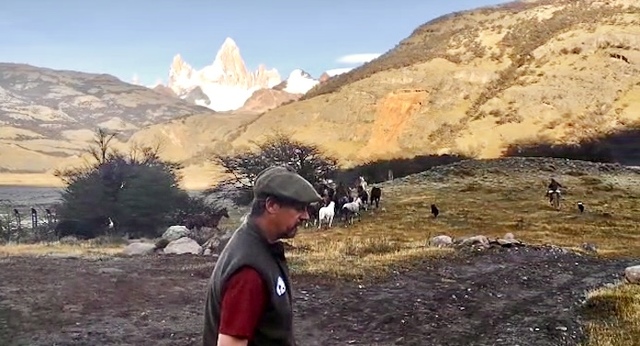
The Gaucho Derby in 2022, unfolds over 10 days in the rugged wilderness of Patagonia in southern Argentina.
Held in the foothills of the Andes and close to the border with Chile, the Gaucho was the better of the two rides, Pam said.
“It required a lot more – a different set of skills. You carried your food, a tent and tiny cooker stove.
“I became pals with some people – from Ireland and Switzerland. Lifetime mates.
“What was really neat was I was 68, going on 69. We were in the Andes. On Day One, everybody got off their horses to walk up.
“I had been training, but remember there was 35 years difference in our ages, and I said: ‘That’s the last time you will have to wait for me.’
“Persistence, determination, fitness – you have to be ready for it.”
The name of the ride comes from the South American cowboys, gauchos, who herd cattle across estancias, similar to Australian cattle stations.
The race is a test of endurance, a true survival adventure on horseback. Spanning 500km, riders are pushed to their limits as they must adapt to seven different horses throughout the race.
Each horse, unfamiliar and unpredictable, presents a new challenge, amplifying the perilous nature of the race.
The terrain is treacherous, varying from steep inclines to hazardous descents, where every step can spell triumph or disaster.
This is not merely a race; it’s a battle against the elements, the unknown, and oneself.
Pam got quite ill while riding and was very much near the end of the pack.
“It was me, not the food or anything.
“I hate to admit it. I took too many electrolytes and not enough water.
“But I completed, which was a big deal. I did every kilometre – every one of them.
“Two 40km rides in two days can take it out of you.”
Start camp was on an estancia (La Perseverancia) that had 10,000 sheep and 800 Hereford cattle. There were seven hexagonal domes set up that, despite being pinned to the ground, refused to stay put thanks to the challenging Patagonia wind.
There were lessons on navigation, familiarisation with the tack and the horses, learning how to use an emergency “In Reach” device and getting scared to death by the medics.
Making weight caused much nail biting: 10kg for tent, sleeping bag, food, stove, set of dry clothes, the saddle bag itself. There was not much room for extras.
“Toby and Sarah, the Swiss brother and sister pair in my dome, made me laugh without any idea of what they were saying.”
“I met Ciara in the bathroom as we were contemplating the six-inch by six-inch towel of sorts for showering. There were now four of us, a team.”
Most things sort themselves out on the trail, Pam said. Each rider had chosen a horse number from the hat and they then had to catch that horse.
Fellow riders were allowed to help – but no gauchos.
Some clever strategies were developed, but then the horses did not like the saddlebags.
“Just getting them securely fastened behind the saddle was a feat. The best way to guarantee a bucking horse is to have loose or unbalanced saddlebags.
“The ground is very uneven, but these horses negotiate it so well especially at a canter and gallop.”
Pam’s first clue to the overall theme of her Gaucho Derby ride came about 5km from where they would stop the first night.
Her stirrup broke then, when she dismounted, her chaps fell off – and a safety lead that had been “secured” to the saddle had gone.
With the stirrup fixed from a pile of scrap metal at the camp, finding a spare lead and cow suture used for sewing the pants, it was back in business.
“The foursome worked immediately. I had much anxiety about navigating even having been tutored by Tim at home.
“A gaucho at start camp had told me: ‘Don’t worry, go in the direction your GPS directs you and when you run into a mountain, go around it.’
“Well, that’s pretty much what we did. We used our maps, although being 40 years old they were not always accurate.”
The rock bogs are an evil enigma. You would be walking up a shale mountain, watching every step closely and suddenly drop entirely to your horse’s belly in a bog.
Pam went completely in and fortunately had a horse willing to give his all to fight for survival.
“He thrashed and thrashed until he hit a bit of hard ground and pulled us out. I was quite shaken and didn’t lead for quite a while.
“Then the mountains, oh the mountains. The winds would screech past us. The condors just glided by.
“We had to hold onto our helmets and the horses seemed to be moving in place. These were the spots that I most appreciated Toby and Ciara navigating and Sarah’s reassurances – her favorite phrases were: ‘We will get there’ and “It’ll be OK!’
“We were in Star Trek, this couldn’t possibly be real.”
In the end it was hard to believe that the finish was just in front. However, the flags scared the horses and started a chain reaction of crashes across the line.
“Funny and fitting. Equal 13th place although there have been some adjustments to that apparently.
“Who cares, I would have done nothing different. It was awesome, and I thank my friends for their devotion to each other and our horses.”
Pam was awarded the Gaucho Award – it has something to do with being the most gaucho-like and is considered an honor.
For this ride Pam raised over $10,000 for the Enfield Food Shelf- a non-profit organisation in Connecticut that offers essential food items and support to families in need.
So what is next for Pam Karner?
The Far-A-Way Easter Carnival at Imbil and the 2016 Tom Quilty Gold Cup at Stirling’s Crossing are on the cards.
Yet for someone who tackles and finishes events such as the world’s toughest horse races, Pam puts her efforts into perspective by relating to the 13-year-old boy in Western Australia who recently swam 4km in the open ocean to get help for his mother and siblings after they had been swept out to sea on inflatable kayaks.
He had not completed a swimming certificate for 350m. Yet managed this effort.
“This shows what people are capable of when left to their own determination and resilience.
“The minute you start saying that you can’t do stuff, you start to shrink. I don’t want to shrink.”