
The term “news desert” was coined by American journalist and academic Penelope Muse Abernathy, chair of the Hussman School of Journalism at the University of North Carolina, to explain the impact on society of an economic phenomenon that has been escalating across the United States since 2004.
In 2020 in regional Australia, the news desert phenomenon is on steroids.
In late March Australian Community Media (formerly Rural Press) blamed the rising Covid-19 pandemic for its closure of about 160 regional newspapers across Australia, saying that they would resume publication in June. As of the end of November, fewer than 110 are listed on ACM’s website. In late May Rupert Murdoch’s News Corp announced the closure of 112 print newspapers across Australia, including 36 that would close completely and 76 that would remain as online presences only. In Queensland alone, 20 print newspapers disappeared overnight.
News Corp did not specify how much local reporting would continue in the digital space, but the evidence locally seems to be not much, with digital news mostly consisting of “clickbait” drawn from all over. At the time, Media Entertainment and Arts Alliance chief Paul Murphy told Guardian Australia: “The closure of so many mastheads represents an immense blow to local communities and, coming off the back of hundreds of previous regional closures during this period, it underlines the seriousness of the crisis facing regional and local journalism.”
And yet two prominent Australian journalists turned academics see “green shoots” rising up in the Australian news desert.
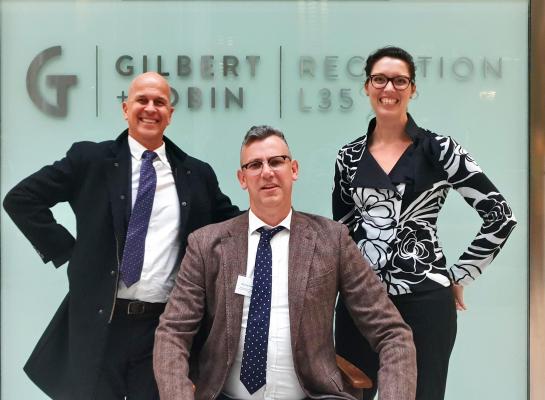
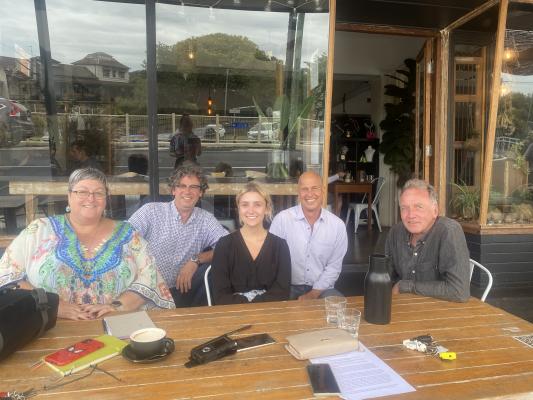
Professor Peter Greste, chair in Journalism and Communication, and Research Fellow Dr Richard Murray at the University of Queensland, working with Dr Rebecca Ananian-Welsh of the T.C. Beirne School of Law, are investigating “local and regional journalism in times of change”. They began their study tour last week with a series of interviews conducted with Star News Group journalists and editors at newspapers across southern and central Queensland.
The Star Group, which not only kept regional newspapers alive through the worst of the lockdowns but also brought newspapers like this one back to life in print and created new titles to fill the void in other areas, has been identified as a leader in the green shoots revival.
If the name Peter Greste sounds familiar, it’s because in 2014 and 2015 he spent 400 days in Egyptian jails after he and two Al Jazeera colleagues were falsely convicted of “spreading false news and supporting the blacklisted Muslim Brotherhood”. He was sentenced to seven years jail but was deported in early 2015 and subsequently returned to Australia, where he has been fighting for freedom of the press ever since, jokingly describing himself as “Australia’s most famous terrorist”. Both he and Murray had distinguished careers as foreign correspondents in war and disaster zones, but both also had beginnings in regional journalism, and they have happily returned to that field to discover what can be done to combat the spread of news deserts.
Says Murray: “Murdoch pulling out of regional newspapers really sent shock waves through people who care about democracy, representation and accountability in our communities.
Penelope Muse Abernathy has studied the communities of the “fly-over” states in the US where this news void has been a huge problem, and found a correlation between losing their media and a rise in local corruption. She says that when communities lose their media they lose their sense of identity.”
Murray is also concerned about social media attempting to fill the news void, “because news media is mediated, whereas Facebook and Twitter are unmediated, and we’ve seen what can happen there, with everyone sharing their own unfiltered truths without a basis of research or facts”.
Murray and Greste hope to find answers to what they regard as one of the major problems facing liberal democracies – the need for democracy and capitalism to coexist. Says Murray: “When it comes to media, it’s an uneasy coexistence, and we are now witnessing the ravages of that. Journalism is not like other industries and it needs to be decoupled from that coexistence, but the ABC is not the answer. Landline is great and we should make news out of our primary producers, but to say that is all you need from regional journalism is wrong. They have a handful of great regional reporters but they can’t possibly provide adequate coverage of the huge territories they are given.”
The green shoots that the UQ team is finding in regional Queensland are at community newspapers. Murray says: “Papers like Noosa Today are a mirror for the community, but the reality in many areas is that the providers of the content that creates that mirror are overworked and underpaid. We want to examine the economic modelling and see what can be done to change that, but we also want to look at the interaction between small newspapers and the law, in areas like defamation and source protection, and see how our expertise can help there too.
“Above all, we want to figure out ways to make regional journalism sustainable, and help the spread of information and diverse voices across Queensland, and across the country.”