Crunch time is looming for the Noosa Oyster Ecosystem Restoration Project, Noosa Parks Association president Michael Gloster told guests last Friday at a forum talk.
Dr Gloster said the project had been funded with $1.2m from The Thomas Foundation, $1.2m from Noosa Council and a further $1.2m from The Nature Conservancy (TNC).
“We thought this would go through quickly with funding. As it transpired we still can’t get (state government) permits,“ he said.
With $1m left in funding, the real crunch will be Council’s review of the project due in a couple of months and whether Council can be persuaded to renew its funding,“ he said.
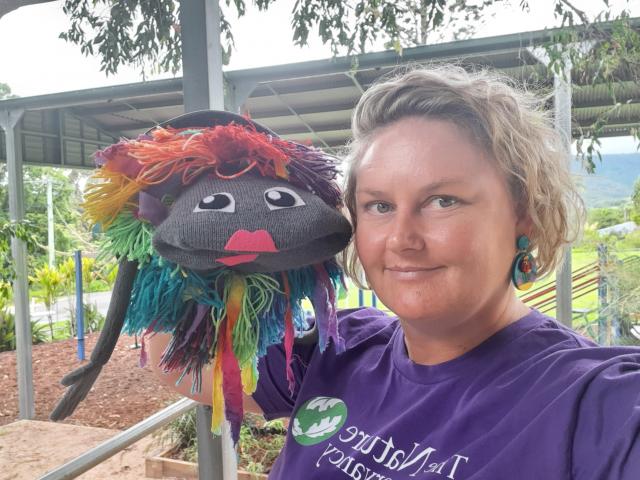
The Nature Conservancy’s Queensland Oceans program coordinator Megan Connell spoke about the project and the organisation that was currently working in 70 countries on a range of projects including shellfish reef restoration in several areas in Australia.
She said the Noosa River project differed from their other reef restoration projects because it was intertidal, comprised of small spaces, was heavily used by the community, and was a place people were passionate about.
Historically, there used to be a lot of oysters in the river and although some still exist on pylons in marinas and rocky areas it did not form a “functional ecosystem“, she said.
They are still here but they are not functioning as an ecosystem should – filtering the water, attracting fish and providing an underwater habitat, she said.
Megan said the project had undertaken mapping and modelling of the river including mangroves, seagrass and existing oyster reefs. It had conducted water quality tests and sediment tests and surveyed river users.
It has identified four sites for proposed oyster reefs at Tewantin, Goat Island and two in Noosa Sound. The reefs at Noosa Sound would hug the shoreline and be more shallow while the deeper sites of about 2m at Tewantin would require larger amounts of rock and be more expensive to build.
Megan said just like construction projects on land, the project required building permits and engineering approval.
The next steps were to obtain the permits, complete construction, then seed the oysters with an expected time line of four years for completion, she said.
TNC hopes to begin construction in June which would be an ideal time due to weather and reduced river traffic and a barge and crane equipment would be a sign of the work in progress, she said.
Megan said the community had already been engaged in the project and this was set to be expanded and include student education through the Noosa Environmental Education Hub.
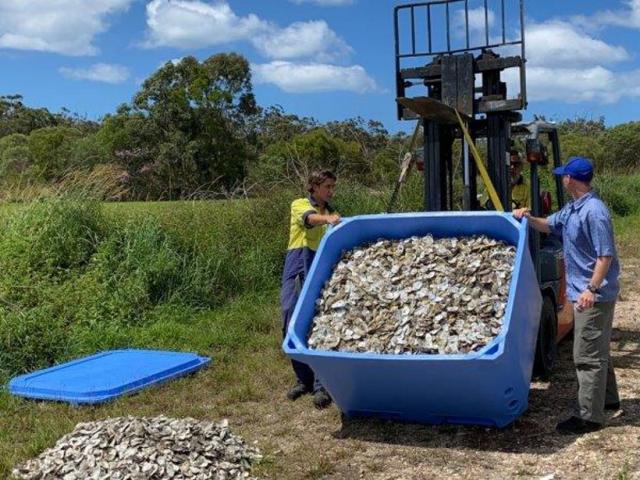
She said empty oyster shells had been collected from three Noosa restaurants and the Mooloolaba Fish Market and washed and dried out at Noosa Landfill and Resource Recovery.
After two months at the tip, the shells can be taken to Bribie Island Aquaculture Research Centre to be seeded with oyster spat.
In addition, Noosa Integrated Catchment Association (NICA) volunteers have been working with TNC in an oyster gardening program, growing oysters from Bribie Island spat in collected oyster shells in baskets in controlled areas off jetties. These are to be introduced to the oyster sites to be built by TNC.
Megan said a number of PhD students would also be undertaking research on issues surrounding the project, including Maddison Brown who has already been studying the viability of growing seagrass on oyster infrastructure.
“Marine ecosystem restoration is still not so well understood,“ Megan said.
“We are world leaders in this type of restoration. We have the best scientists onboard.“