Who knew gay male swans are the most successful couples in raising signets to adulthood, lizards live in multigenerational family groups and snakes sometimes lay eggs in communal nests?
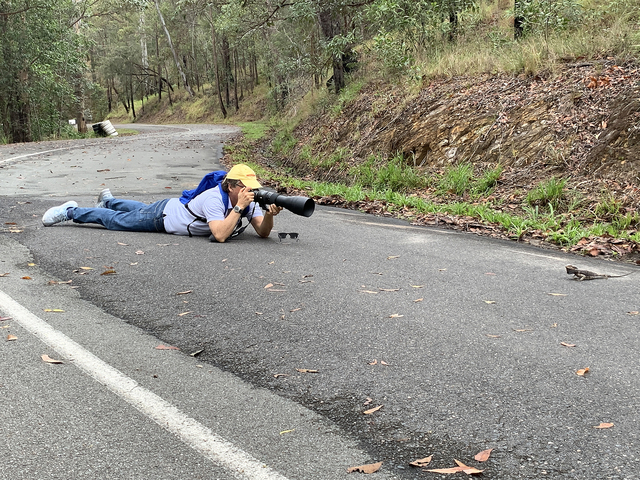
These are just a few of the mating habits of Noosa wildlife that author, wildlife photographer, Noosa Parks Association (NPA) president and former mayor Tony Wellington told guests last week at NPA’s Friday Forum.
“While we humans attempt to project our preconceived notions of appropriate behaviour onto wildlife, nature often refuses to conform to our expectations,” he said.
Tony said the dominance, until recently, of male biologists led past information to have an overemphasis on male animals, and confirmation bias (the tendency to interpret new evidence as confirmation of one’s existing beliefs or theories) led to a serious impost of Christian nuclear family values on animal world.
But in reality “a lot of weirdness goes on and we can’t impose human morals on native wildlife,” he said.
Among the “weirdness”, when it comes to attracting a mate, research has shown for frilled lizards, females are attracted to males with the most colourful frills and the male crabs that grab a females attention are the ones who have both the biggest claws and the ability to wave their claws the fastest.
It’s not size that matters for Golden Orb spiders but maybe speed is important. The males are much smaller than females and live in a section of the same web specially fashioned to tell the female he’s a male and not to be eaten, but there’s always a good chance of him being eaten if he doesn’t get out of the females way in time.
With about 90 per cent of bird species forming permanent bonds with their mates, the need for birds to attract a mate has been overrated, though many bird species are not monogamous, Tony said.
A recent study found kookaburras to be one of few species to be completely monogamous and maintain fidelity with family groups often raising the young.
Others such as Magpie geese sometimes breed in pairs, but more often have polygamous families with one male and two females.
“Both females will share the nest and lay their eggs and have eggs fathered by the one male,” Tony said.
When it comes to raising their chicks favouritism and infanticide are not uncommon.
Pelicans, for example, nest in colonies. They lay two eggs a couple of days apart and generally the second one is killed by the older one.
Yellow tailed glossy black cockatoos lay two eggs, the second egg is usually ignored and dies in the nest.
There’s a lot of cooperative breeding goes on as well, Tony said.
“Sometimes some swallows will only lay a couple of eggs in a nest and decide there’s not enough eggs and abandon the nest and another pair will take over the nest and lay their eggs and raise a bigger brood.”
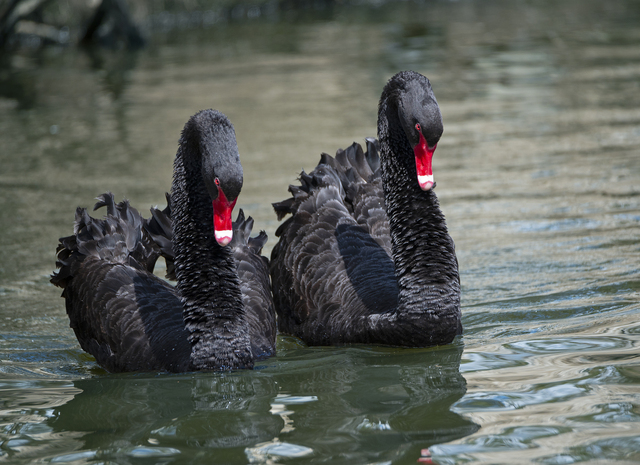
Same sex partners among birds is quite prevalent, Tony said, with a quarter of mates in black swans being same sex, mostly males.
These same sex partners manage to have babies either by chasing off a heterosexual pair or chasing off a female that lays an egg after one of the males has mated with it.
“Science has shown male couples have better success in raising signets to adulthood,” he said.
A number of animals including turtles, some lizards and bush turkeys engage in temperature sexual determination and this has implications with global warming, Tony said.
In bearded dragons, for instance, below 32 degrees more males are hatched, above 36 degrees the offspring are 100 per cent female.
A recent study undertaken at University of Sunshine Coast found six per cent of birds, including magpies and lorikeets, undergo sex reversals. DNA tests have shown their physical sex to be different from their genetic sex.
It’s unknown whether this has always been the case or has resulted from man made interference such as the presence of endocrine disrupting chemicals entering the food chain through sewerage systems.
“We’ve got an awful lot to learn and we’re only scratching the surface,” Tony said.
“You’ve got to stop making assumptions before you go out and look at wildlife because nature doesn’t follow rules and nature doesn’t share our views.”