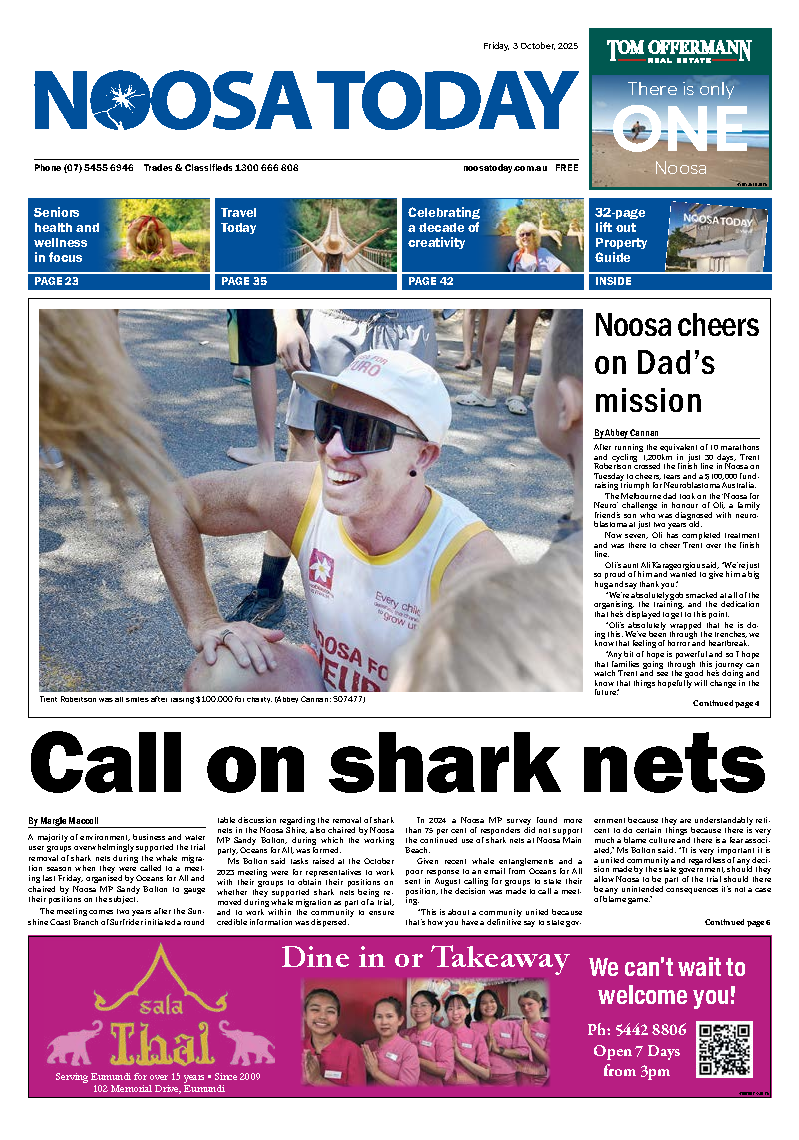

Oceans for All (OFA), formed in 2023, is a working party of representatives from multiple groups with a shared goal: to replace and update the Shark Control equipment in the Noosa area with modern technology that protects both humans and marine life.
The Queensland Shark Control Program (SCP) is a catch-and-kill program aimed at mitigating shark risk by reducing the coastal shark population. This is achieved through continuous fishing using mesh (shark) nets or baited drumlines (Cardno review, 2019). In essence, the program operates as a shark culling program. Neither baited drumlines nor shark nets provide direct protection to beachgoers; the only protection they offer is the random chance that the shark caught is not the one that may interact with a water user.
The 2024 KPMG report supports this view, stating that “the capture and euthanasia of target sharks serve as a practical proxy for reduced human-shark interaction, based on the logic that removing a shark situated near water-users eliminates the potential risk of that shark interacting with humans.” The same report also notes that the consensus among stakeholders is that SCP operations are not entirely effective in safeguarding water users.
The 2020 fatal shark attack at the netted Greenmount Beach, and the fatality at Bargara Beach in 2024—a beach with numerous drumlines—sadly demonstrate this limitation. Several recent shark attacks in NSW have also occurred at beaches where shark nets were in place, including the death of a 12-year-old.
A 2020 James Cook University research paper, The Scientific Basis for Global Safety Guidelines to Reduce Shark Bites, available on the Queensland Government website, makes an important recommendation. Supported by multiple research papers, it advises that beachgoers should not swim or surf near shark nets, as any marine animal caught in the nets may attract large sharks to those locations, increasing the risk of negative shark-human interactions.
The peer-reviewed research Increased Shark Bite Survivability (2022) identifies another often-overlooked factor: during the same period that shark nets were introduced in Queensland, lifeguard services and emergency medical response also improved. While fatal attacks declined following the introduction of nets, the overall number of shark bites continued to increase. The research found that improved observation (such as drone programs), better-trained first responders, and enhanced medical equipment had a greater impact on reducing shark fatalities than the SCP itself.
Recent motions by Noosa Mayor Wilke and Councillor Lorentson support the work OFA has been undertaking. Importantly, the call is not to remove shark control measures at Noosa, but to replace shark nets with updated programs that provide real protection for swimmers and beachgoers.
Claims circulating in the media and on social media that “removing” shark nets at Noosa will put lives at risk are misleading and untrue. Research shows no statistical difference in the number of shark bites at netted versus non-netted beaches since 2000.
In NSW, The Sydney Morning Herald reported that there were no shark attacks at beaches where smart drumlines were combined with drone surveillance. Prior to their implementation, those same beaches had recorded 19 attacks, suggesting that smart drumlines may reduce shark-human interactions.
This pattern is also evident in Queensland. In Cairns, shark nets were replaced with smart drumlines in 2013, and in Mackay in 2015. Since those changes, there has not been a single shark attack at either location, despite both areas previously recording shark-human interactions.
One persistent myth in the Noosa shark net debate is that there have been no attacks at Noosa Main Beach since nets were installed. This claim is incorrect. The Australian Shark Incident Database, maintained by the Taronga Conservation Society and containing records dating back to 1791, documents several incidents.
The first recorded shark attack at Noosa occurred in 1961 and was fatal. A local resident was bitten by a bull shark and died three days later from blood poisoning. Shark nets were installed one month after this incident.
In 2001, a surfer at Noosa Main Beach experienced a shark encounter when his board was bitten. In 2013, another surfer’s board was bitten, and he sustained minor bite marks to his arm. In both cases, a tiger shark was identified as the species involved.
The Noosa Shire has experienced two additional shark-human encounters. In 2002, a surfer was injured by a whaler shark at Sunrise Beach. In 2011, a swimmer sustained a minor injury at Peregian Beach after provoking a wobbegong shark.
Based on these figures, it can reasonably be concluded that there is no meaningful difference in the number of shark incidents at netted beaches compared with non-netted beaches in the Noosa Shire. The species most associated with incidents in the area is the tiger shark.
However, shark bite statistics must be used cautiously when assessing the effectiveness of the SCP. The KPMG review highlights several limitations, including under-reporting, the inclusion of provoked bites, unreported near-misses, and incidents occurring in the open ocean.
The review also notes that between 2001 and 2020, Queensland recorded 67 shark attacks, including 10 fatalities—an average of 3.35 incidents per year. Between 2021 and 2024, only four attacks were recorded, averaging 1.04 incidents per year. Several of the attacks since 2001 occurred at beaches where shark control equipment was in place.
A Noosa Today article asked why groups such as OFA—described in the article as advocating for shark net removal (a description we dispute, as we support replacement rather than removal of shark control measures)—cite the KPMG review in support of their position.
The answer is straightforward. Like any robust review, the KPMG report examines both sides of the issue. It should be read in full and assessed based on its data and conclusions, rather than selectively quoted to support a predetermined position. The report presents multiple recommendations to government following its analysis.
Recommendation 3.2 specifically calls for a trial removal of nets during the winter whale migration. This recommendation aligns exactly with what OFA and the Noosa Council are advocating.
When Is a Shark Not a Shark?
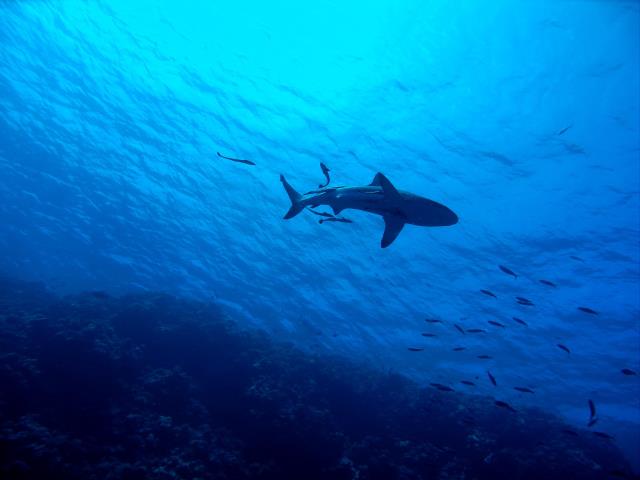
The Queensland Shark Control Program 2025 report lists 37 shark species caught by the SCP in that year, but only seven are classified as “dangerous” and included on the catch-and-kill list. In reality, only three species pose a significant risk to human life: the bull shark, tiger shark, and white shark. Of the remaining four species classified as “dangerous,” only one has ever been recorded in a coastal attack, resulting in injury in 1980.
Debate around the SCP should therefore focus on these three species. Sharks caught that are not on the dangerous list are released alive where possible and recorded as by-catch. This distinction is often overlooked, with the incorrect assumption that all sharks caught by the program are dangerous to humans.
According to the Queensland Government QFish website, of the 3,623 sharks caught by the SCP in 2025, only 996 sharks were species that could potentially cause harm to humans. Some of these were juveniles and posed little risk. The remaining 2,627 sharks were classified as by-catch and released.
OFA bases its policies and recommendations on the most recent government review (KPMG) and the latest Noosa-specific catch data.
Data supplied by the Department of Agriculture and Fisheries (DAF) shows catch figures for Noosa Main Beach nets and drumlines from 2019 to 2023. During this four-year period, 13 bull sharks were caught (10 in nets and three on drumlines), 33 tiger sharks (29 on drumlines and four in nets), and two white sharks (one in a net and one on a drumline).
This equates to an average of 3.25 bull sharks per year, a reduction from the 7.25 annual average reported in Noosa Today for the preceding eight years. Tiger shark numbers remained relatively stable, averaging 8.25 per year from 2019–23 compared with 6.75 previously. White shark numbers increased slightly from 0.3 to 0.5 per year.
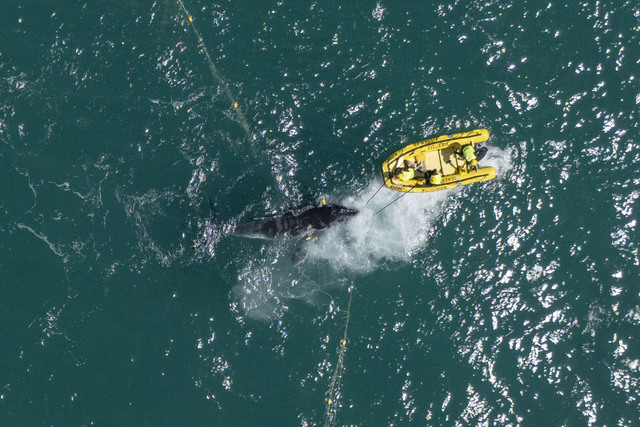
Notably, based on these averages, more whales than bull sharks were caught by the Noosa main beach SCP last year.
These figures highlight that catch numbers fluctuate annually sometimes widely. Marine biologists consulted by OFA inform us that weather patterns play a significant role, with warmer waters associated with El Niño weather events, such as the one we are experiencing now, consistently increases shark activity.
The KPMG review and Noosa data also show that clustered drumlines, which cover an area similar to nets, are more effective at catching dangerous sharks than nets alone. In Noosa, the two nets caught 19 dangerous sharks over the reported four years—an average of 9.5 per net—while the three drumlines currently in place, caught 33 dangerous sharks over the same period, on average 11 per line.
If shark culling were the primary solution for protecting beachgoers, drumlines would clearly be the more effective tool.
Noosa has historically been an outlier, with more bull sharks caught in nets than on drumlines, though this pattern is not reflected elsewhere in Queensland, where the figures are much closer.
Shark population trends remain a topic of debate. Within the context of shark control programs, the populations of the three dangerous species are the only relevant ones that should be considered. While some in the fishing community report high shark numbers, dive boat operators and whale-watching businesses report difficulty locating sharks. Further research is needed before a complete picture emerges.
Fish depredation is another important issue. A local PhD student has conducted research in this area that is currently undergoing peer review. Using small cameras attached to fishing lines, the research found that much of the depredation attributed to sharks was actually caused by fish escaping the line or by other species, such as barracuda.
Where sharks were involved, they were generally not large sharks that could be considered dangerous to humans.
Peer-reviewed research has established that tiger and white shark populations have been declining for some time. Bull shark populations remain less well understood, though local researchers are currently working on population estimates. Until this research is completed, OFA will not adopt a position on shark population and fish depredation and will continue to base its policies on established, verifiable facts.