
A $6.9 million global research project involving USC as the only Australian partner has developed a new monitoring and intervention system to slow or even reverse the progression of frailty among older adults.
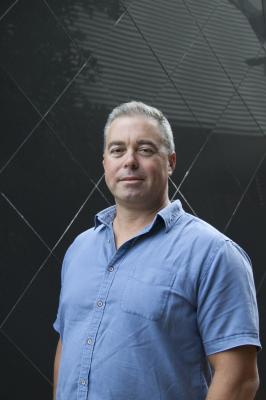
USC neuropsychology researcher Associate Professor Mathew Summers said the preliminary findings were exciting because they indicated that the IT-based tailored health care platform and program could help older adults live in their homes longer.
The world-first approach is called MyAHA (My Active and Healthy Ageing).
Dr Summers was awarded $496,000 by the National Health and Medical Research Council towards the four-year European Union Horizon 2020 consortium grant project that has just been completed.
The Sunshine Coast was the only Australian site for the research, which recruited more than 40 older people between Noosa, Caloundra and the hinterland for an 18-month trial.
Dr Summers was one of the project’s principal investigators, alongside colleagues from 16 other universities and private institutions across Europe and Asia.
“This new IT-based platform is designed to identify and monitor older adults exhibiting early stages of frailty, then develop individually-tailored interventions that can slow the progression of frailty or even reverse it back to normal function,” he said.
“We looked at all types of physical, cognitive and social frailty, such as problems with mental processing and memory, isolation and loneliness, depression and anxiety, nutrition and sleep.”
More than 250 volunteers worldwide participated in the project (www.activeageing.unito.it). They were split into two groups, with half testing the system and half acting as a control group.
Data from wristband sensors that tracked physical activity and from surveys of participants’ cognitive health, nutrition and moods was fed into a web-based platform and analysed for changes over time.
“We then developed algorithms to automatically identify patterns of change that indicated potential clinical changes in function,” Dr Summers said. “For each pattern, we prescribed interventions targeted towards those weaker areas.”
Researchers visited participants individually in their homes and as groups in the community to assess and intervene.
“While the results of the research are currently under peer review for publication, we can say we found a maintenance and slight improvement in quality of life for older people who received the intervention, and a significant decline in quality of life for the control group.”
Dr Summers said the system supported older people staying in their own homes for longer.
“When an older person lives at home, the biggest risk is a fall and the mostly likely trigger is their own physical frailty,” he said.
“By targeting early indicators and halting or reversing the progression of frailty, the ongoing benefit is to reduce their risk of falls and increase their likelihood of living at home for longer period of time with minimal support.”
Dr Summers said USC’s work within such a large international consortium gave it access to advanced technologies and leading researchers, as well as multilingual platforms for migrants.
“The next step is to gain investment from companies to pursue commercialisation, to make the platform available more widely,” he said.