
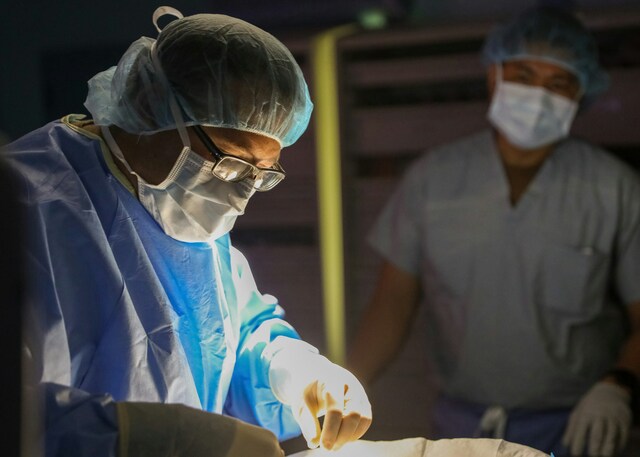
A leading Noosa surgeon has urged residents to undertake the free national bowel screen test.
Dr Heinrich Schwalb, general surgeon at Noosa Hospital, said the hospital received about 50 bowel cancer presentations annually.
“Do the National Bowel screen test,” Dr Schwalb said. “ It is free and the government send it to all citizens every second year from age 50 to 76. Previous statistics show that the uptake was (only) about 40 per cent.”
He said about 23 per cent of bowel cancers were genetic.
“A healthy lifestyle is very important.”
“See your doctor if any unexplained abdominal symptoms, weight loss or iron deficiency.”
About 280 Australians are diagnosed each week with bowel cancer – Australia’s second deadliest cancer.
A team at the Colonoscopy Clinic mapped cases of bowel cancer on the Sunshine Coast, using data from the Australian Cancer Atlas.
The team found the coast’s business centre, Maroochydore, had 19 per cent more cases than the national average, while Noosa and Mooloolaba were six per cent below the national average.
The Colonoscopy Clinic operates across several sites on the Sunshine Coast, including Caloundra Private Day Hospital, Nambour Selangor Private Hospital, Noosa Private Hospital and Sunshine Coast Day Surgery.
Gastroenterologist, Dr Tim Lyon from Colonoscopy Clinic Sunshine Coast, said the data told only part of the story, with more younger people now testing positive.
“The rate of detection in Australians aged under 50 has been steadily increasing over the last 10 years,” he said.
As a result, the National Bowel Cancer Screening Program has been expanded, so that anyone aged 45-50 can register and request a kit in the mail. Australians aged over 50 are automatically sent a kit.
“The early onset of colorectal cancer is influenced by a range of factors, including diet and lifestyle,” Dr Lyon said.
“I know there is an ‘ick-factor’ in the screening test. I know there is an ‘ick-factor’ in having a colonoscopy. But if it’s caught early, colorectal cancer is very treatable.”
“Polyps can take up to 10 years to turn into cancer, so early testing and removal can save lives.”
High risk factors include family history of bowel cancer or polyps, a sedentary lifestyle, obesity, smoking, excessive alcohol intake and a diet high in processed or red meat.