Prostate cancer is the most diagnosed cancer and a leading cause of death by cancer in Australian men.
Early detection is key to successful treatment but men often dodge the doctor, avoiding diagnosis tests until it’s too late.
Now an artificial intelligence (AI) program developed at RMIT University could catch the disease earlier, allowing for incidental detection through routine computed tomography (CT) scans.
The tech, developed in collaboration with clinicians at St Vincent’s Hospital in Melbourne, works by analysing CT scans for tell-tale signs of prostate cancer, something even a well-trained human eye struggles to do.
CT imaging is not suitable for regular cancer screening because of the high radiation doses involved, but the AI solution could be used to run a cancer check whenever men have their abdomen or pelvis scanned for other issues.
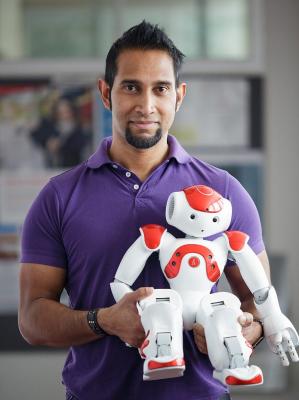
RMIT’s Dr Ruwan Tennakoon said CT scans were great for detecting bone and joint problems but even radiologists struggled to spot prostate cancers on the images.
“We’ve trained our software to see what the human eye can’t, with the aim of spotting prostate cancer through incidental detection,” he said.
“It’s like training a sniffer dog – we can teach the AI to see things that we can’t with our own eyes, in the same way a dog can smell things human noses can’t.”
Prostate cancer is slow growing and is usually detected incidentally meaning it can go undiagnosed for years. In Australia, it was responsible for an estimated 12 per cent of male cancer deaths in 2020.
For the study, published in Nature’s Scientific Reports, researchers from RMIT and St Vincent’s Hospital Melbourne studied CT scans of asymptomatic patients, with and without prostate cancer.
The team trained the AI software to look for features of disease in a variety of scans and where exactly to look for them, avoiding the need to manually crop the images.
The AI performed better than radiologists who viewed the same images, detecting cancerous growths in just seconds.
What’s more, the AI improved with each scan, learning and adapting to read images from different machines to spot even the smallest irregularities.
RMIT’s Head of Artificial Intelligence, Professor John Thangarajah, said the study demonstrated how AI could and should be used to create public good.
“Our health sector needs smarter solutions and AI can help, but we’re only scratching the surface,” he said.
“There’s a lot of good that artificial intelligence can bring to the world, which is our focus at RMIT and this study forms a big part of that.”
Dr Mark Page, Head of CT in Diagnostic Imaging at St Vincent’s Hospital Melbourne, said early intervention for prostate cancer was key to a better health outcome.
“Australia doesn’t have a screening program for prostate cancer but armed with this technology, we hope to catch cases early in patients who are scanned for other reasons,” he said.
“For example, emergency patients who have CT scans could be simultaneously screened for prostate cancer.
“If we can detect it earlier and refer them to specialist care faster, this could make a significant difference to their prognosis.”
The technology can be applied at scale, potentially integrating with a variety of diagnostic imaging equipment like MRI and DEXA machines – pending further research.
“It was excellent to tap into the AI expertise at RMIT and we look forward to future possibilities for analysing more radiology scans,” Dr Page said.
The multi-disciplinary team, including researchers from RMIT’s School of Engineering and School of Computing Technologies, is looking for interested commercial partners to develop software to further integrate the AI technology with hospital equipment for possible clinical trials.