
We know whales like to sing but what can they hear?
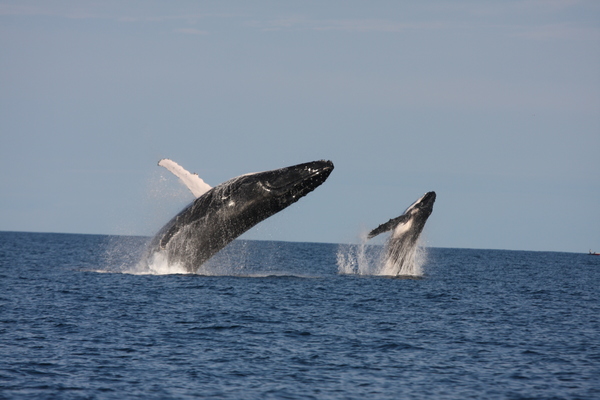
Whale hearing will be the focus of the next three years of research as part of long term studies that has made Peregian Beach the base for the biggest research project on baleen whales in the world.
Led by University of Queensland humpback whale researchers Professor Michael Noad and Dr Rebecca Dunlop the studies have investigated the population and songs of the humpbacks on their annual migration from Antartica to their breeding and birthing grounds in Hervey Bay.
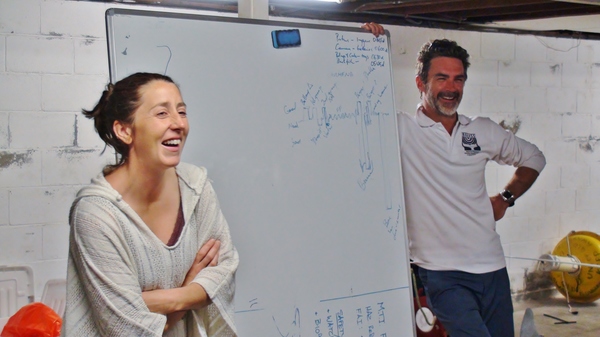
Last Thursday Dr Noad spoke about some of the findings from his 25 years of research, at the Association of Independent Retirees Noosa Branch meeting.
Humpbacks are baleen (toothless) whales that use baleen plates to sieve krill and small fish enabling them to feed in mass quantities.
As they pass our shores travelling north the polygamous males are looking for a female mate while the pregnant females are heading to the warm waters to give birth to their calves after a year’s gestation. Whales are sexually mature at 5 years of age and the females can produce a calf every year throughout their 50 year lifespan, Dr Noad said.
Scientists estimate the east coast migrating population to have been about 30,000 before hunting of them began in the 1950s.
Dr Noad said between 1952-62 humpbacks were hunted from stations at Tangalooma and Byron Bay under a government quota of 700 whales a year (600 at Tangalooma).
But in 1962 only 62 whales were caught and, thinking there were no whales left, the stations were abandoned.
Dr Noad said in two years from 1960-62 a Russian whaling processing ship, The Slava, had taken 22,000 whales in the Antarctic, wiping out 99 per cent of the population leaving only about 300 remaining.
“We didn’t know until 1990 when the information came out with the fall of the Soviet Union,” he said.
Surveys of the migrating humpbacks began in the 1970s, the last in 2015 counting a population of 25,000. Now nearing its pre-hunting population the researchers predict after years building their population the next decade for the whales could bring a period of adjustment that could include beachings, a die off or thinner whales.
Dr Noad’s whale song research began in 1995.
About 3km off shore from Peregian Beach the researchers have anchored acoustic but as they record and try to analyse the meaning behind the whale songs. By triangulating the acoustics they can work out which whales are singing and where they are swimming.
What the researchers do know is that only males sing, some sing louder than others, they don’t sing in unison or chorus and while they will sing beside a female they stop singing when swimming beside a male.
“They usually sing for 1-2 hours. Each song is 5-10 minutes. There’s about seven themes in a singing session,” Dr Noad said.
What they don’t know is why whales sing but they suspect they sing as a strategy to attract females or interrupt other males.
The songs are complex with a tremendous variety of pitch and all males in the population sing the same song.
The team discovered in 1997 how much they crave a new song when a group of whales started singing a new song and two months later the new song had taken over. “It was a complete song change not just a small change,” he said.
The adoption of songs from other whale populations around the world has led researchers to consider the songs may be tied to the communication of weather predictions or food availability.
While the whales migrate north out to sea they hug the coast on their return journey, particularly the mothers and calves that prefer the shallow waters, giving both researchers and residents fantastic access to the migratory corridor.