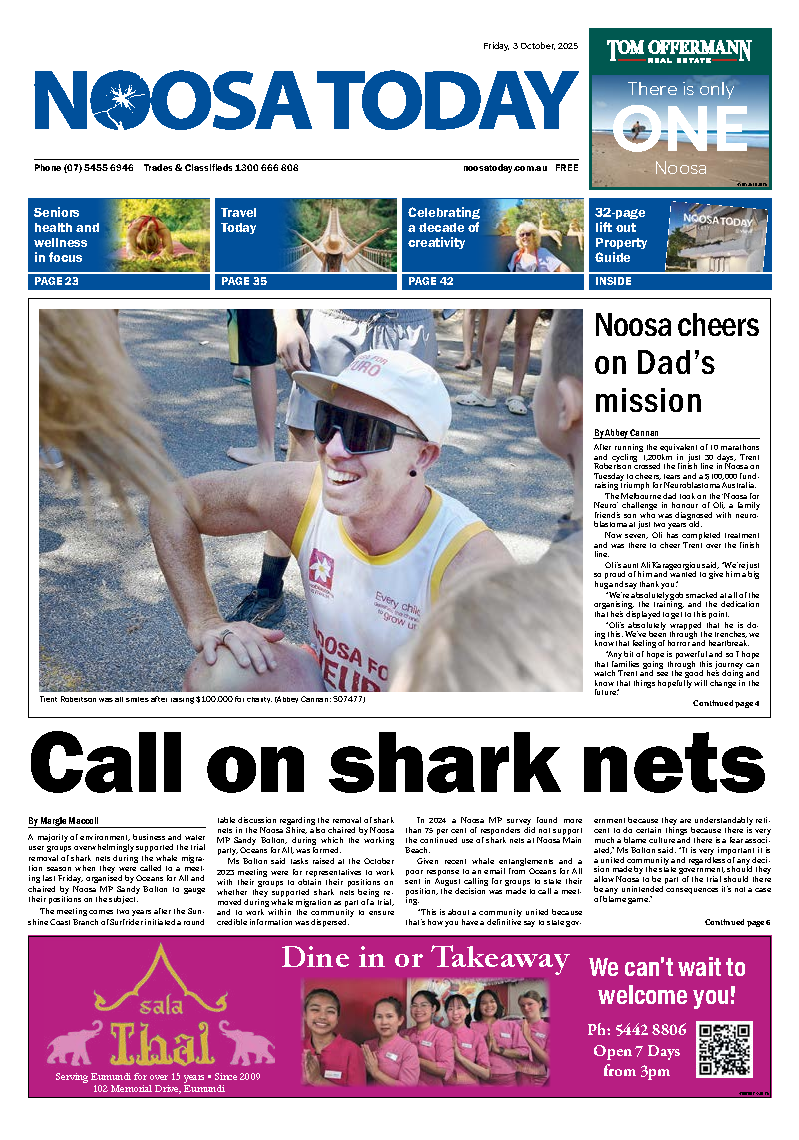
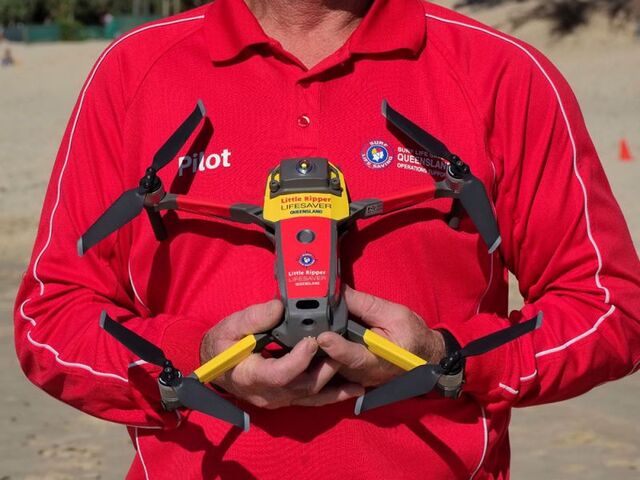
The Queensland Government is expanding SharkSmart drone surveillance as part of the Shark Management Plan with a permanent shark-spotting summer drone fleet and expanded it to six more beaches across the state including Kings Beach on the Sunshine Coast.
The move follows a four year drone trial which aimed to detect sharks and gather data on shark movements and behaviour and was run across 10 beaches including Noosa Main Beach, Coolum, Alexandra Headlands and Rainbow beaches between September 2020 and April 2024.
During the trial SLSQ pilots conducted 17,954 drone flights between September 2020 and April 2024 (16,601 at South East Queensland beaches, 1,353 at northern Queensland beaches) covering 7,181km.
The drones were operated on weekends, public holidays and Queensland school holidays and the hours varied depending on weather conditions, but usually began when beach patrol opens in the morning, with drones flown twice every hour, until around midday. Each flight was about 20 minutes. About five per cent of flights were cancelled due to bad weather.
A report on the trial showed sharks were sighted on 3.8 per cent of flights, with 676 shark sighting events recorded (a sighting event can be 1 individual shark or multiple), equating to 4,959 sharks seen across the trial.
Of these 676 sighting events, 190 were large sharks estimated to be >2m in total length and SLSQ evacuated people from the water on 39 occasions due to potential risks from large sharks sighted.
The report showed the number of drone shark sighting events (676) to be significantly greater than the number of sharks caught in Shark Control Program nets and drumlines deployed at the same beaches over the same time period (284).
A similar number of bull sharks were sighted on drones (23) compared to caught in nets and drumlines (26); however, the nets and drumlines caught 64 tiger sharks and five white sharks, whereas only one white shark was sighted on drones and no tiger sharks.
The report concluded this may indicate that tiger sharks and white sharks occur further offshore or that these species are caught at night when drones are not operating.
Nets and drumlines had a substantially higher environmental impact than drones due to the capture of 123 non-target animals (not including non-target sharks) at these 10 beaches during the trial period, the trial found.
Minister for Primary Industries Tony Perrett said the drone program had been expanded to some of Queensland’s most popular, and densely populated, beaches.
“We boosted the investment into the Shark Control Program by 151 per cent, resulting in more than $88 million of additional funding over the life of the plan to return it to its primary purpose; to protect swimmers at select beaches from shark attacks,” he said.
“Importantly, 60 per cent of the new investment delivers the non-lethal and innovative solutions that have been a key feature of the strengthened Shark Management Plan 2025-2029.
“The Crisafulli Government made a commitment to double its drone program to 20 beaches for the 2026–27 season and we are well on track to delivering – if not exceeding – that commitment to Queenslanders’ safety.”
For more information visit www.dpi.qld.gov.au/news-media/campaigns/sharksmart/equipment/drones.