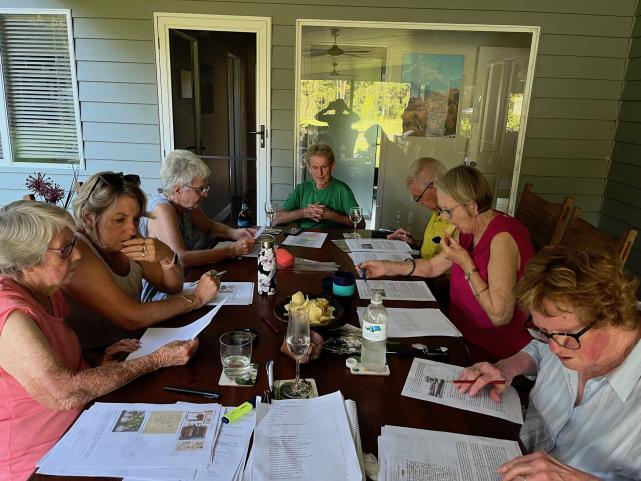
Longtime Verrierdale resident Kathy Lynch got so fed up with her community’s almost total absence from local histories that she decided to do something about it.
After 16 months of hard slog by Kathy and the small group she put together, and a small grant from Sunshine Coast Council to help cover the printing, the History of Verrierdale 1860-1960 will be launched, at Verrierdale Hall of course, next month. It’s a slim volume of 76 pages, but that’s about 75 pages more than the cumulative written history that preceded it, and I’m sure it will be appreciated by the 360 rate-payers who will get a free copy, and read with great interest by the locality’s 775 residents.
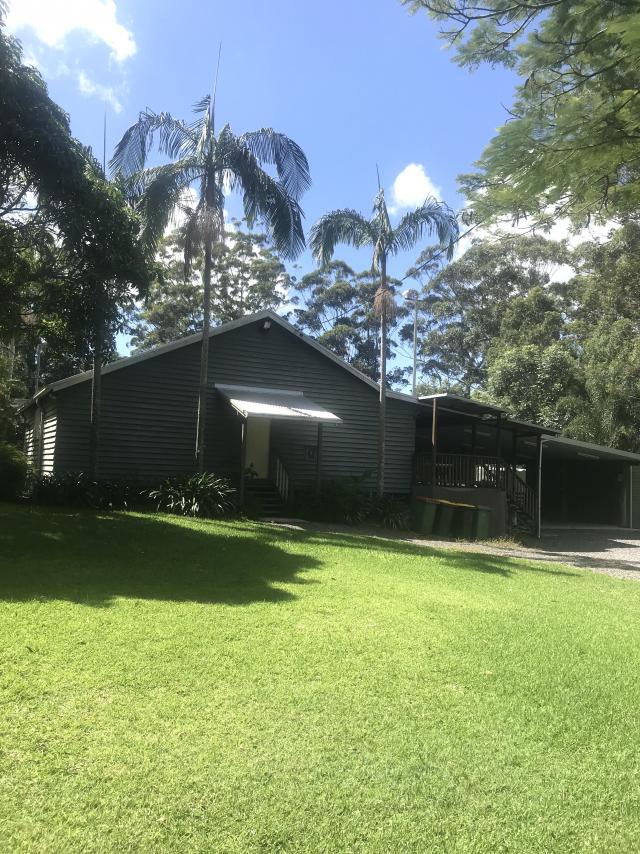
No doubt mostly famous for the Full Moon Dances at the community hall, which have been an institution since muso Barry Charles and friends introduced them in the 1980s, Verrierdale covers just under 30 square kilometres in a shape that looks a bit like the USA, wedged between Noosa and Peregian to the east and Eumundi and Yandina to the west. So it’s a bit more than a postage stamp but it doesn’t have its own postcode. It sits just outside the Noosa Shire boundary. The community hall and tennis court are Verrierdale’s only public facilities, located in the dead centre of the locality, but if you blink you’ll miss them.
Says editor Kathy Lynch: “I’ve lived in the area on and off since 1978 and my husband Phil’s family has been here since 1971. When Phil and I bought land here in 2014, we started thinking, what have we bought into? What is Verrierdale? I mean I knew about the dances back in the ‘80s, but there was really nothing written about the place. You could find plenty about Eumundi and Noosa, even Yandina, but nothing about Verrierdale. So we started looking around and talking to people, and decided to put a group together and write a history. It snowballed from there.”
While the book focuses on the century since the arrival of the first European settlers around 1860, it also acknowledges the first custodians, the Kabi Kabi whose sacred sites can still be found in the locality. As with Noosa, the gold strikes at Gympie in 1867 provoked a rush of interest in selecting land for settlement, mainly from timbergetters eager to cut the fine stands of red cedar and white birch for use on the goldfields. The first land was taken up in 1883 and by 1915 all the lots available in the locality had been granted.
But the place still didn’t have a name, until along came David George Verrier. Born in England in 1851, at 19 he migrated to Queensland, arriving in Moreton Bay in 1871. He married Caroline Weaver, a girl he met on the boat, in 1873. The couple lived in Brisbane and had three children – Joseph, John and Annie Weaver – between 1876 and 1880, but in the first chapter of what became a rather tragic life, the Verriers had lost all three children by 1885.
Although the electoral rolls show Verrier’s occupation as a labourer in 1903, he appears to have been an entrepreneurial one. By 1908 he was a selector in what was still called Doonan. Verrier and Caroline, presumably seeking a new start after their losses, were only in the district for a few years when Caroline died in 1913. This seems to have been the catalyst for him throwing himself into his new community. In 1915 he donated land from his selection to the War Council for soldier resettlement, followed some years later by the donation of another three acres for a community hall and tennis court.
This largesse was enough for the handful of residents to honour him in the name of their town, first known as “Verrier Vale”, but as that was a tongue twister, changed to Verrierdale and gazetted in 1916, the same year that the Verrierdale State School opened.
If this makes it sound like Verrierdale was experiencing a growth spurt, it wasn’t. By 1954 the population was just 70, and although the community hall was finally opened in 1959, the school closed in 1963. The locality had no phone until the ‘60s and no postal service until the late 1920s, when a twice-weekly service began. Still today it has no post office or general store. As the book notes: “In 1924, Verrierdale was described as ‘a village little known and seldom heard of 4 to 6 miles east of Eumundi’. Nothing has changed much in nearly 100 years.”
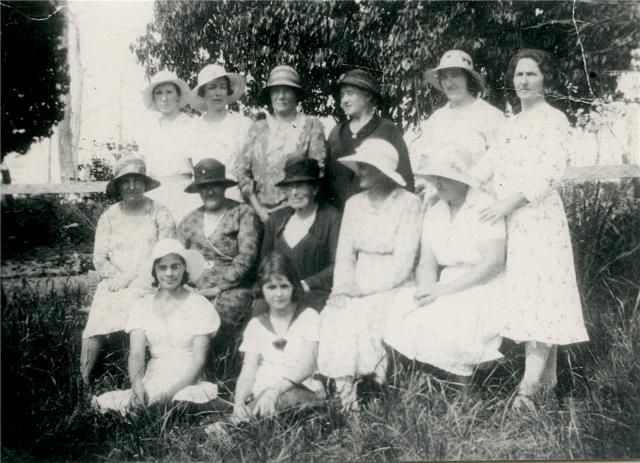
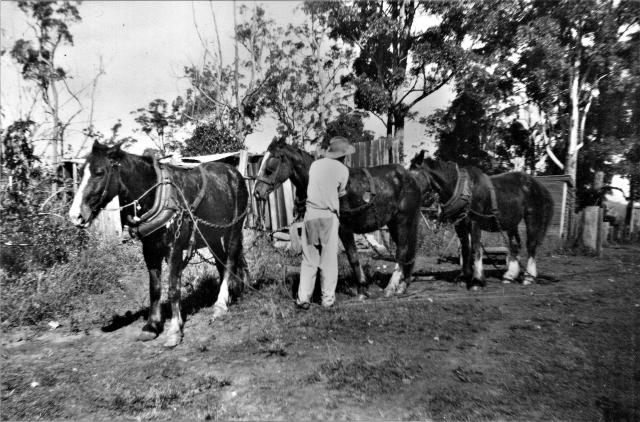
And that’s why the locals love it. Kathy Lynch and her team were able to track down descendants of several of the pioneer families, such as the Butlers (1913), the Deans (1923) and the Lynchs (1943 and not Kathy’s family), whose photos and memories inform the book, while Kathy’s husband, Phil, a map fanatic, found some going back to 1860. Says Kathy: “We started looking at the land selections and the portion numbers and worked out which family owned what. We were also able to trace the changing land divisions, from 160 acres down to much smaller in the 20th century. How the land has been used is quite an important part of the book.”
History of Verrierdale 1860-1960 will be launched on Saturday 7 May at Verrierdale Hall from 10am with morning tea provided. It’s a free event but you need to register for a ticket at tinyurl.com/Book-VerrierdaleHistory