With peak holiday season upon us, we will all be aware of the pressure on our roads as car numbers swell and competition for limited car parks intensifies.
It’s therefore a good time to consider what kind of transformational change we’d like to see in the way we travel around Noosa Shire, especially to the popular Hastings Street area. This was a strong message from the community for the Noosa Council draft Destination Management Plan. A key ambition within the Plan is to “learn from global best practice”. So, with the Council adopting the final plan, what exactly would such change look like, and equally importantly, how will it be funded?
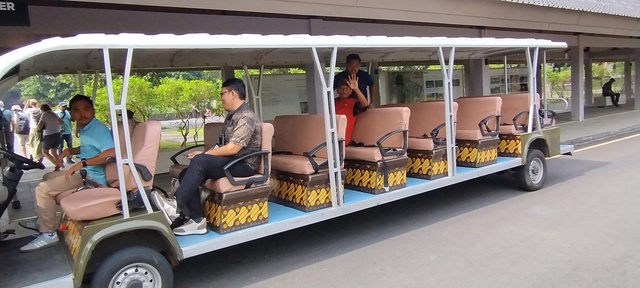
There are many lessons we can learn from communities around the globe which are doing it better. For example, in a recent trip to Indonesia, one of our ZEN members, Vivien, was able to view firsthand the operation of electric people movers at high visitation tourist spots, such as the UNESCO World Heritage Borobudur Temple at Yogjakarta. Borobudur receives over 4 million domestic and 300,000 international visitors a year. Rather than having cars and buses descend on these fragile and culturally significant sites, the developing nation of Indonesia has instead provided electric shuttle services for the last part of the visit with car parks located off-site.
For Noosa, one part of the jigsaw puzzle of transformational change could be a similar electric people mover to get people to popular destinations such as Noosa National Park, Noosa Woods and Noosa Spit. Noting, our version of the people mover would have space for surfboards, boogie boards, strollers and picnic baskets!
Rather than the hopeless task of trying to find a car park at peak tourist times, park-and-ride services could promote Noosa as a relaxed and fun destination. The people mover could become an iconic symbol of Noosa embodying the beach experience, just like the dolphin-themed electric bus at Busselton Jetty in West Australia.
The second part of the equation is how to fund this transformational change. Operating shuttle services or providing safe cycling routes for families requires funding.
For example, Noosa Council estimates that a new walking and cycling pathway over the hill from Noosa Junction to Lions Park will cost about $15 million. Numerous transport, walking and cycling initiatives like this sit on Council shelves, with no funding to deliver on their admirable goals.
In its submission to the draft Destination Management Plan, ZEN strongly supported the introduction of paid parking by visitors in tourist hot spots, with funding to be ring-fenced for alternatives to the private car.
Currently Noosa ratepayers pay a $30 a year Sustainable Transport Levy and it seems only fair that visitors should contribute as well. Noosa could learn from communities such as the World Heritage Blue Mountains which received 5 million visitors in 2024, who again were making no contribution towards infrastructure costs. After community consultation showed 71 per cent support, the Blue Mountains City Council introduced paid parking, with residents and workers exempted, utilising smart parking technology. New technology means paid parking need not be the eyesore it once was.
In 1997, Noosa Council took the hard decision to limit development. Now, with two budgets before the next election, the Wilkie Council has the opportunity to journey with its community in setting the transport future for Noosa. It could be inspiring!
To learn more or get involved check out www.zeroemissionsnoosa.com.au or email info@zeroemissionsnoosa.com