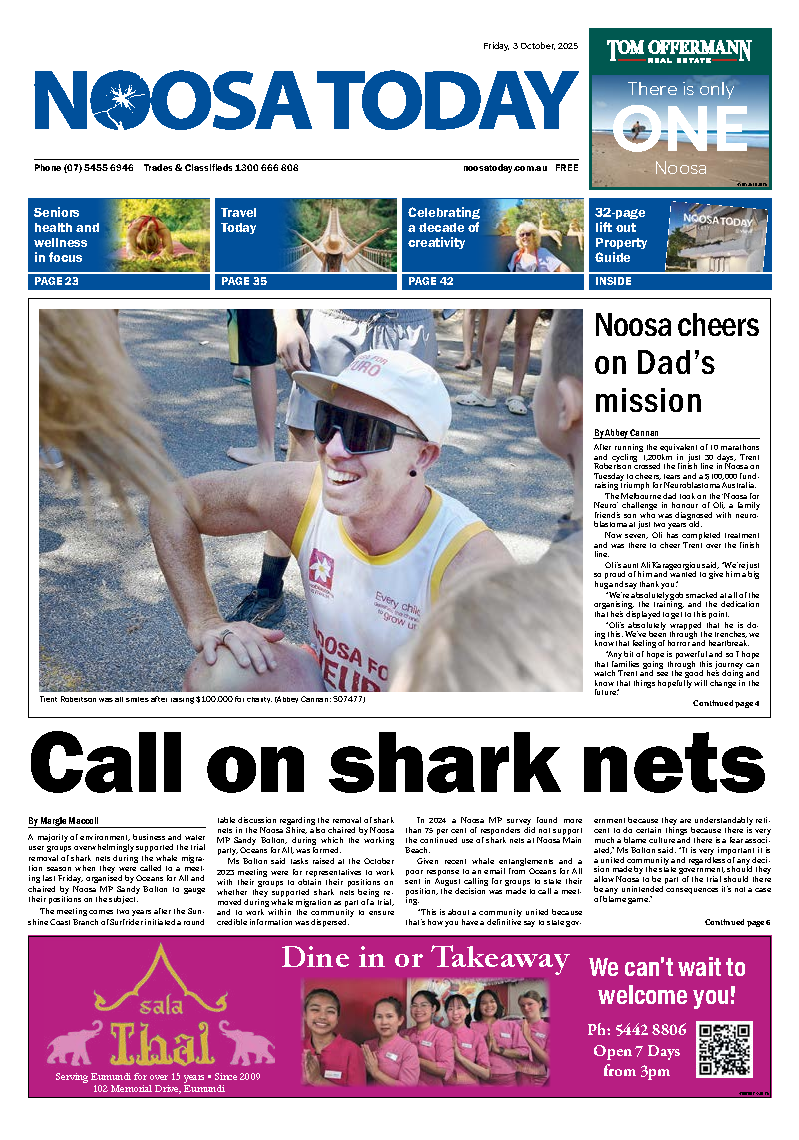
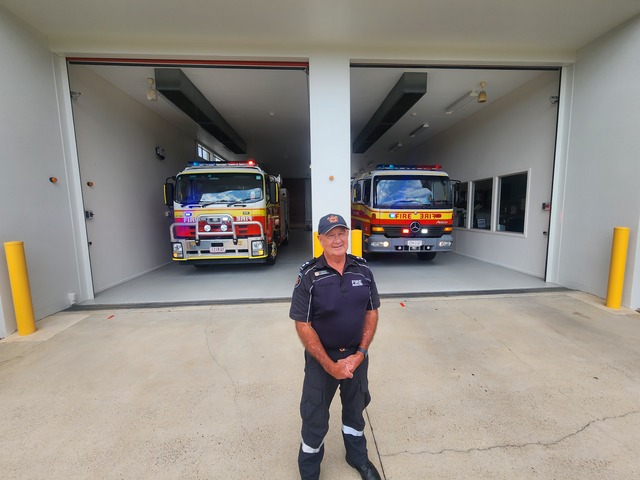
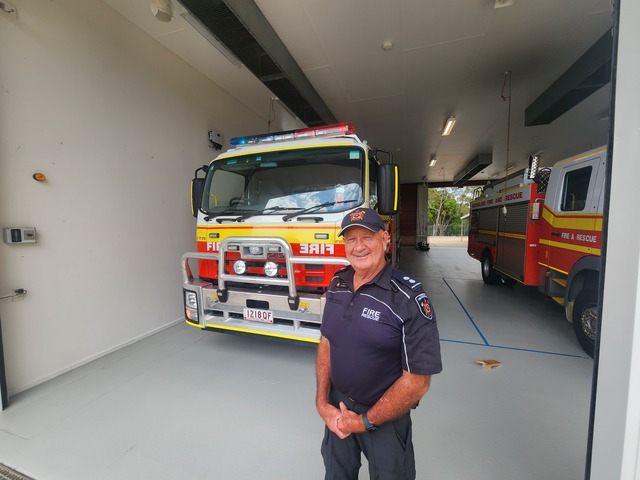
By any measure, Brian Riley has seen it all.
A 43-year veteran of Queensland Fire and Rescue, Brian has spent more than three decades as Station Officer at Noosa Fire Station, quietly leading crews through some of the region’s most challenging and confronting emergencies.
Living locally and deeply connected to the community he serves, Brian’s career is a testament to dedication, resilience and an unwavering sense of duty.
The Sunshine Coast Division stretches from Beerwah to Gympie, encompassing a diverse mix of urban centres, coastal communities and hinterland towns. Stations across the division include Noosa, Tewantin, Cooroy, Coolum and Pomona, with Noosa operating as an urban-stream station.
At Noosa, firefighters work around the clock, with two fire appliances on duty 24 hours a day. Crews operate on shifts ranging from 10 to 14 hours, ensuring the community is protected at all times.
The station is staffed by 25 permanent firefighters, supported by 10 auxiliary firefighters who provide vital additional capacity.
“Being a state resource, we can be deployed anywhere,” Brian said.
“We can be sent to assist with urban incidents, rural fires, and even interstate deployments when needed.”
Brian’s own journey into the fire service began almost by accident.
“By chance, really,” he said. “A friend asked me to join the auxiliary and it went from there. Once I got a taste for it, I developed a drive and ambition to become a firefighter.”
That drive has carried him through more than four decades of service and 30 years as Noosa’s Station Officer — a role that demands leadership, calm decision-making and deep trust in the crews under his command.
Among the many incidents Brian has attended, one stands out as the most significant and harrowing of his career: the Golinski fire in 2011.
On Christmas night that year, an electrical fire tore through a Noosa home, claiming the lives of celebrity chef Matt Golinski’s wife Rachel and their three young daughters — Sage, Willow and Starlia.
The tragedy shocked the community and left a lasting impact on all first responders involved.
“It’s something you never forget,” Brian said quietly.
Bushfires have also featured prominently in his career, including the deliberately-lit fire in national parks and reserves around Peregian.
The fast-moving blaze spread rapidly towards Peregian Beach, destroying bushland, threatening homes, forcing widespread evacuations and ultimately destroying one house.
“These fires move quickly and unpredictably,” Brian said. “They test not just our resources, but the resilience of the community as well.”
In the past 12 months alone, Noosa firefighters have responded to 387 calls for assistance. These range from structure fires and grass fires to road crashes and vehicle fires.
Brian estimates that around 10 per cent of their workload involves structure fires, including homes, garages and other sub-structures — incidents that can be particularly confronting for residents.
Beyond fires, the role of firefighters extends well beyond flames and smoke.
“We are here to support the community and to support the ambulance, police and SES services,” Brian said. “It’s very much a team effort.”
He also urged residents to be mindful of the risks associated with electrical storms.
“Electrical storms can cause power surges in homes,” he said. “They can also start bushfires, especially in dry conditions. Preparation and awareness make a big difference.”
Despite more than four decades on the frontline, retirement is not yet on Brian Riley’s horizon.
The veteran firefighter says the job still gives him purpose, pride and a deep sense of connection to the Noosa community.
“I love serving this community,” he said. “As long as I can still contribute and lead, I’m happy to keep doing what I do.”
For Noosa residents, that quiet commitment offers reassurance that when the call comes, a familiar and steady hand will be there — just as it has been for more than 43 years.