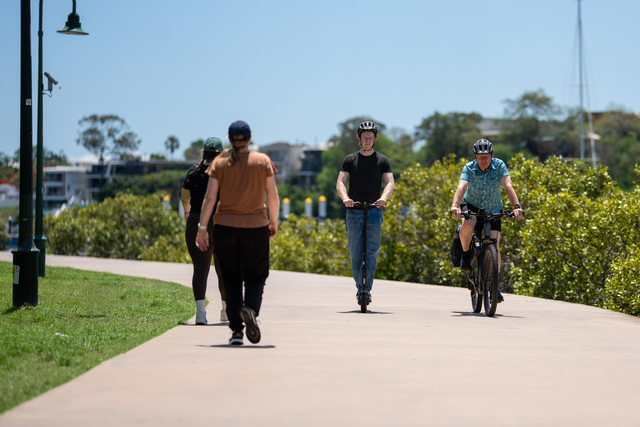
More than half of Australian drivers believe children should not be using e-bikes or e-scooters to get to and from school, as concerns grow across Noosa and the Sunshine Coast about safety in busy school zones.
New research released by insurer AAMI shows 39 per cent of drivers believe electric-powered devices should not be allowed in school zones at all, while 70 per cent oppose their use outright, citing speed, poor visibility and children’s lack of road safety experience.
The findings come as students return to classrooms and follow a rise in serious crashes involving young people on electric bikes and scooters. Several schools in Queensland, Victoria and Western Australia have already introduced bans on e-bikes and e-scooters on school grounds this year.
Speed was identified as the biggest concern, with 67 per cent of drivers worried about how fast the devices can travel. More than half were concerned about children’s understanding of road rules, including navigating intersections and roundabouts, while 40 per cent feared drivers may not see children riding e-bikes near schools.
The research also highlighted risky behaviour by drivers themselves in and around school zones. One in five admitted to speeding because they didn’t notice school zone signs, while nearly one in ten said they had intentionally sped because no children were visible. More than a third of drivers said they were confused by school zone rules and signage.
AAMI Motor Claims Manager Leah James said the results showed an urgent need for clearer rules and better awareness.
“When you add fast-moving devices like e-bikes and e-scooters, ridden by kids with limited road experience, to already busy school zones, you’ve got a recipe for chaos,” she said.
Australian Road Safety Foundation founder Russell White said many parents may not realise children under 16 face restrictions in most states, including Queensland.
“School zones are busy enough without adding turbo-charged kids into the mix,” he said.
The study found overwhelming support for safety measures, including mandatory helmet use, lower speed settings and restricting children to bike paths rather than roads.