For more than 60 years, the Bellagio Centre Residency Program has brought global leaders, including more than 85 Nobel Laureates, together to connect, collaborate, and create breakthrough solutions that change the world.
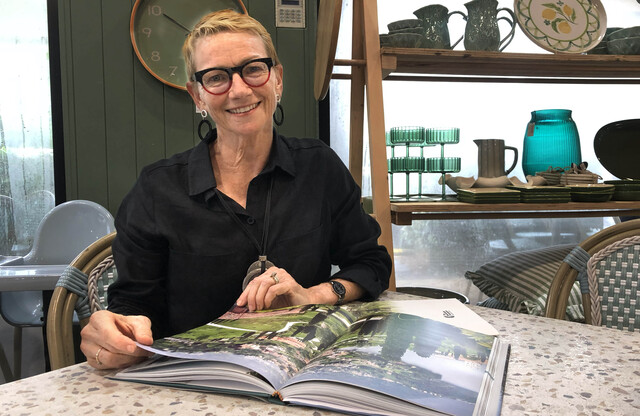
The 2025 class was made up of 105 global leaders from 33 countries and included Noosa Professor Karen Woolley.
The class aim was to advance a range of projects that reflect The Rockefeller Foundation’s mission to “promote the well-being of humanity.”
Others in the class included Nobel Prize winner and scientist Carlos Nobre (Brazil), New York Times Bestselling Author Tara Westover (United States), world-renowned “farm to table” chef Robert Oliver (New Zealand), renowned digital artist Prince Igwe (Nigeria), Government of India G20 Sherpa Amitabh Kant (India) and award-winning broadcaster and author Krista Tippett (United States).
Professor Woolley spoke to Noosa Today lat week about her experience of the program at The Rockefeller Foundation Bellagio Centre in Bellagio, Italy in August-September last year.
To be selected for the program attendees need to be a world leader in their field and have a project that not only has a good chance of reaching a successful conclusion but would have a global impact in a humanitarian way.
Professor Woolley has pioneered research and best practices for patient involvement in medical publications.
“My project was ‘Patients in Publications – nothing about us without us’,” she said.
“For 350 years medical publications have excluded the voice of patients, so medical journal articles are written by doctors, they’re read by doctors, used by doctors in patient care.
“My area of research is a positive disruption to that model and it’s helping patients to be trained to write publications, to ensure the patient voice is included in journal articles because your care, my care will be affected by journal articles. They can influence whether people live or die. What is read in a medical journal publication will affect patient care and it just seems like the patient voice has been missing.
“Medical articles are all about patients but they’re not done with patients and it’s pleasing to see the medical profession, medical journal editors are recognising the unique value that the patient voice has to make the publication more relevant, more accessible, have greater reach. It’s really disrupting that model.”
Professor Woolley was a surfer before becoming a scientist.
But after completing a PhD in asthma research in North America the Adjunct Professor at the University of Queensland and the University of the Sunshine Coast has become a world leader in medical communications.
Professor Woolley was awarded the highest international honour in her profession from the International Society for Medical Publication Professionals (New York, USA). She has served on the boards of government and healthcare services (including Sunshine Coast Health), as well as national and international not-for-profit medical research and communication associations. She established one of Noosa’s first internationally successful internet-based businesses in 2000 and provides governance oversight for Zero Emissions Noosa. Karen has won the Telstra Business Women’s Award, the Premier’s Export in Business Award (Queensland), the Sunshine Coast Business Women’s Award, helped establish the University of the Sunshine Coast Clinical Trial Centre, and served on the inaugural Board of Directors for the University’s Innovation Centre. She still surfs.
At the Bellagio residency program Professor Woolley was brought together with 12 people from around the world who had no direct interest in her area of interest.
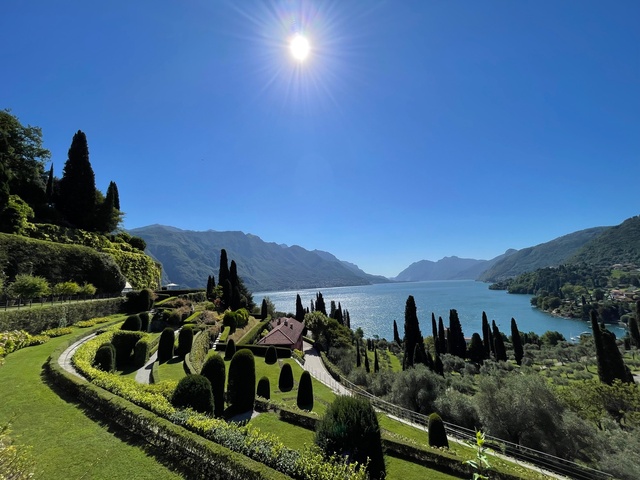
“The idea is you come together in this unique setting in Lake Como where almost every need is catered for so you can just focus on your research or project and every evening about 6pm you meet maybe for for an aperitif spritz or two but also to share your ideas and listen to others ideas,” she said. “So you’re expected to contribute to 12 other projects and they’re expected to contribute to yours.”
Both the valuable input she gained from the group and the time to reflect on her own project resulted in the identification of gaps which led to further work in her research and resulted in a much stronger project, she said.
“I realised a piece was missing. It was necessary detour and it’s really strengthened it,” she said.
“It changed my project in a very good way. That’s the beauty of challenging minds coming into a project. The other thing was the time to think and reflect. Being in an environment to be there just to focus.”
She has now created the world’s first research roadmap on advancing patient authorship.
“For many doctors this is quite new, seeing a patient as equal,” she said.
“It will change the face of medical partnership.
“This will be my gift to my profession.”
Professor Woolley said the advice given to her at the start of the program was “to be vulnerable”.
“You are already recognised in your field,” she was told.
“Ask the questions you may be too embarrassed to ask. That’s when you will get the most out of it.
“If your are able to reflect and expose weaknesses others may be able to address that.”
This approach where multiple minds work on something has probably led to breakthroughs in progress, she said.
On her return to Noosa Professor Woolley continues to be fuelled by the passion ignited by the program.
It was a fellow Noosa resident John Martin, an Emeritus Professor, who suggested she apply for the program and she would like to pass on that advice.
“It’s an extraordinary program and I just think someone in Noosa alerted me to the program and I feel I would love to pay it forward,” she said.
“You realise at the end of the day when you’re trying to advance understanding or disrupt conservative ways there’s a commonality we could all share and contribute to our projects.”