PRECEDE
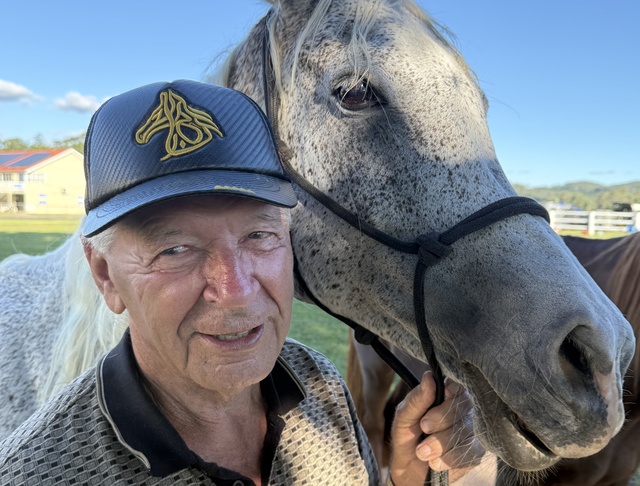
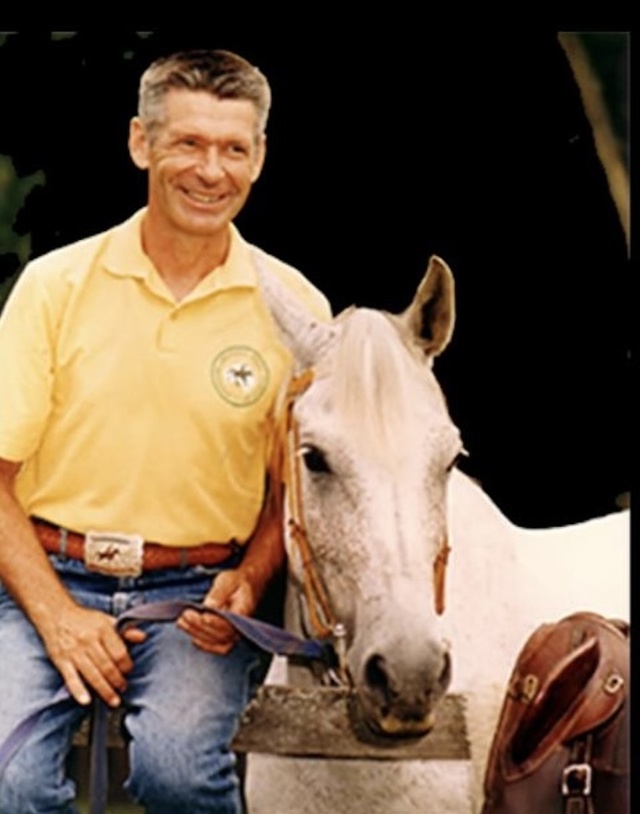
Tom Thomsen came to Australia from Denmark at the age of seven. ERLE LEVEY finds out about a life in the bush that has seen Tom go on to compete and succeed at the highest level of endurance horse riding both here and internationally.
BREAKOUT QUOTE
“It’s about what is between the ears .. for rider and horse.”
There is something about the Australian bush that gets into your blood.
That has certainly been the case for Tom Thomsen.
His story could easily be made into a movie – what he has learnt and what he has done with horses across time and distance is quite breathtaking.
Now he has moved on to mentoring other riders coming through in the sport of endurance.
Nothing has stopped his love and enthusiasm for riding, even at the age of 83. And nothing has diminished his recognition of the horses he has had the good fortune to have been involved with.
Born in Denmark, Tom came to Australia at the age of seven and grew up working on big grazing properties in Western Australia.
It was at the end of World War Two and his parents were looking for a new life in a new land – one that was away from the terror of the war years.
They already had work lined up at small-crop farms just outside of Perth.
All Tom can remember of the voyage was it was a Greek ship with three classes of cabins.
First, second and steerage – in the very bottom of the ship were migrants destined to work on major infrastructure projects such as the transcontinental railway, Snowy Mountains hydro electric scheme, highways and factories. These men were in cabins with bunks stacked three high on either side.
Tom’s working life was on sheep properties – to the north of Kalgoorlie and then in the far north-west, before a job at the then-new Ord River Dam and irrigation scheme.
His boss up north was an older, traditional farmer, Tom said, who only wanted mustering on horseback – not motorbikes.
“My job was to muster the stock horses of a morning for the station hands.
“Then I would ride around the windmills to make sure there was water for the stock.
“I couldn’t ride when I first got there, but was told I would soon learn.’’
When Tom finished up at the sheep station in north-west, rather than return to Perth he drove across to Brisbane and was immediately won over by the weather … it was like paradise compared to the winters in Perth.
Initially, Tom moved away from horses to concentrate on work but eventually bought a couple of acres at The Gap.
The property was big enough for some horses for the kids to ride but it turned out they weren’t that keen.
A Winton-To-Longreach ride got him back in the saddle. Yet as fate would have it, he ended up strapping for another rider at that famous event.
Still, he loved the countryside – the vast landscapes. And the horses.
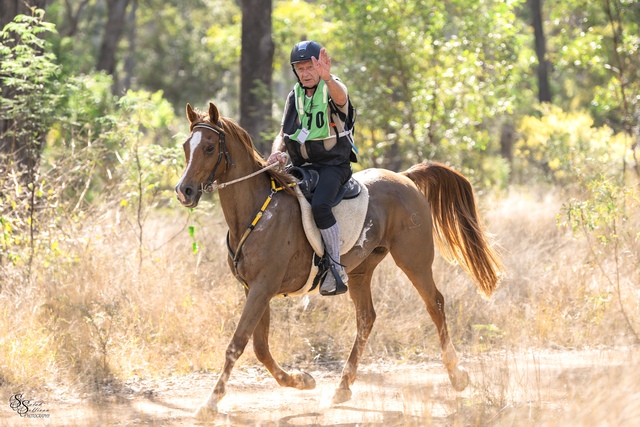
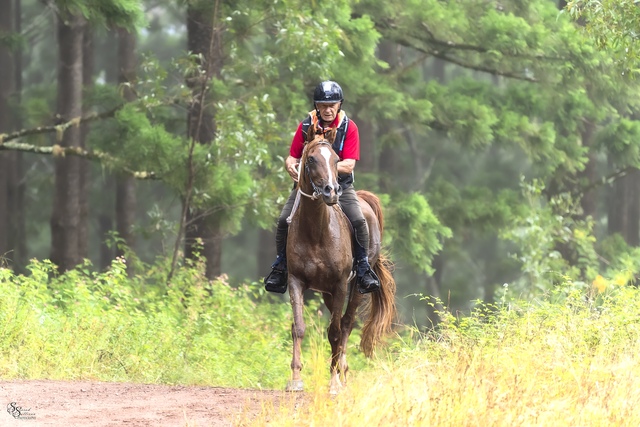
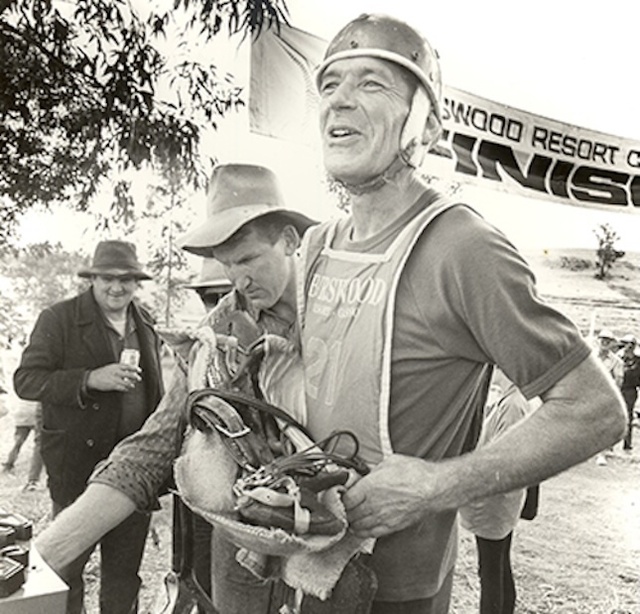
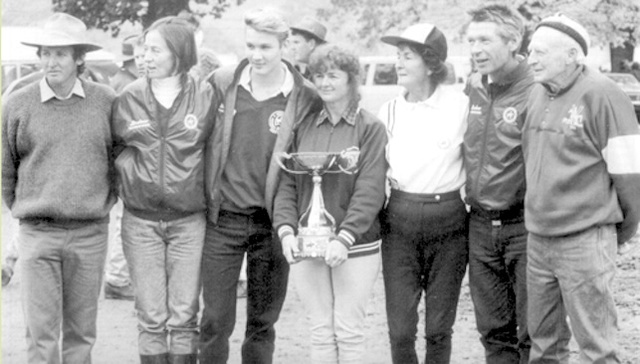
So much so that he went on to win two Tom Quilty Gold Cups – regarded as Australia’s premier endurance event.
Riders who complete 160km in a day are awarded a highly-sought Tom Quilty belt buckle as recognition of their horsemanship skills.
Few get the opportunity to win one, let alone two.
Not only that, Tom came second in TQ1990 after falling from his horse and losing 20 minutes.
Imbil’s Brook Sample went on to win that event at Myrtleford, in the foothills of Victoria’s high country.
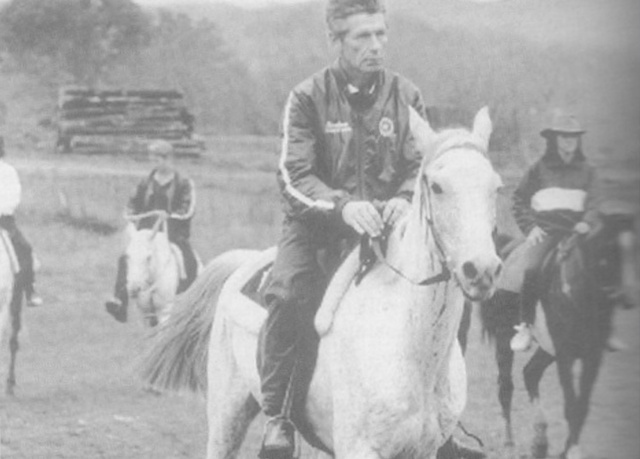
However, Tom got the chance to ride in Sweden as part of Australia’s team in the World Equestrian Games in Stockholm.
That was in 1990 and Australia’s team was placed sixth – one team member gaining bronze.
Included in Australia’s team were such names as Andrew Hoy (eventing) and Vicki Roycroft (jumping), both who have worn the green and gold at Olympic Games.
Tom left his horse Prince Aussie in Sweden but it had never been properly trained to be ridden.
Initially, he had picked Prince Aussie up for $150 at Nambour saleyards … an Australian stockhorse that looked to have little future.
Yet it turned into a Melbourne Cup story for endurance … a horse no-one really wanted, going on to win at a national level and compete internationally.
Even though the horse had not been broken in, it was simply a matter of Tom leading him around for about 20 minutes before getting into the saddle.
By showing mutual respect, it was job done.
As is often the case, the horse chooses the rider as much as the rider thinks it is their eye for breeding.
It was the same when he left Prince Aussie in Sweden. The first time with a new rider it threw her off and the result was a broken shoulder.
Tom walked the horse and showed the next rider the trick. They thought he was a horse whisperer.
“It’s about what is between the ears,’’ Tom said, “… for rider and horse.’’
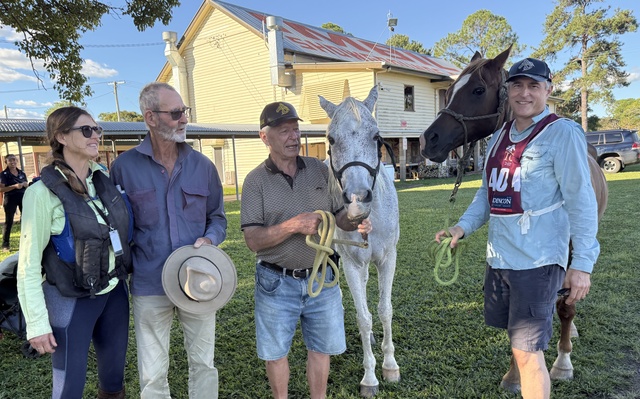
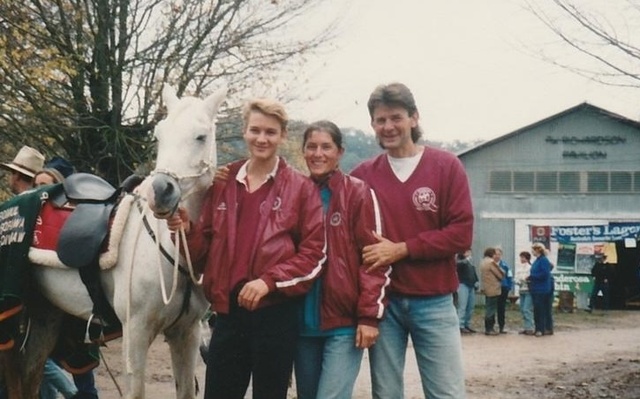
Now a mentor for the sport, Tom Thomsen was at Imbil for the Far-A-Way Easter Endurance Carnival when I spoke to him.
“It’s attitude,’’ he said. “In many ways it’s an extension.
“The horse picks you. It’s about the attitude of yourself and the animal.’’
The first property Tom worked at in Western Australia, near Kalgoorlie, the stockmen were all cowboys, he said.
“They just wanted to read Zane Grey novels about the Wild West.
“They would go shooting every chance they got, and fire 5000 bullets in a month.
“I had 100 for all the time I was there, and still had some left when I finished up.’’
When Tom went to Sweden with the Australian team he had the same horse, Prince Aussie, at what was the biggest and best horse event – the World Equestrian Games.
He was leading at one stage, but Prince Aussie was vetted out at the end.
“If you want to know about fame, talk to that horse,’’ Tom said. “He had a book of results that was inches thick.
“When I left him in Sweden, they rode all over Europe. He won a Swedish championship, competed in Denmark, England, France, Spain and North Africa. I’m not sure about Germany.
“He was only a station horse from Queensland – we think he might have come from Longreach – and was brought to Brisbane because they were de-horsing the property.’’
In Brisbane, he took up riding as a hobby – first at at Brisbane Forest Park, then Murrumba and at Kenilworth.
“When I went into endurance, Winton-To-Longreach was the only ride I wanted to do. That was all those years ago but I never did it.’’
Tom rides very little now but jumps on a horse now and then.
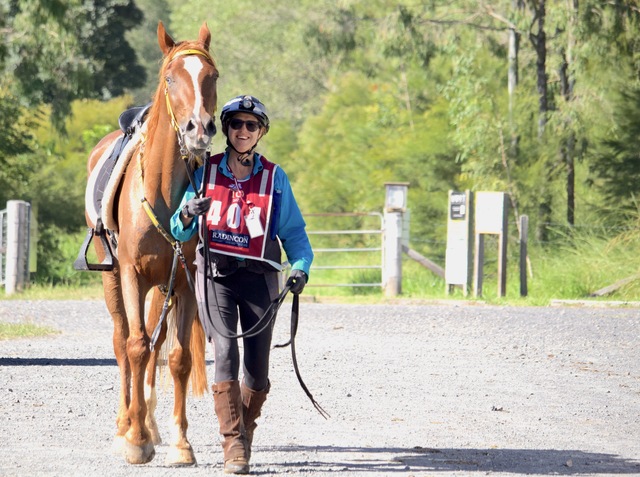
He has trained horses for Natasha Thackwray, who went on to win the 2025 Far-A-Way Marathon of 320km on County Downs Optical Illusion.
Tom had ridden the horse in a training ride of 42km at the 2024 Far-A-Way Easter Carnival and as a middleweight in an 80km at Wondai in 2025.
“He’s more than a mentor,’’ Natasha said of Tom.
“A few years ago he just took me under his wing.
“He’s just a great teacher. He’s got a great nature about him.
“You’ll never hear him complain.
“After that I came from nothing and won a 160km on this horse at Inglewood.’’
Tom’s secret in life is don’t stop, just keep going, Natasha said.
“This horse was always having trouble with the hind legs and Tom was able to pick that up, that he had an issue with one vertebrae.
“He’s just incredible.’’
At the 1999 Tom Quilty Myrtleford ride Tom fell off but still came second.
He said it was just one of those things that happen.
“I lost a stirrup and that cost 20-odd minutes. It was probably Prince Aussie’s best ride as well.
“He was a bush horse. Yet the number of completions I did with him was extraordinary.’’
In those days they were just stock horses, Tom said, and if they couldn’t do anything with them they could always do endurance.
“I’d been warned that he hadn’t been ridden so I thought I’ll just take him for a lead.
“After about 20 minutes I could see that it was starting to come back to him.
“I could see it in his eyes, so I put a saddle on and he was okay.
“The same thing happened in Sweden. I told them don’t put a saddle straight on him, walk him around for 20 minutes.
“I’m sure they didn’t follow that. The rider jumped on and he threw her … and broke her shoulder.
“The next ride was the Swedish championship. She jumped on and cleaned them all up.
“Having showed them how to do it, they thought I was a champion.’’
When Tom went up to the north-west of Western Australia he worked for a while on the first Ord River dam.
After that he thought it would be good to have a look at Queensland and then go back down through the other parts of Australia.
“But I didn’t do that. Brisbane‘s got better weather than Perth.
“Why would I go back there whether there’s not good weather?
“I went to Denmark in Western Australia, but it’s right down south and while the area was pleasant the weather miserable and cold.’’
He retired in Brisbane after a feeling of being burnt-out from living hand-to-mouth for many years.
“The Winton to Longreach ride was what brought me back to horses.
“We had bought a property in The Gap and the kids were grown enough so I said: ’Come on, we’ll have a horse’
“They didn’t like it but I did, so I went to Longreach and thought I would go in that ride.
“Instead, I crewed for Dean Stephens of Toowoomba.
“Everything had to be done on horseback. You didn’t drive around because that cost petrol.’’
At Tom’s first job near Kalgoorlie they gave him the house horse to do the windmill run so he got used to just sitting in the saddle all day.
“We would get up at five and then have a break at lunchtime and then finish off in the cool of the evening.
“If you went into town, the cattle boys didn’t talk to the sheep boys.
“Being in the bush was fabulous – we would carry a billy, pair of pliers, wire, tomahawk, poison and a rifle.
“I got sick of carrying that rifle all the time and yet the other others went out kangaroo shooting any time they could.
“I had a ball there. But I couldn’t see any sense in shooting a kangaroo.’’
Right from the end of his primary school days Tom liked being around horses.
Nobody had any money, but there was a trotting stable in the next suburb.
“I got a job there five or six bob a week helping out. But he was a typical town trainer … used the whip and the electrical jiggers.
“He used to forget to pay me but every now and then he would, so I suspect he had a win on the trots.’’
For Tom, there’s no question that without horses he wouldn’t be the person he is today.
“When things go wrong. I’ll jump on a horse and go for a ride.
“I lived on a hill in Brisbane so that kept me fit, going down and catching them.
“They’re a bit like having a dog … they don’t ask questions.’’
Tom has been back to Denmark since coming to Australia but he said it was different to what he remembered.
“You’re expecting things and it doesn’t happen. I thought I was a bit Danish but, no, I’m Australian.
“I was a stranger in the place I was born in. I haven’t been back in 20 years.’’
That was when Tom told me a story about when they were in outback in Western Australia.
“This other fellow said: ’You know, we’re probably the first white people to be out here.’
“And not 10 minutes later, we come across this tobacco tin.
“It was brand new. So we figured it was probably thrown out of the light plane some stage.
“We’ve been lucky to have experienced the Australian bush … it’s changed but it will change that much again in the future.’’
Tom is looking forward to the 2026 endurance season, especially with the 60th anniversary of the Tom Quilty Gold Cup to be held at Imbil in July.
He will be among the previous winners of the coveted trophy to be honoured at Imbil … and may have a hand in helping one of the new generation of riders hold the gold cup.