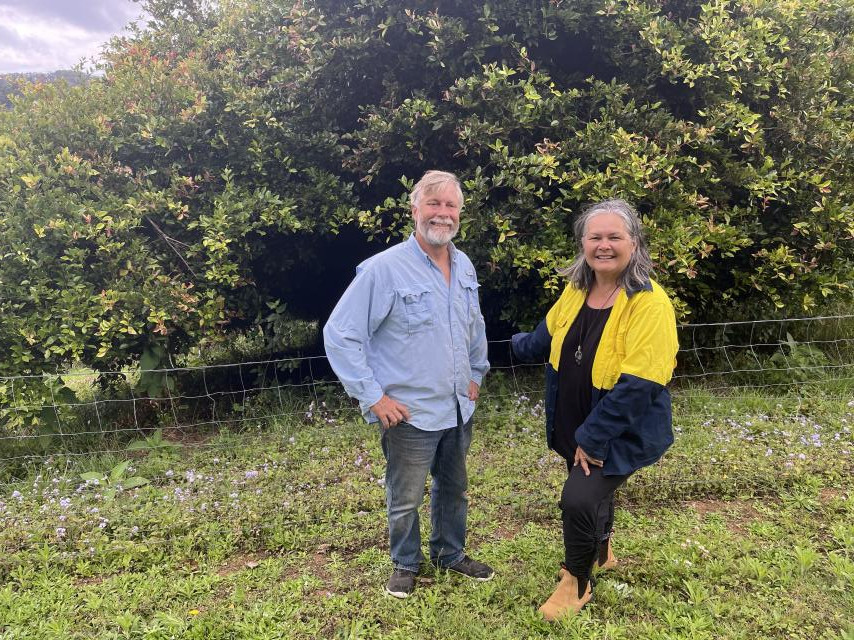
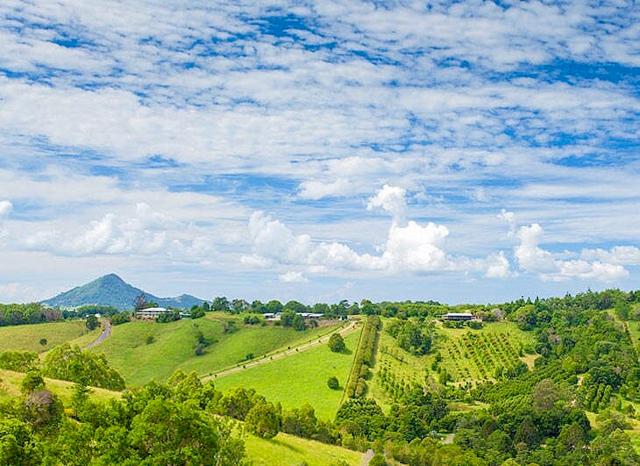
Next Friday, when a busload of delegates from the Social Enterprise World Forum being held in Brisbane visit the Galeru bush tucker farm in the hills behind Cooroy, they will no doubt be impressed by the range of native foods being produced and the amazing list of firsts being racked up by the current owners, but they may not be aware that over and above that, Galeru is fast becoming a poster child for the ideals of the social enterprise movement.
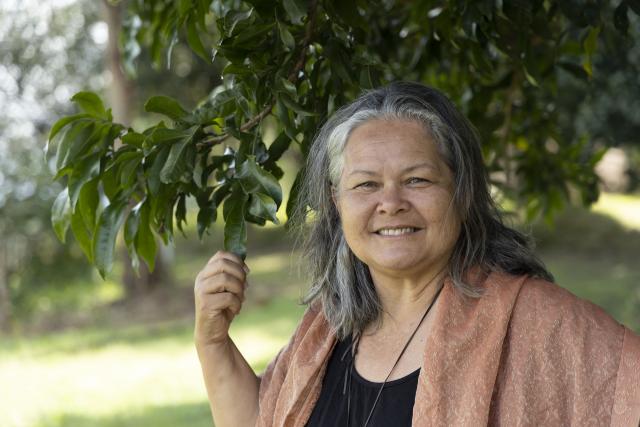
Says managing director Terri Waller: “Yes, we’ll point out that we have the largest producing satinash stand in the world, that this is the largest Indigenous-owned bush foods farm in Queensland, and the fact that because of the state of the world, a lot of food industry people are paying attention to the fruit nuts and aromatics that we produce.
“But the highlight of this property is not a fruit or a tree but the whole lot as a social enterprise, which is what we’ll be trying to demonstrate to them.”
In fact, the connection with exotic native foods, celebrity chefs and brand-building is all a happy accident, brought about because SevGen Aboriginal Corporation, the farm’s parent company, needed a base to help rebuild troubled families and children.
It’s a remarkable story, stretching back more than a quarter century.
In 1997 middle-aged tree-changers Martha Shepherd and David Haviland bought about five hectares of ridiculously steep hillside with a simple cottage offering commanding views at its summit.
It might have seemed challenging to most, but Martha and David had a vision to inspire the creation of a small network of farms devoted to native bush foods.
Back in the ‘80s bush tucker had become a fad at trendy restaurants around the country, largely thanks to TV’s Bush Tucker Man, Les Hiddens. (Mind you, after I spent a day foraging in Kakadu with him for a Playboy interview, Hiddens drove us hastily an hour to the nearest roadhouse pub for a much-needed pie-based counter tea and a few beers.)
But by the ‘90s, the fad had faded and native foods had disappeared from most city menus. Martha, who had experience in marketing, thought it was time for a comeback.
She and David named the property Galeru and began planting lillypillies and satinash up and down the hillsides as well as blue quandong, white aspen and native tamarind and ginger.
By 2006 Galeru led a collective of small enterprises and Martha was winning prizes for her agribusiness model, but David’s health was suffering in the humid summers, and they reluctantly sold up and moved south.
The new owners were wannabe hobby farmers but their main interest was in expanding their view with a huge deck and an adjoining infinity pool.
Looking out across the majestic hills and valleys from a poolside lounger the other day, I could empathise, but the sad fact was that the orchard was soon overgrown with weeds and vines.
Luckily, however, native plants are nothing if not resilient, and in the fullness of time, when the owners gave it up for the city and offered Galeru for lease, idealistic local Ginny Mobbs jumped at the chance to uncover what lay beneath and give the farm new life.
She was well into this monumental task when the owners put the farm up for sale and told her to vacate at the beginning of last year.
While Martha and David were planting their hill and building their dream, Aboriginal woman Terri Waller, her husband and six children had arrived on the Sunshine Coast and Terri had started helping out with Indigenous programs at Nambour State School, where the principal recognised her potential immediately and told her to go to university and become a teacher. She did as he suggested, but from the beginning she knew that her education model would be vastly different from the one she was leaving.
In 2012 Terri founded SevGen, standing for the First Nations’ idea that what you do today
will affect people seven generations into the future. It remains the guiding philosophy behind all of SevGen’s enterprises, including Galeru.
Says Terri: “As the SevGen organization built, it turned to justice, health and education reinvestment work, which were the main things we were asked to respond to.
“As a closed ecosystem, we needed some kind of property with accommodation for kids who were sent to us by court order for three or four months at a time. We’d tried renting and billeting but none of it really worked, so we started looking for something to buy.”
In the meantime, SevGen had also begun its first truly social enterprise business, the Deadly Espresso coffee distribution and café.
“They all told us you can’t call a food and drink business deadly”, Terri laughs.
“We said, don’t worry, the blackfellas will get it!”
Today the Deadly Espresso Cafés at Eumundi and other parts of the Sunshine Coast is a thriving business and a popular meeting place for community groups, while its offshoot in the Noosa National Park is a tourist delight.
At the beginning of last year, Terri heard about Galeru being on the market.
She says: “I had no agricultural background. This place just presented as a pure opportunity, with a building that could accommodate our needs and the orchard as a bonus.”
The downside was that a buyer would need to raise more than a million dollars, fast. As Terri Waller starts to tell the story of how SevGen did it, her steely determination is written all over her face.
She says: “We managed to cobble the finances together through the help of a combination of friends and fans of SevGen who knew our work over the years.
“Essentially, we crowd-funded through a group of people we call pot-holders who contributed funds to make it happen, and then a finance operation got us over the last hurdle.
“It was intense but it happened from nothing. It was bold, but we just did it.”
And that’s the way Terri and SevGen roll.
She continues: “Bush foods wasn’t a commercial goal, it was just what we inherited.
“Of course, I was interested in Indigenous foods, but when you hear about what had already been created by Ginny and Martha and David before her, it just sparks that passion.
“The original intent was for a place where we could carry on our mission-related work.
“Now it’s grown into a passion that meets a lot of current needs and current thinking, with the current situation in the world and the need for food agility.
“In our first year here, even with the rain bombs and Covid we’ve been able to continue with that work with family reunifications, youth justice, traineeships and so on.
“Ours is a completely different model of community development. On top of all that, we’re running a bush foods orchard that now offers 36 different native fruits!”
As well as the work with the Social Enterprise World Forum next week, Galeru Farm is working closely with Permaculture Noosa, the AgriHub, local chefs and the Noosa Biosphere Foundation’s upcoming fundraising gala on 1 November.