
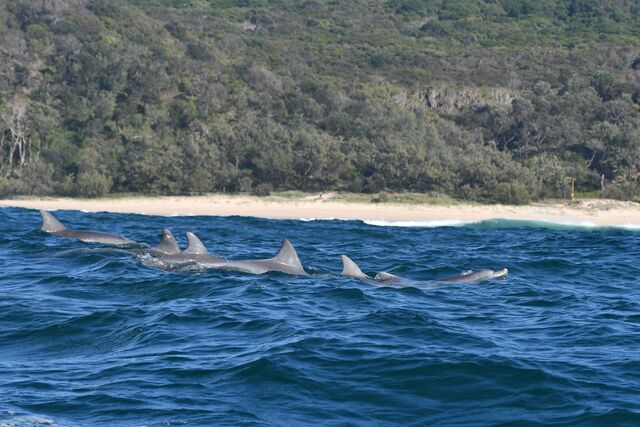
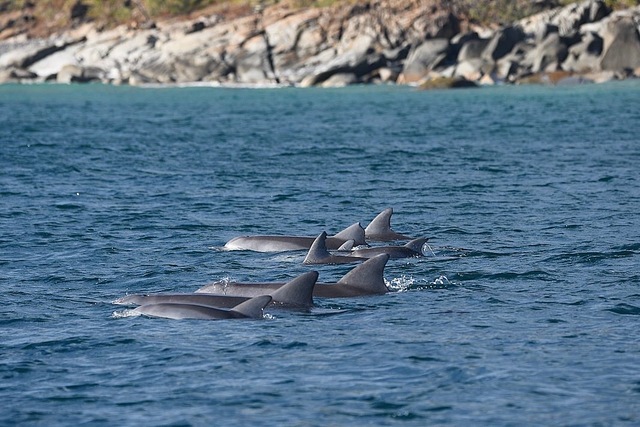
A popular attraction off Noosa beaches are the local pods of dolphins, and while locals know they exist up until now there has been no research conducted on them.
Dr Alexis Levengood, a research fellow and lecturer at the University of the Sunshine Coast founded the Dolphin Research Project SEQ in 2022 to research the marine mammals, along with her team of researchers.
Her research project follows more than 15 years of experience working with marine mammals including eight years conducting research on the world-famous Shark Bay dolphins in Western Australia.
The local research will focus on five pillars – animal behaviour, ecology, genetics, health, conservation and ecosystem dynamics, Dr Levengood told Noosa Parks Association’s Friday forum this month.
“We have a thriving population of dolphins here,” she said.
“Dolphins are marine mammals that breath air, like us, give birth to live young and nurse their young. They’re also long-lived, estimated to live an average 40-50 years and they are indicators of the environment we live in.”
There are 73 species of dolphins in the world and 15 in South East Queensland, she said. More than 630 dolphins have been identified in the area including seven of the vulnerable Australian humpback dolphins and a calf.
“What do we know about them – very little,” she said.
Most information on dolphins comes from research done in Sarasota, Florida which began in 1980 and Shark Bay, Western Australia which started in 1982.
Locally most work has been conducted in Moreton Bay with 43 studies published and 11 studies published from research in Hervey Bay.
There are no published papers on Sunshine Coast dolphins, but the first paper is in draft format, Dr Levengood said.
The dolphins most observed in the area are the common bottlenose, Indo-Pacific bottlenose and Australian humpback dolphins with records based on reports by eco tourism operators, marine stranding records and bycatch records.
The research project will include investigation of the dolphin population ecology such as how connected are they across space, socially, genetically and what are threats they face from natural predators and unnatural.
Early investigations looking at shark bites have found dolphins in the Sunshine Coast present with fewer shark bites, typically one bite mark, than those in Hervey Bay where some have three bite marks and survived all shark bites.
“They are prey to sharks,” Dr Levengood said.
“Dolphins like shallow water but sharks like it as well.
Other research will consider dolphin health, such as the appearance and cause of skin lesions, which could reveal wider ranging factors in the health of the environment.
Health skin lesions, body condition, ecotoxins such as pesticides, and stress levels.
“What we’ve seen so far they do have skin lesions,” she said. “They’re more common in Indo-Pacific bottlenose dolphins. We don’t know how severe these things are or whether they affect their survival.
“They present with more lesions after heavy rainfall which could be a result of runoff.
“Dolphins that live closer to the rivers have more lesions. Research shows dolphins living closer to urban centres have more lesions.”
Dr Levengood said dolphins accumulate toxins they digest in their bodies. Testing them for a range of chemicals as well as stress hormones will provide an indication of the health of the animals as well as the environment.
The research group will also look at issues such as strandings, entanglements, bycatch and evidence of boat strikes.
How can people help?
In addition to the research group Dr Levengood recently established a Facebook site, Dolphins sighting SEQ, and is urging citizen scientists to record their dolphin sightings on the site, including information such as time, date, geographical coordinates, numbers of species, identify the species if known and dolphin photos to assist with the research.
The team will also be running workshops between February and March on dolphin spotting.
“Any time you see an animal let us know about it,” she said.