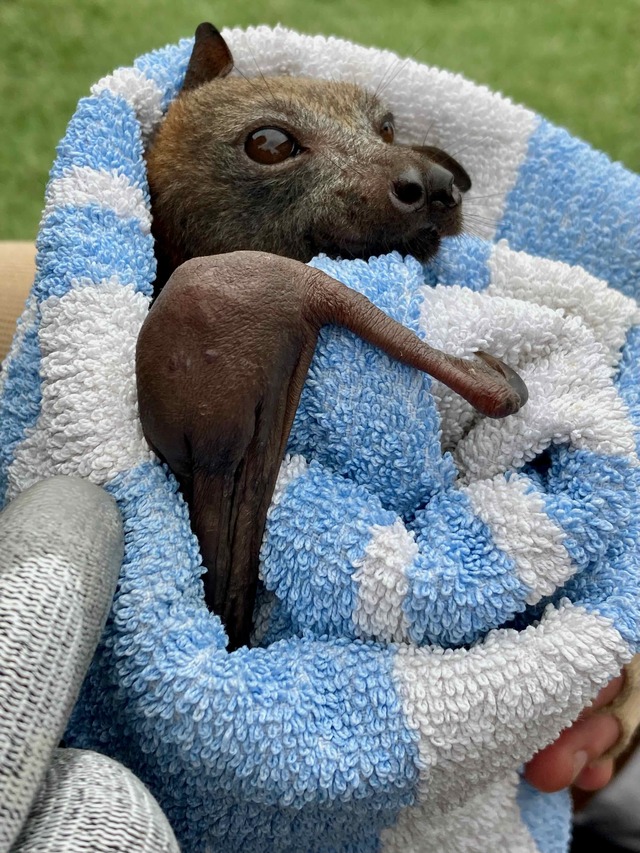
A major breakthrough has been reached in the flying fox netting incident at Noosa Golf Club, with wildlife experts, the club and netting contractors agreeing on a solution aimed at preventing further bat entanglements.
Flying fox specialists, Noosa Golf Club representatives and Gabba Sporting Nets met on Thursday to discuss the issue, following the deaths of dozens of little red flying foxes that became trapped in driving range nets earlier this week.
The incident sparked widespread concern among wildlife carers and the broader community.
According to Wildlife South East Queensland (SEQ) president Antony Born, the meeting resulted in both immediate and long-term measures to address the problem and improve wildlife safety.
“We’re satisfied with their response,” Mr Born said.
“They have a short-term and long-term plan in place.”
“They’ll be putting up wildlife-friendly nets with reflectors and lights. We’re grateful everyone has come together to try and solve this issue.”
Mr Bourn said the agreement marked a positive step forward after what he described as a confronting and largely preventable tragedy, highlighting the risks posed by large-scale netting in known flying fox flight paths.
Noosa Golf Club president Dale Officer told Noosa Today the club had already begun implementing interim measures, including additional lighting installed overnight to make the netting more visible to flying foxes as they travel at dusk and during night feeding movements.
“We’ve got more lights coming tonight. We only had one bat caught in the net last night,” Mr Officer said.
He said the club plans to remove and replace the top two decks of the existing netting over the next two weeks, reconstructing them using wildlife-friendly materials, reflectors and improved lighting systems designed to reduce the risk of further entanglements.
“The plan over the next two weeks is we’ll be able to pull down and replace the top two decks of netting, and reconstruct them with reflectors and lighting,” he said.
Mr Officer acknowledged the financial impact of the changes, estimating the cost to the club would exceed $20,000. Despite the significant expense, he said the club was committed to finding a solution that balanced player safety with the protection of native wildlife.
Flying foxes are a protected native species and play a critical role in pollination and seed dispersal across Queensland’s forests. Wildlife groups say the outcome at Noosa Golf Club could serve as an important precedent for other sporting facilities and land managers operating in known flying fox flight paths.
Authorities and wildlife organisations will continue monitoring the site as the upgrades are rolled out, with further updates expected in the coming weeks.