

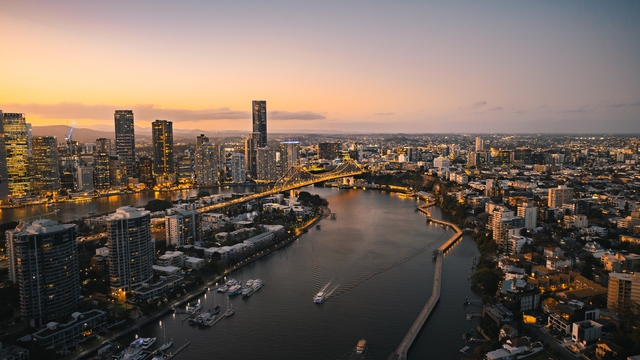
Alternative Perspective – Private infrastructure
Alternative investments have surged in popularity among private wealth clients over the past decade as access has broadened beyond large institutions. Importantly, “alternative” does not mean new or untested. Infrastructure, a key alternative sub-asset class, dates back over 170 years to the first private capital investment: the 1,911-mile Transcontinental Railroad in 1852, financed by Union Pacific, Central Pacific, and the US government. Today, private infrastructure spans a wide scope, broadly divided into economic and social infrastructure.
Economic infrastructure
• Transport (Ports, airports, roads, bridges, tunnels, parking, railways, etc.)
• Utilities (Natural gas pipelines, storage, power generation, water, sewage, solid waste etc.)
• Communication (Transmission, broadband networks, towers, satellites etc.)
• Renewable energy (Solar, on-shore & off-shore wind, hydro etc.)
Social infrastructure
• Education (Colleges/universities, schools, vocational training etc.)
• Healthcare (Hospitals, outpatient clinics, nursing homes etc.)
• Civic (Correctional complexes, courthouses etc.)
Not all infrastructure is investible. Public safety infrastructure, such as Police and Fire Stations and disaster management centres, are typically held on government balance sheets, along with other similar assets that are not intended to produce revenue.
What makes infrastructure …. Infrastructure?
While the definition and opportunity set of infrastructure has evolved since the transcontinental railway, the asset class remains fundamentally underpinned by common characteristics that make it incredibly defensive, with an ability to deliver resilience in a variety of macroeconomic environments.
Characteristics of infrastructure
• High barriers to entry: Projects require significant capital and regulatory approvals. Airports and seaports often operate as government-mandated monopolies.
• Inelastic demand: These assets deliver essential services, ensuring stable demand regardless of economic conditions.
• Long-term orientation: Multi-decade contracts with governments or corporates provide strong cash flow visibility.
• Inflation protection: Many contracts include inflation-linked revenue escalators. For example, Lane Cove Tunnel tolls rise quarterly with CPI.
Why now for infrastructure?
In addition to the points noted above, global infrastructure represents a US$100 trillion investment opportunity, driven by aging assets and new projects for a modern economy. The data shows significant private capital will be required to finance projects due to stretched government budgets, and more than 80% of the US$100 trillion spend is in opportunities outside the US.
The yield attributable to infrastructure investments can range from 5-8%, making infrastructure attractive for income-focused investors.
Risks with private infrastructure
Unlisted infrastructure in Australia shows annualised volatility of 5–7%, lower than equities (10–20%) but higher than bonds (3–5%). However, risks extend beyond volatility:
• Regulatory/political risk: Governments can alter terms under political pressure (e.g., Sydney toll review).
• Leverage risk: Capital-intensive projects carry heavy debt, creating vulnerability during rate hikes (e.g., Thames Water).
• Construction risk: Cost overruns and delays can erode returns if risk isn’t transferred (e.g., Channel Tunnel).
• Illiquidity risk: Large, complex assets have limited buyers, and transactions can be lengthy.
As with any investment, understanding the asset class and manager is critical. Speak with a financial adviser to assess whether infrastructure suits your portfolio.
As always, tread carefully.