



The past year saw those on the land put down some foundations on which the community can build in 2026.
Much of it has to do with the better understanding and implementation of traditional methods to improve the returns, at the same time growing more nutritional food.
Then there is the growing awareness of provenance – understanding the origin or source of the food we eat.
Supporting local producers helps build a sense of community as opposed to convenience.
There are the lessons to be learned from exploring history and developing a deeper sense of the benefits in preserving our heritage. That can be in buildings, food, art, performance and everyday activities.
Developing an awareness of the past helps us feel connected to historical events, places or figures. It can help us understand how time shapes our world and lives, often through shared experiences.
This awareness is increasingly important across many fields – from art to technology and consumer goods, as it helps establish authenticity, value, and ethical integrity.
What it helps develop is an agri-tourism industry that is attracting visitors from within Queensland, across Australia and from overseas.
A great example of how devotion to good, clean and healthy food came to us mid-year when Tim and Amber Scott of K2Beef and Kandanga Farm Store were the first in Australia to be accepted into the world-wide Slow Farms network.
Slow Farms is part of Slow Food International, a movement represented in more than 150 countries and dedicated to producing good, clean and fair food in a way that’s rooted in agroecological principles.
Care for their livestock, the soil and involvement in the community were key elements of Tim and Amber’s acceptance.
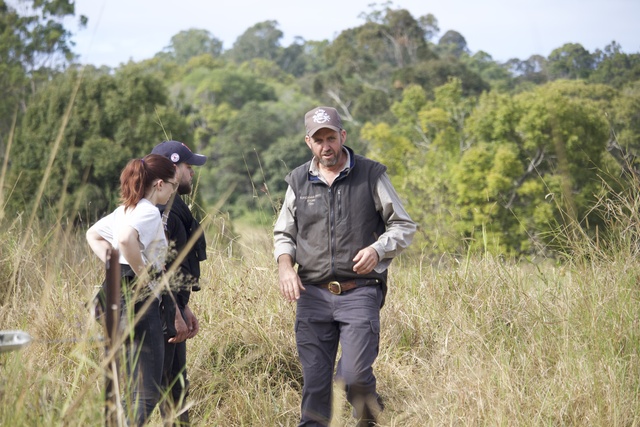
They run about 350 head of grass-fed cattle on four holdings in the Mary Valley. They focus on organic and regenerative food production, and throughout the year have teamed up with friends and fellow graziers from Western Queensland who share the same food production and environmental values as well as having organic certification.
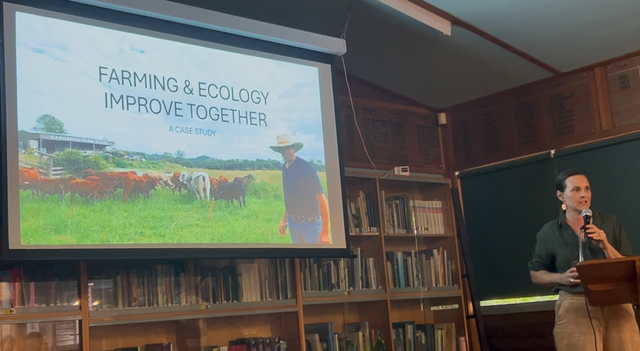
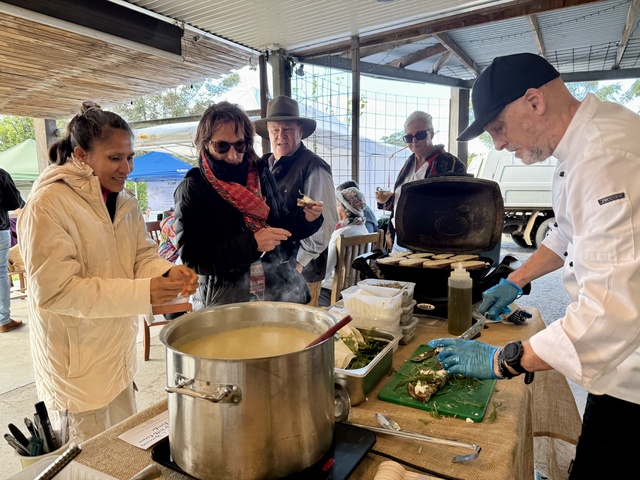
Tim and Amber are both proud and excited at what they are doing within the community – the farm store acting as a hub for seminars in agroecology as well as events to celebrate healthy food.
Being accepted by Slow Farms is validation of their vision, hard work and ethics. Yet acceptance also comes from the way they are connected with the Mary Valley community.
The announcement will have world-wide impact in growing awareness of the clean, green and healthy way food can be produced in Australia. It will also act as inspiration for farms with similar direction to apply for the status.
Agroecology is sustainable farming that works with nature. It’s about how to design and manage sustainable food and farming systems, with methods that increase yields while reducing environmental impacts.
Long-term profits can be increased by reducing input costs (fertilisers, pesticides), and improving soil health.
Slow Farms are a tangible example of how agriculture can be both environmentally friendly and deeply connected to local communities.
Each farm in the network embraces the principles of Slow Food, promoting biodiversity, adopting agroecological practices, and fostering strong ties to the land.
“We haven’t changed anything to get Slow Farms accreditation,’’ Amber said. “For us, we were already doing it.
“There were questions about chemical use, and obviously we are organic. Animal welfare was very high on the criteria, such as how calves are handled.’’
The use of sheds for keeping livestock in the harsh northern hemisphere winters came up but Amber explained they are not needed in Queensland.
“We have complete solar power – portable solar fencing units, solar-powered water pumps, and the investment in solar for refrigeration.
“The other really interesting thing was the social implications and contributing to community, which is really lovely.’’
Slow Food Farms are set to become the largest global network of farms dedicated to producing good, clean and fair food in a way that’s rooted in agroecological principles.
Aligned with Slow Food’s philosophy that everyone deserves access to nourishing food that supports communities and strengthens local economies, these farms are designed to embody the future of sustainable agriculture.
This is in contrast to farming and food distribution systems that affect biodiversity loss and the depletion of vital natural resources, while deepening social inequalities – small farmers and communities can be put at risk by corporations, all the while grappling with natural disasters, health crises and unstable markets.
With K2 Organic Beef, no third parties are involved and whole of life traceability for every animal is maintained. This means the meat comes from animals that have never been traded through saleyards or even by private sales to different owners.
“We know for sure our animals have been managed in a way that is in line with natural landscape function and honours natural animal behaviour. We use software to keep records which means we can tell you which paddock they have been in and when for their entire lives as well as what minerals supplementation and homeopathic nosodes they have had access to.”
Nosodes are homeopathic preparations made from biological materials.
Discussions are under way to have Tim and Amber as Slow Farm delegates at the 2026 Terra Madre Salone del Gusto in Turin, Italy – the international conference with countries from around the world participating.
Tim and Amber started the Kandanga Farm Store in 2015 and have since developed their K2 Organic Beef operation.
Their move down the regenerative farming route had no definite starting point, rather something that evolved over time from their individual backgrounds.
“I don’t know why it happens but it does seem to help contribute to a better social network and outcomes for people within community,’’ Amber said.
“It’s the way you think – sharing knowledge, we’re running farm-based events as well as food-based events which again has more community building.
“We are creating opportunities for other people.”
BLUE RIDE FOR MEN’S HEALTH
You can’t have a Blue Ride without Bluey … and Bingo for that matter.
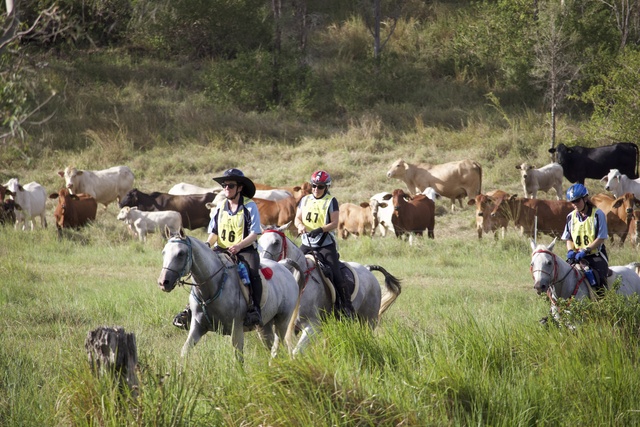
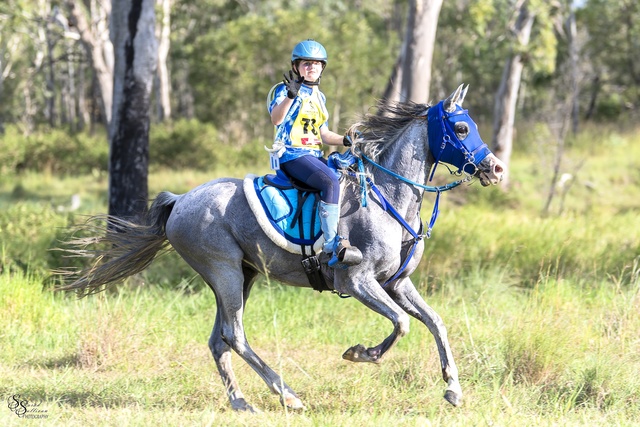
The holding of the Kilkivan Blue Ride for Men’s Health in March cast ripples of support that spread throughout the community, beyond the endurance horse-riding association.
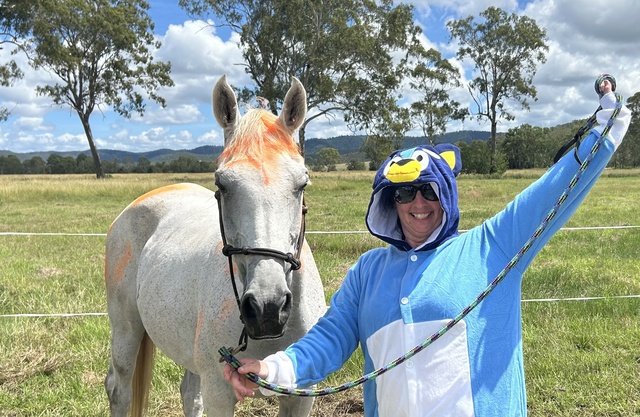
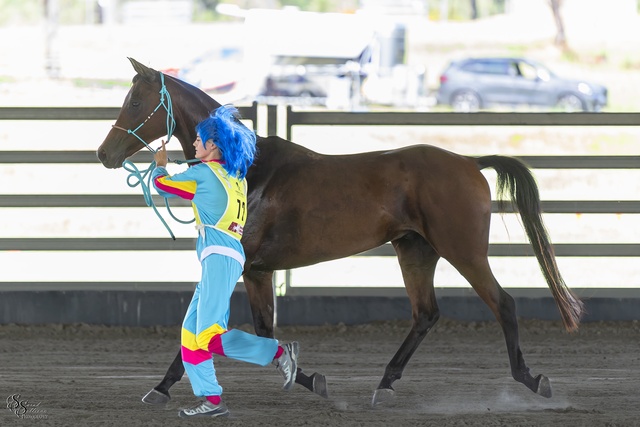
Wondai’s Sue Vacher dressed as Australia’s loveable blue heeler for the event and added dabs of orange paint to her horse to signify Bluey’s younger sister, Bingo.
The Blue Ride, originally scheduled for the previous November but postponed due to wet weather, attracted a field of 72.
It follows the Bony Mountain Pink Ride For Breast Cancer held each February.
The Kilkivan ride saw a humid 30 degrees this time for a 2pm start. Little wonder that Sue Vacher was keen to change from the Bluey costume into her riding gear.
“You can’t have a Blue Ride without Bluey … and Bingo,’’ Sue said after the initial pre-ride vet check of horses.
Cloud cover and a breeze rolled in as the field negotiated the first of three legs of the 80km course.
There were 144 acceptances for the six rides over two days – from 10km and 20km introductory rides to 40km and 80km intermediate rides.
Some of the 80km course was over country ridden in the 2013 Tom Quilty Gold Cup held at Kilkivan.
The Kilkivan ride this year will be on May 16-17, with riders again using the event to complete 80km distances for themselves or horses as they prepare for the major rides this season.
These include the Far-A-Way Easter Endurance Carnival at Imbil, the 2026 Tom Quilty Gold Cup at Stirling’s Crossing in the Mary Valley on July 4-5, and the Queensland State Championships at Biggenden on September 12-13.
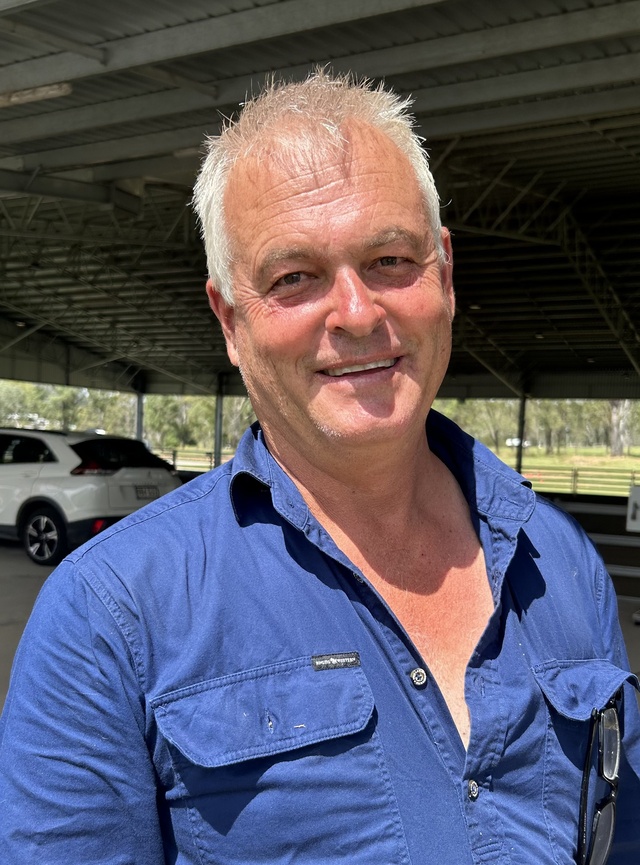
Queensland Endurance Riders Association (QERA) president Dick Collyer was pleased the association could present the Kilkivan ride.
He reminded that men’s health is an issue and events such as this encourage men to get together and talk horses when otherwise they may be reluctant to open up.
That can be the starting point and afterwards the talk becomes more general on how things are going.
“Men’s health is about awareness,’’ Dick said. “That’s the first step … then there’s understanding.’’
HORSES HEART OF HERITAGE
The 2025 Kilkivan Great Horse Ride and Country Weekend Escape in April promised to be double the fun and excitement of previous years.
It exceeded that … by far, and was probably three times bigger than 2024.
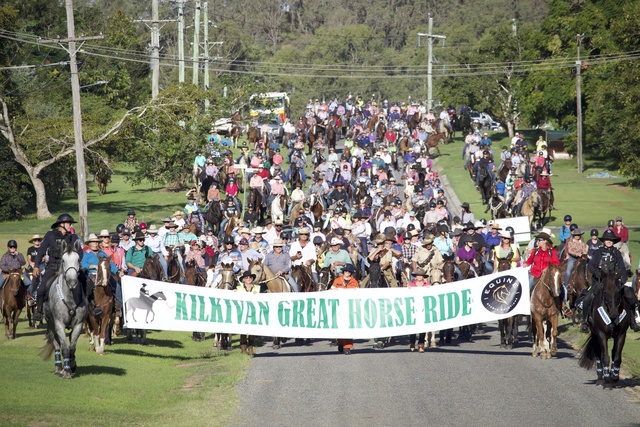
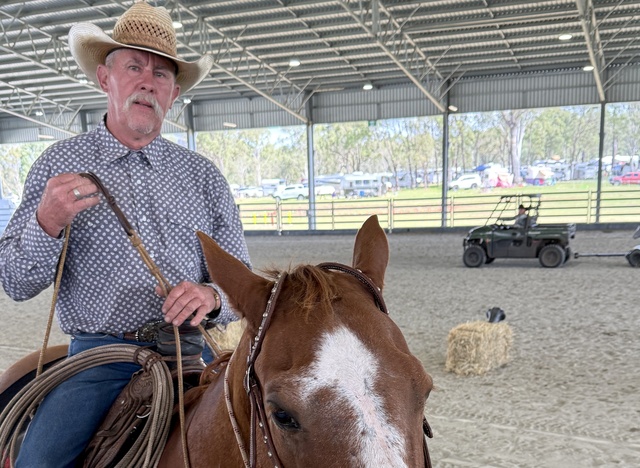
More than 400 riders and horses took part in the ride down the main street at 4pm, watched by an enthralled crowd that took up vantage points ranging from shop fronts to the hotel verandah.
The weekend saw more than 1000 horses and riders nominated for a variety of events. From trail rides to calf-roping, barrel racing to heavy horse displays, a handy horse challenge and ranch sorting – where teams of riders sort 11 numbered cattle.
The Cobb & Co coach was a popular addition to the program this year, with the promise of a working bullock team for the 40th anniversary event on April 11 this year.
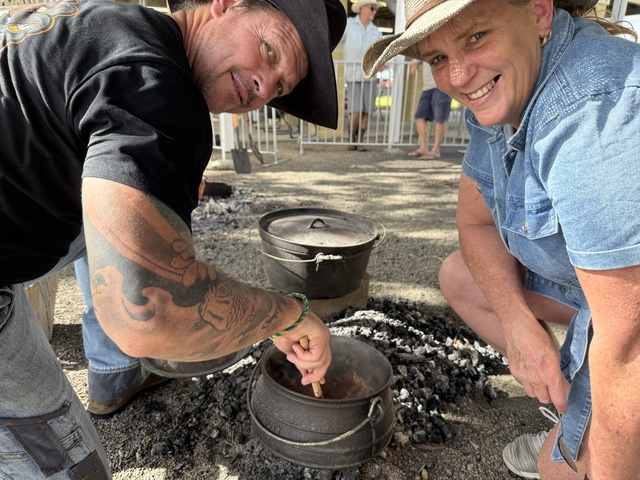
Yet that wasn’t all – there were working dog demonstrations and camp oven cooking displays, musicians and artists, stationary engines and antique and veteran car clubs.
Included was a demonstration 25km ride by Queensland Endurance Riders Association (QERA), with Kilkivan having recently successfully held a Blue Ride in support of men’s health.
A feature of the weekend was the sense of history evident in the town, with the event paying tribute to the area’s long heritage with horses and to celebrate the Australian bush culture.
Ride weekend president Craig Ellison was thrilled at the popularity of the event and the sense of pride it engendered in the community.
“Well, the weather was certainly on our side,’’ he said after the street parade of horses. “An early morning shower took the temperature out of the day, and made it fantastic for the horses and the riders.
“The numbers were up substantially on last year in preparation for our 40th anniversary in 2026.
“The barrel racing on Friday night was a huge success.
“The off-track events on Sunday added another dimension – such as the handy horse that shows a genuine concern for retired racehorses.”
While the horses remain the main attraction of the Kilkivan Great Ride, next year the focus will be on the greater aspects of a country weekend, Craig said.
“We just want people to have a good, wholesome country weekend.’’
The Kilkivan Great Horse Ride & Country Weekend Escape celebrates the horses and bush culture that has been long part of the region.
Kilkivan was central to the opening of the 5330km-long National Trail – stretching from Cairns to Healesville, outside of Melbourne.
That was in October 1988, as part of an Australian Bicentennial project.
Fabian Webb of the Webb Brothers fame started the Kilkivan Great Horse Ride in 1986 as a tribute to the history of the area.
The Webb Brothers were the instigators of what has become the Gympie Country Music Muster – an event that has also been running for four decades and reached national acclaim.
Mike Webb, who continues the family history as a bush poet, welcomed the return of the Great Horse Ride to its former popularity.
The Webb Family came to the area in 1862 when GS Webb set up on a property at Black Snake.
“It’s good to see horses back in Kilkivan,” Mike said. “It’s a tradition which we pay respect to.
“That’s been my trade if you like. Today everything is about time and money, but that does not do a lot for the country towns or for the cattle.
“They appreciate a gentle lifestyle. It’s about treating the cattle calmly and that brings on good conditioning.
“If they’re happy, they’re doing well. They’re thriving.
“We’ve got the best meat in the world in Australia.
“You need to travel to see and understand what we have in this country. There is no second place … we are that far in front.’’
RATTLER THE HEART OF COMMUNITY
The Mary Valley Rattler embodies the history of the region, winding its way through the community thanks to the staff, volunteers and supporters that make it run.
Last year it gained world-wide acknowledgement through Slow Food for its links to the people, the farmers and the producers.
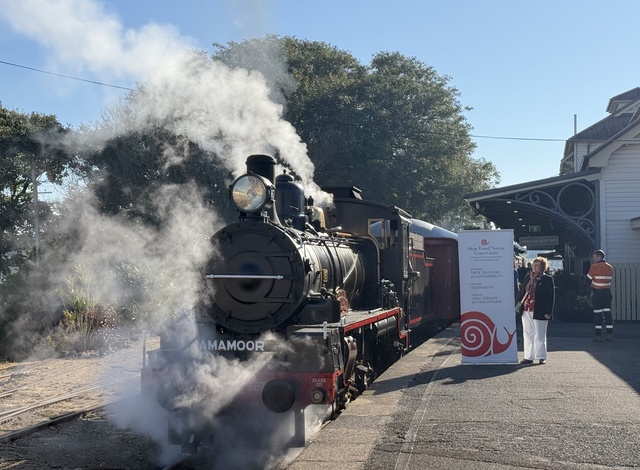
The Spirit of the Mary Valley is the flagship of this community-based operation. The lovingly-restored C17 967 steam locomotive stands at the heritage-listed Old Gympie Railway Station, with refurbished red carriages coupled on.
The Slow Food Snail of Approval award is not just for the support the Rattler provides to local food and producers but for the way it encourages the wider community to support each other.
As such, it is part of the world-wide Slow Food movement – the first train in Queensland to be recognised in such a way.
Each journey from Gympie through the Mary Valley to railway stations at Amamoor or Dagun are more than a novelty, entertainment or a pinch of nostalgia.
The train trips are like visiting a museum without walls, an excursion through what makes the region thrive. It’s history, it’s culture, it’s artistic abilities, its architecture and sense of community.
These adventures weave their way through the very fabric of the valley, providing a glimpse at the future as well as its glorious past – one built on timber-getting, farming and gold mining.
Then you have the present-day drivers of the economy, still built around agriculture and horticulture, even aquaculture. Yet it is very much about tourism – agritourism if you like.
The stops at the railway stations provide a chance to experience musical talents as well as produce stalls and wine tastings from the region. Then there are historical notes and displays that capture the colour of those days of yore.
The Mary Valley Rattler is a Top 10 train experience in Australia and the only one that doesn’t rely on government funding.
The way the organisation embraces its staff, volunteers and supporters make it an exceptional recipient of the Snail of Approval.
The award also comes for the way it provides so many facets for locals as well as the many visitors from throughout Australia and the world.
The Snail of Approval is awarded to those who are judged to be part of a system that encourages good, healthy and fair food for all, produced in a sustainable manner.
“Fairness is a cornerstone of how we operate at the Mary Valley Rattler,’’ general manager Sherry Lowe said.
“We proudly pay our producers and suppliers fair prices and ensure their stories are woven into the experiences we offer.
“By creating platforms for regional food to be enjoyed, celebrated, and shared, we help build a strong local food community – one that respects the hands that grow and make the food, and one that remains accessible and enriching for both locals and visitors alike.’’
The whistle of the Mary Valley Rattler steam train has echoed through the Gympie region for more than a century – a sound that once marked the daily rhythm of transporting fresh produce from the fertile Mary Valley to markets across Queensland.
The Mary Valley branch line was established back in 1911, and was critical in the transport of fruit, vegetables, and dairy, connecting local growers to the broader world. While its function has evolved, its spirit remains unchanged — deeply embedded in the land, community, and local food culture.
Formed in 1996 after the closure of the line, the Mary Valley Heritage Railway was created by the local community and steam railway enthusiasts to re-open the line and operate tourist train services.
Today, The Mary Valley Rattler is much more than a heritage rail journey – it is a celebration of slow travel, a champion of regional producers, and a dynamic community precinct bringing together food, culture, and history.
From the moment guests step onto the platform at Old Gympie Station, they’re immersed in an experience that highlights the flavours, stories, and spirit of the region.
The Rattler invites everyone aboard to slow down, connect, and savour all the Mary Valley has to offer.
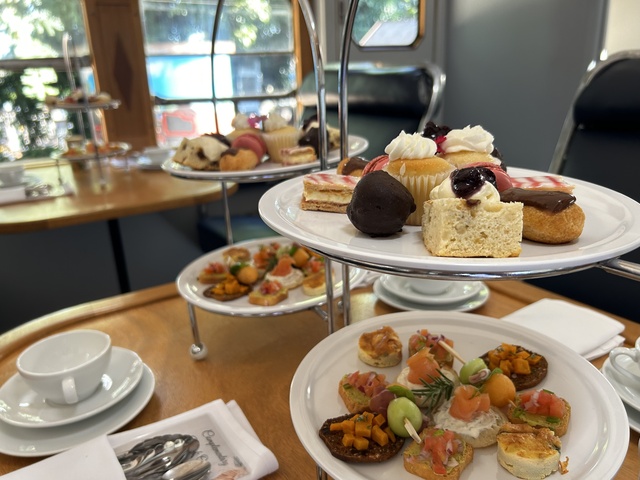
The Gympie Station precinct is home to the Rusty Rails Café, a hub for locally sourced food, community connection, and seasonal celebrations.
“We celebrate food way beyond the paddock – we are taking food to the people, to the traveller,’’ Sherry Lowe said.