Next week’s Life of Brine will be my 700th column in Noosa Today, which I reckon is worthy of a celebration.
While that number includes columns written for the original owners of the masthead, as well as every Star News Group issue, it does not include the surfing column which preceded it in the Noosa Journal between 2008 and the Journal’s 2012 demise. If I add those in, we nudge closer to the magic 1000.
I’ll let you know when we get there, but for now, and for a week or two, I thought I’d celebrate by digging up some happy memories from more than half a million words of Life of Brine.
Cabo dreaming
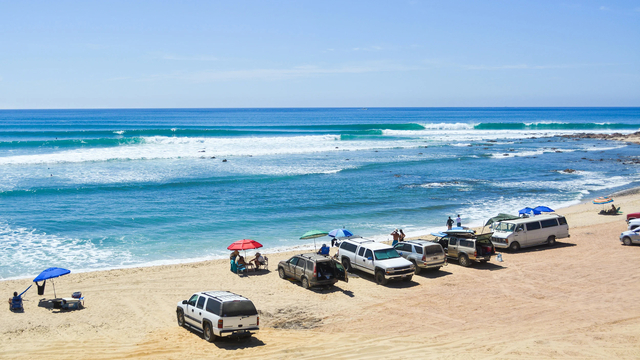
I first discovered the rugged appeal of Los Cabos, Baja California Sur, Mexico, and specifically its East Cape, in 1999 when I attended my first Surf Industry Manufacturers Association conference, and it remained a favourite until the magic of La Saladita on the mainland won me over a dozen years later. Here are a couple of takes.
Zacatitos
When you reach the end of the new toll road from Los Cabos International Airport to the coast, the azure Sea of Cortez lies dead ahead and the most important decision of a Cabo holiday is upon you. Right or left?
To the right a dual carriageway (the only one in Baja California Sur, for the moment) will carry you along the tourist corridor and eventually dump you in the frenetic port of Cabo San Lucas, where you will be harassed all day by bad mariachi bands and all night by excitable hookers. Me, I go left.
The left turn will land you immediately on the Roundabout of Death (so named by visiting gringo surfers), a humungous circuit around a nature plot where eyes in the back of the head and a loud horn are a distinct advantage. Taking the Zone Touristico exit, we slip past the hotel district, take a detour onto the dusty construction site of the new road that will one day lead to the San Jose marina, bump past the sewage plant holding our noses, then ease our way over the coastal mountain goat track for 20 kilometres, and finally slide down the hill into the gringo settlement of Zacatitos. Welcome to the middle of nowhere.
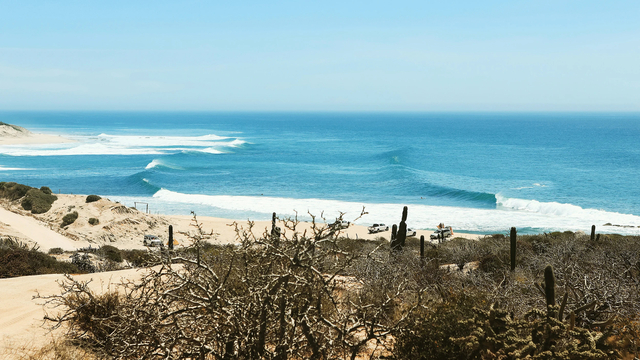
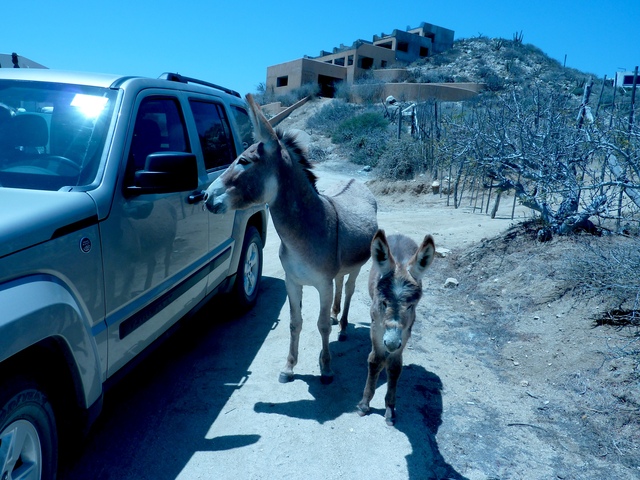
This is the start of Cabo’s East Cape, a gloriously under-developed 80-kilometre stretch of Cortez coast where hardly anything ever happens. The high desert drops down out of the hills and meets the sea in deep, dry arroyos. Mules rule the dirt tracks and frequently seek midday shade under the woven beach palapas.
Dawn on the Sea of Cortez reveals corduroy lines of ocean groundswell, groomed by a twisted journey from the equatorial Pacific, that wrap again into half a dozen bays. Then precisely at 10.37am from March to September, the wind begins its rotation, picking up velocity and creating a sea of white horses. On East Cape the second part of the day, après-surf, begins.
This is where old surfers come to grow even older disgracefully. One such is Bob, with whom I share a glorious morning’s surf at Nine Palms, so named for the palms either side of the access track, seven of which have died since my first visit. Bob is a retired judge from Bakersfield, California, who camps on the beach at Nine Palms, sleeping in a campervan he leaves here each summer, during which he’ll fly in and fly out four or five times, relishing the time to surf, read, walk the beach and maybe suck on an icy Pacifico or three come sundown. “I love it here,” he tells me. “It’s the end of the road. There’s a certain isolationist comfort in that.”
Rancho Buena Vista
The stretch of winding road between La Paz and Los Cabos – the final hours of the interminable Highway One that snakes through mountains and deserts the length of Mexico’s Baja California peninsula – is a lot better than it was, but the roadside graves at every bend demand a level of attention I just couldn’t muster this hot and dusty early summer afternoon.
We were expected back at Los Cabos for a surfing expedition on the remote southern tip of East Cape, but my yearning to stop driving got the better of me and, entirely on a whim, I swung off on a dirt track to the coast just south of Los Barriles. A sucker for a rustic sign, I’d zoomed in on a broken-down classic half-hidden in the cacti. It said simply, “Rancho Buena Vista. Fish. Accom”.
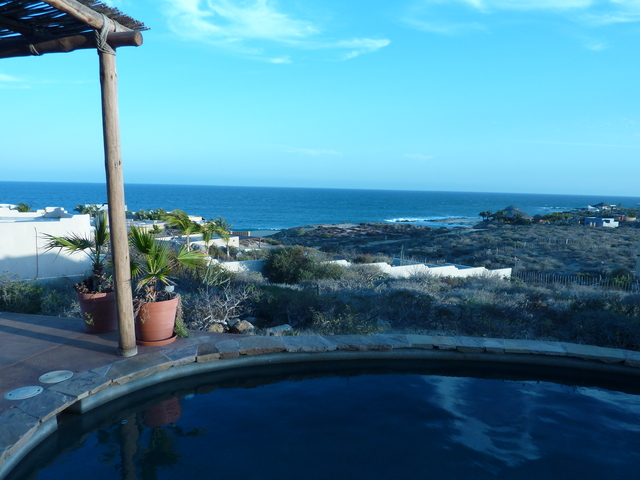
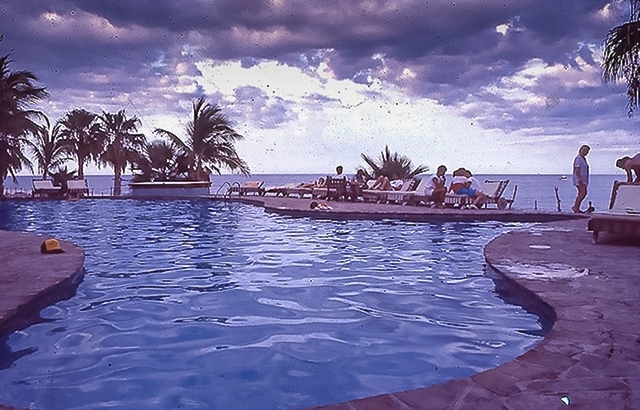
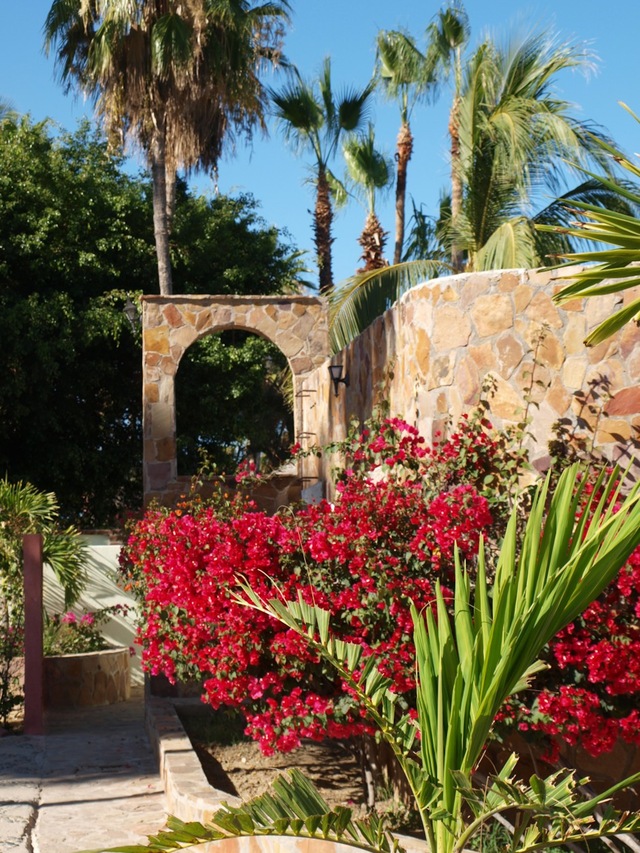
Rancho Buena Vista was a cluster of sun-worn buildings at the bottom of a hill. Beyond lay the sparkling Sea of Cortez. The place seemed deserted. I checked my phone and Blackberry. No signal. I loved RBV immediately. We scared up someone to check us in and were shown to a cabin whose grass roof had seen better days and whose outdoor table had lost a leg, but inside the basics were clean. More importantly, from our deckchairs we looked out to a stretch of sandy bay that ran all the way to the tip of East Cape, the breeze off the sea was refreshing and the margaritas were potent and two for one, it being 4pm happy hour.
Fortified with tequila, we snorkeled the inshore reef and did some beachcombing before returning to the big palapa by the pool for pre-dinner drinks with our fellow guests, who turned out to be, in the main, good ole boys from California and Texas, intent on killing fish and drinking their own body weight in beer and tequila.
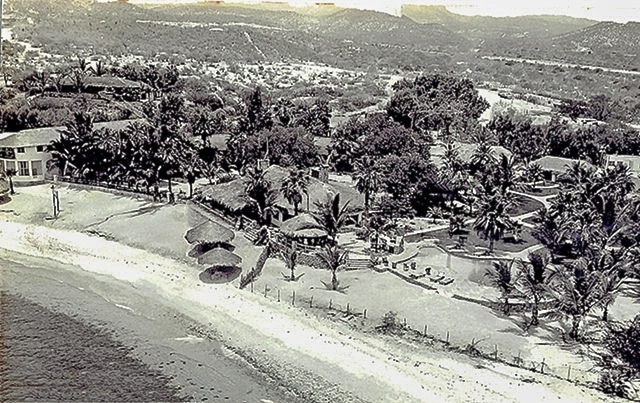
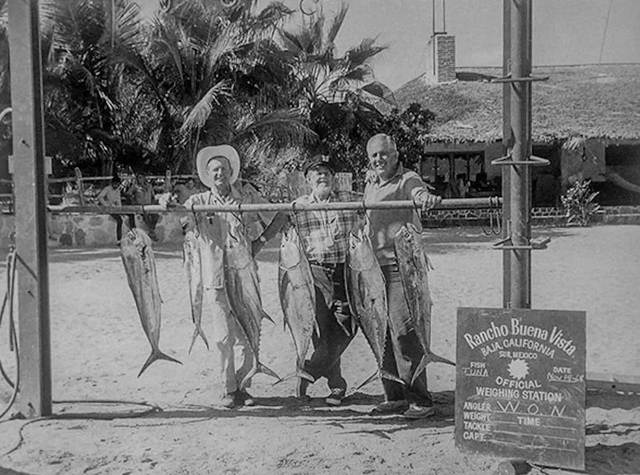
Buena Vista was a fishing lodge of the old school. In fact it was the first lodge built in Baja Sur, back in the early ‘50s when the only way to get to East Cape was to fly in by light aircraft and land on the soccer field. This was exactly what pilot and fishing tragic Herb Tansey and his pals had done in 1952, then being ferried by donkey down the hill to the Buena Vista goat farm where they rented a room and a boat with an outboard. The fishing was so good Tansey bought the farm, had a classic stone-walled lodge built at the shore and started renting rooms to fishermen.
And now to us. Muy gusto, Buena Vista!