By Hollie Harris
SCIENTISTS fear the Irukandji jellyfish is getting a sensationalised rap about migrating down South toward our beaches after a spate of stings on Fraser Island recently.
RACQ LifeFlight rescued a 10th person with a suspected Irukandji jellyfish sting at Queensland’s Fraser Island since December 22.
A teenage girl was airlifted to hospital for treatment in a stable condition last week, after being stung on the leg.
Australian Marine Stinger Advisory Services director Dr Lisa-Ann Gershwin says Irukandji stings were not new to Fraser Island and had been happening for decades.
“The database shows plenty of Irukandji stings dating back to 1893 on the South East Coast. There is no invasion and not a shred of evidence to suggest Irukandji are moving south,” she said.
“The species is incredibly fragile. It is extremely tied to its habitat and the idea that they are migrating toward the Sunshine Coast over the next five years is absurd. There are no more stings recorded than any other year and, in fact, the chances of being stung are less than ever before.
“I say show me the evidence. If you have any, it should be peer-reviewed and documented,” she said.
Irukandji Syndrome is the name given to the illness which follows a sting from 16 different jellyfish species.
There were eight documented cases of suspected Irukandji syndrome on Fraser Island in both 2015 and 2014.
Dr Gershwin says not every jellyfish in Australian waters is a box jellyfish or an Irukandji and has just released a new jellyfish app in the hope it will make Australian beaches safer by reducing the number of stings and providing warnings that the animals are present in the water.
The jellyfish app contains information about swimmer safety and scientific information about jellyfish, including photos and first aid treatment.
“The idea behind this is to give people the ability to know a bit more about what they’re looking at so that they’re not afraid of every jellyfish,” she said.
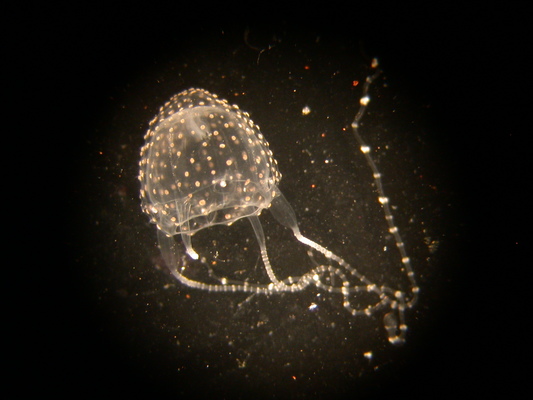
An Irukandji is very difficult to see. They are the size of a thumbnail and clear with small tentacles, so most people who are stung are unable to identify the species.
No definitive treatment is currently available for the Irukandji Syndrome, however, the Australian Venom Research Unit is currently involved in research to develop an ant venom to treat Irukandji envenomation.
The symptoms of an Irukandji jellyfish sting are not immediate and may appear five to 45 minutes after the initial sting. Signs and symptoms can include severe backache or headache; shooting pains in their muscles, chest and abdomen; nausea; anxiety; restlessness; vomiting; and breathing difficulties.
Management of Irukandji jellyfish stings:
* Carefully remove the casualty from the water;
* Avoid rubbing the sting area;
* Immediately douse the sting area with vinegar for at least 30 seconds;
* If vinegar is not available, carefully remove tentacles off skin and rinse well with seawater;
Call triple-zero (000) for an ambulance immediately;
* Regularly monitor and record the casualty’s pulse, breathing and consciousness level; and
*Begin resuscitation if necessary.
Source: Australian Resuscitation Council