
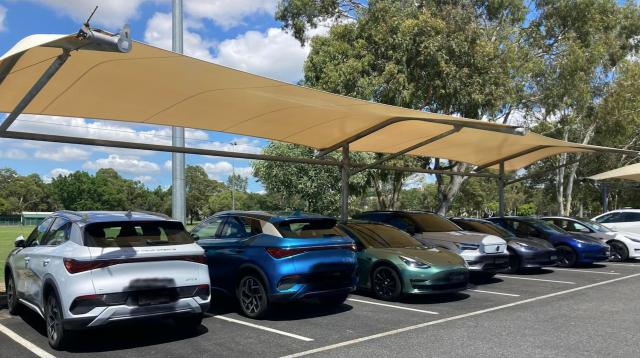
Statistics can be tricky. Take, for example, this astounding figure: EV sales in Australia increased by 385 per cent in 2022.
Australians love league tables, and surely this figure would put us at the top of the global EV table – especially when the equivalent figure for boastful Norway was a meagre seven per cent.
But, as usual with statistics, the devil is in the detail.
Australia’s rocketing increase came from a lowly base. In 2022 the 385 per cent increase brought the total fully-electric EV sales in Australia up to 33,410.
But Australians bought over one million petrol and diesel passenger cars that year. Our EVs were only four per cent of all purchases.
Meanwhile, Norway remains the world leader, with over 153,000 EVs purchased in 2022 – 88 per cent of total sales. Norway aims to achieve 100 per cent fully-electric sales by 2025.
And all other advanced economies are streets ahead of Australia – even neighbourly New Zealand at 27 per cent.
Two questions emerge. First, how did Australia end up at the back of the pack in the race to electrify its cars?
One reason is wrapped up in Volkswagen’s refusal so far to send any electric passenger vehicles to Australia.
In recent years, Australia has joined Russia as the only two advanced nations not to adopt a fuel efficiency standard (EFS). In simple terms, this standard means that all the cars imported by a particular maker must meet a certain average level of fuel efficiency, measured as CO2 emissions per kilometre.
Because Australia has no standard, car makers have been free to import shiploads of gas guzzlers. With an EFS in place, they would need to offset the gas guzzlers with shiploads of low-emission – or no-emission – imports, particularly EVs.
VW Australia’s managing director publicly admonished Australia for its lack of an EFS.
In a forthright statement, he also decried the lack of EV charging infrastructure in Australia (a striking example of the chicken and egg conundrum). That lack feeds into the national ailment called range anxiety – the fear of running out of charge while far from home.
In a further critical jab, the VW chief lamented the lack of government financial incentives for EV purchasers.
One Noosa resident wrote home recently about the incentives he’d learned of while holidaying in Norway. They included exemption from the usual vehicle taxes, parking fees and toll charges and the provision of large carparks with individual free charging stations.
Most breathtaking was the imposition – on every non-electric sale – of a vehicle tax almost equivalent to the purchase price.
Australia’s uptake of EVs was certainly not helped by baseless statements made during a recent election campaign.
There were strident claims that – if EVs prevailed – Australians would lose their weekends and lose their utes. Similarly baseless was the claim that EVs were incapable of towing the boats and trailers essential to the Aussie weekend.
Still, the picture is not all doom and gloom. Australia’s 2022 uptake of four per cent actually signals exponential progress since the two per cent in 2021. If anything like exponential momentum can be sustained, perhaps Australia will become the Norway of the Antipodes.
Our next ZEN INC column will switch focus to our second question: What positive factors are bringing EVs onto our streets in unprecedented numbers?
And we’ll explain the paradoxical relationship between EV uptake and the boosted sales of dental floss.