By PHIL JARRATT
ONCE I realised that I wasn’t going to be able to see anything in any direction, I looked up at that beautiful Saturday morning night sky, just a solitary wisp of cloud across the constellations like an ethereal sash, and relaxed in the moment.
Here we were on the sand at Main Beach, Noosa, in the pre-dawn of Anzac morning – what, 5000 or more of us?
I could see that the crowd went all the way to First Point, but I have no idea how far it stretched down the beach to the west.
This was not a sombre crowd but people spoke only in low whispers when they had to as we waited in respectful silence for the service to begin, proud old Diggers with chests sagging under the weight of medals, young families with kids on dads’ shoulders for the view, surfers, hipsters, backpackers and schoolkids.
As I said, from my position I couldn’t see a damn thing, but I learned later that there were many by the water’s edge who could see but not hear, and I think I may have had the better of the deal. It was quite moving to hear the Unknown Soldier’s casual, laconic delivery of the words that truly summed up what the spirit of Anzac has become.
As playwright Cr Frank Wilkie, who scripted the service, put it: “It’s important we honour them, not by glorifying war, but by what is hoped to be an honest testament to their courage and dedication to their mates.”
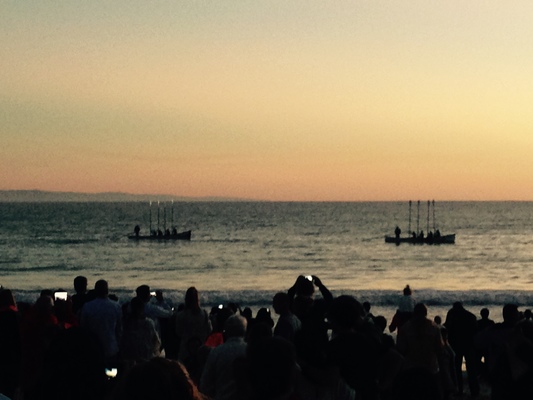
It was all of that, Frank, and although we couldn’t see the boats land, and could only hear that beautiful rendition of Eric Bogle’s spine-tingling The Band Played Waltzing Matilda, we could feel every moment. Even the ocean got in on the act.
As the Last Post played, a rogue set reared up in the dark at First Point and you could hear in the background the rumble of surf upon sand, just as you may have done on another beach 100 years ago as the shallows turned blood-red.
Later on Anzac Day I was searching through my collection of ancient books and magazines for something when I stumbled upon a copy of Man magazine, the slightly risque barber shop magazine that did so well in the middle years of the last century. Between the wink, wink, nudge, nudge artful representations of scarcely-clad ladies in this edition from a few months before I was born, I discovered the following in a column called “World Affairs” by one J.M. Prentice:
“Some even think that Anzac is a fading vision. Another 10 years will see the last of the Anzacs to his fathers; thereafter Gallipoli and The Landing will rank with the Peloponnessian Wars – a rather dramatic page in the larger history of the world.”
Well, how wrong was Mr Prentice! And this was written when the Anzac survivors were about the age I am now, and Gallipoli was very much a live memory, not as removed in time as much as the Vietnam War is to us. But it was Vietnam that took us further away from the legend of Anzac. I remember at the time of the moratoriums, when only Gough Whitlam stood between me and my study-deferred National Service, how much we loathed the “glorification of war”, which was all that we saw in the march of the medals and the sea of proud red faces every 25 April.
So has Anzac Day changed or have we? The late Malcolm Fraser contended until the very end that it was the Liberal Party that had changed, not him. But I think it was both, and although I concede that my world view is very different now to what it was when I was conscripted, there is no doubt in my mind that what we commemorate now is not the glory of war but the futility of it. And the lost innocence of a young country that would happily send off teenage boys to die horrible deaths on foreign shores in defence of a fading empire.
The heroism of the fallen is not in question, but what we remember now is that no matter how stupid and misguided the Dardanelles campaign, and many of those before and since, may have been, their sacrifice helped define us as a nation.
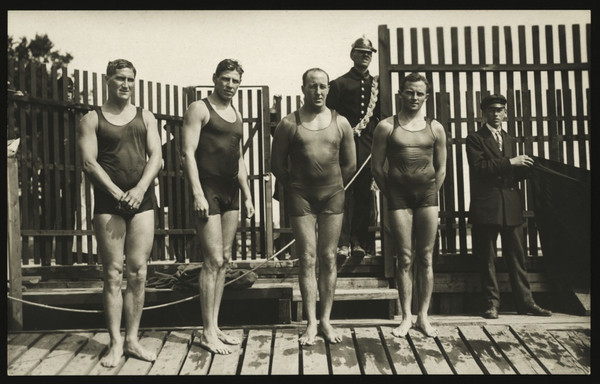
One last word on Anzac. As the lifesavers brought the boats ashore and I lost them in the crowd, I couldn’t help thinking of dear old Cecil Healy, whose name I didn’t see anywhere in the remembrances of things Anzac. Cecil wasn’t in the Anzac landings, but he knew a lot about sacrifice. A surfer, lifesaver and rower of note, he was Australia’s greatest swimmer of the pre-war years, but he sacrificed his chance to win gold at the 1912 Stockholm Olympics when he refused to swim without Duke Kahanamoku, who had failed to show for his semi-final.
It wouldn’t happen today, but they gave Duke another shot and he beat Cecil by a stroke in the murky waters of Stockholm Harbour. The two swimmers became firm friends, and Cecil was one of the men in the NSW Swimming Union who arranged Duke’s visit to Australia just two months before the Anzac landings. Shortly after this, Cecil enlisted in the AIF and spent much of the war at Trinity College, Cambridge, training and motivating recruits. In June 1918 he was commissioned as a second lieutenant in the Sportsmen’s Battalion and posted to France. He was killed during his first action in the battle for Mont St Quentin on 29 August, just nine weeks’ short of the armistice.