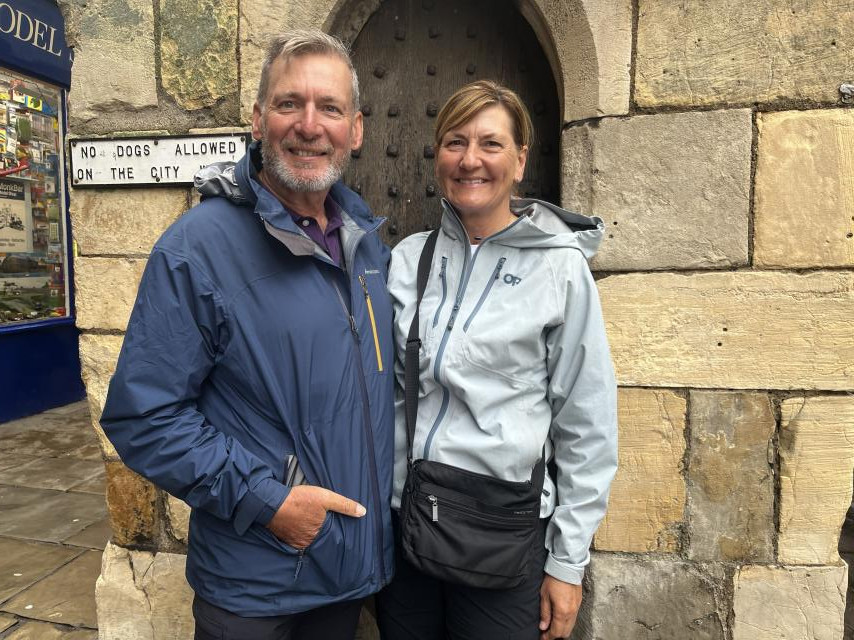
Phil: Was there an element of healing in your walk, even if you didn’t set out that way?
Jane: For me I think there was a sense of letting go after what we’d been through with family dying, the stress of decluttering our lives and other things, and by the time we left on the journey we were both exhausted. When we started the walk I felt hyper-charged, but once we got into the rhythm of it, the walk was quite cathartic. It was quite a beautiful thing to slowly realise, I don’t need to be anywhere else at this moment in time, and all we need to think about is what we’re going to eat for breakfast, lunch and dinner. The thing you can’t buy is time, and having lots of time allows you to shape it. It becomes a valuable commodity.
Graeme: So you’re walking along in the heat, wearing shorts and a tee, and there are no toilets out there so you just wander off the track a bit and find a bush. But there’s a lot of paspalum in the longer grass and with that and the heat I developed a quite severe rash on one of my legs. My calf doubled in size overnight and I could hardly walk on it. We video-called a medic mate in England and he had a look at it and prescribed antibiotics and anti-inflammatories and told me how to treat it. The next day I wasn’t feeling well enough to walk but Jane took off and I was going to get a bus. But I started walking around the local area looking for inspiration to walk the trail, and my inspiration came from my dad who had been in New Guinea in World War II and I’d listened to all his stories about walking through the jungle for days. So I started walking rather than catching the bus. I was limping but I just kept going and I suddenly felt this great wave of inspiration. I was walking on my own and I began to feel quite emotional, crying and talking to my dad. The further I worked the stronger I got. Jane rang me at some point and was quite surprised but for me it was a great moment of overcoming my pain in several ways.
Towards the end of that day another guy came limping towards me. He was English so we struck up a conversation and I suggested we limp along together. It turned out he’d been an advisor on cyber-security to the British and Australian governments. People are very open on the Camino. They’re willing to share so much with you, and with my professional perspective as a psychotherapist, they seemed willing to share even more with me. On several occasions I found myself in quasi-therapy sessions, which I really enjoyed.
Phil: So you had six weeks on the Camino, a bit of a break touring around the hotspots of southern Europe and then you’re walking again. Was it hard to get back into it?
Jane: Well, we had about six weeks off between them, so we were pretty ready.
Graeme: We were in Italy during a heat wave which was challenging too, but when we took on the Coast to Coast I think we were a bit naïve, feeling if we’d done 800km on the Camino we were ready for anything. But from day one it was much more demanding than we’d expected.
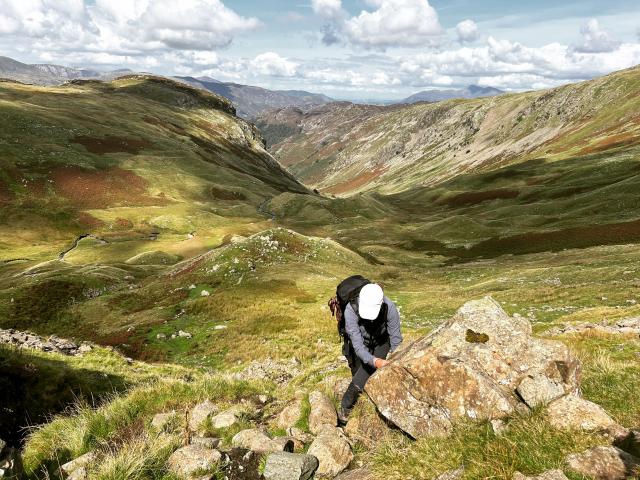
Jane: It was more hilly and more challenging than we expected, there were some very narrow sections of trail along cliff faces and I get anxious about heights.
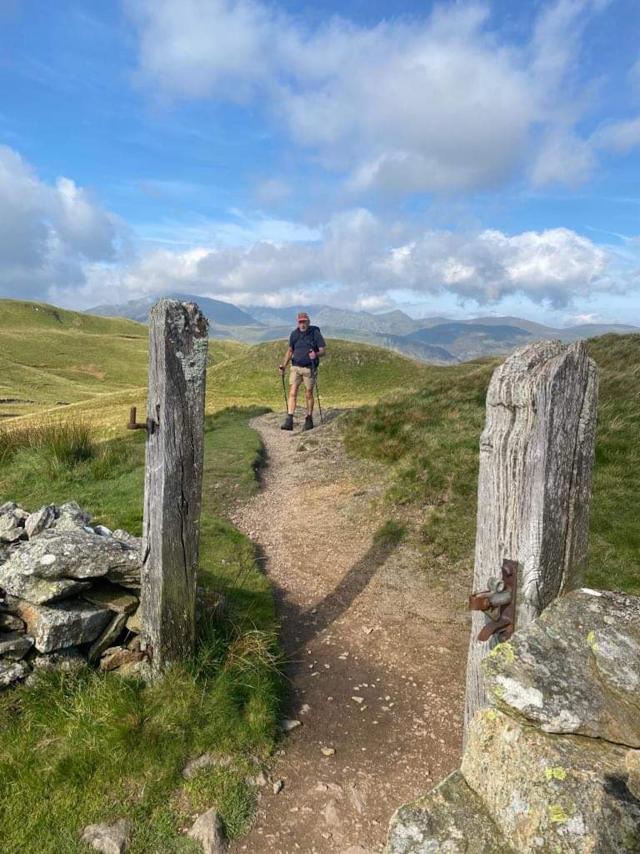
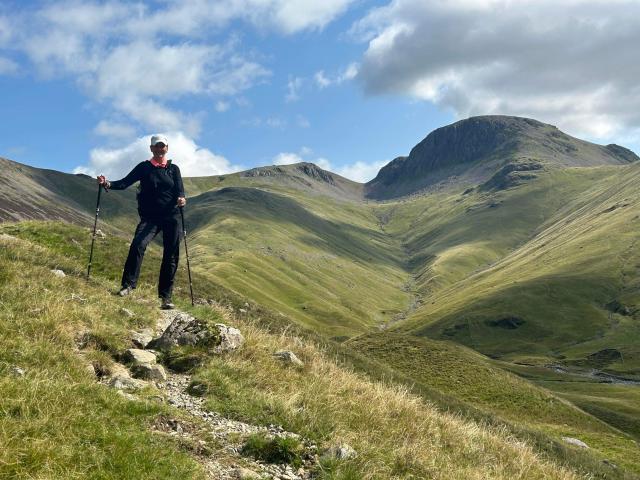
Graeme: We’re talking about putting one foot in front of the other along a sheer drop-off with me telling Jane, don’t look down! We took the high route which in retrospect was a mistake. Also there’s a huge difference between navigating the Camino where you just follow the big yellow arrows and the Coast to Coast where until recently you really had to know how to navigate and read a compass. Alfred Wainwright wanted to give people choices for different weather conditions, which makes it much more difficult. You need to be checking your route at least every 20 minutes.
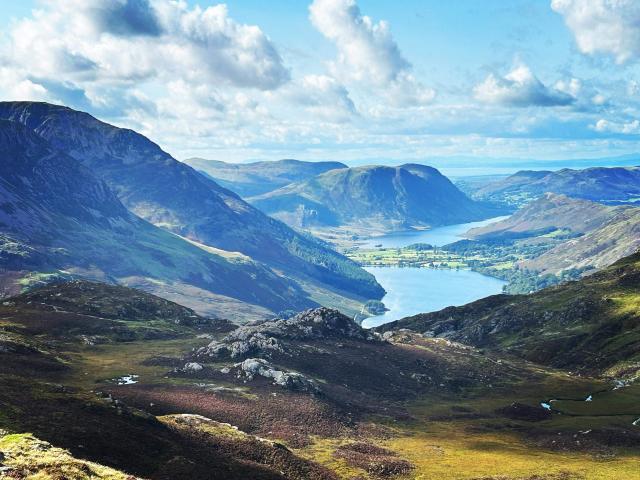
Jane: After the mountains it got much better, very beautiful, but there were other challenges like bogs where you could easily lose a boot.
Phil: Were the people you met on the Coast to Coast different from the Camino?
Graeme: They seemed to be at first but what was revealed was that everyone has a story if you take the time to listen, and that’s what we did, from kids who had nothing and were trying to find themselves to people at the high end of the social spectrum.
Jane: There were a lot of young guys doing what they call wild camping, where they just walk and walk and pitch their tents when it gets dark. They get through a lot of kilometres a day but it means they have to camp anywhere and it’s often boggy and wet and very rough.
Phil: What were the takeaways when you sat down at the end at Robin Hood Bay and analysed what the experiences had given you?
Jane: Well, we talked about that a lot while we were still walking, and Graeme said, we’re not spending the whole year walking, are we? I said no, but it’s in my blood and I love to get away from civilisation. I’m not done yet and we’re heading for Scotland and the Cornwall where there are some beautiful coastal walks.
Graeme: What I realised about myself was that I don’t like going uphill but I love the downhill feeling, a bit like surfing. My experience of the walks is totally different to Jane’s, just because of the way we are and the way we approached them. I ask questions of everyone, Jane is more into the experience. I would recommend doing this to anybody, even if they only do a few days of it. Not the Coast to Coast because you really need to be a trained hiker, but the Camino is for everyone. It’s totally liberating and if you’re open minded, you’ll love it.