

Running the world’s greatest rugby team for 18 years is nothing compared with bungy-jumping into a gorge, All Blacks manager DARREN SHAND tells PHIL JARRATT.
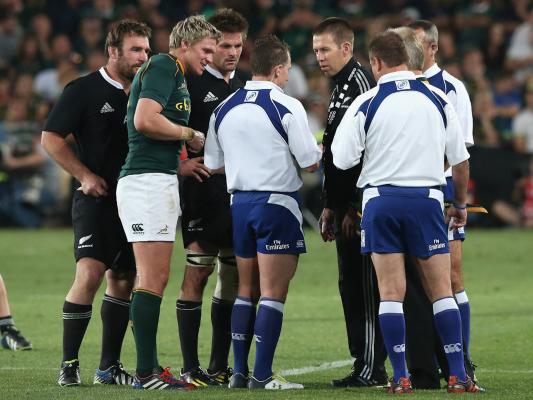
While the pressure mounted as the lead changed hands four times in the frenetic last five minutes of the final of the Rugby Championship on the Gold Coast on 2 October, All Blacks manager Darren Shand sat on the bench with his players, trying to transport himself to a capsized kayak and a bunch of tourists who didn’t speak English, desperate to keep their heads above the freezing, raging river.
Now that was real pressure, Shand told himself. This is nothing.
“Okay, it was a bit scary,” he says of the heartbreak two-point loss after the hooter to the Springboks, “but not as scary as jumping off a bridge over a ravine with an elastic cord tied to your leg.”
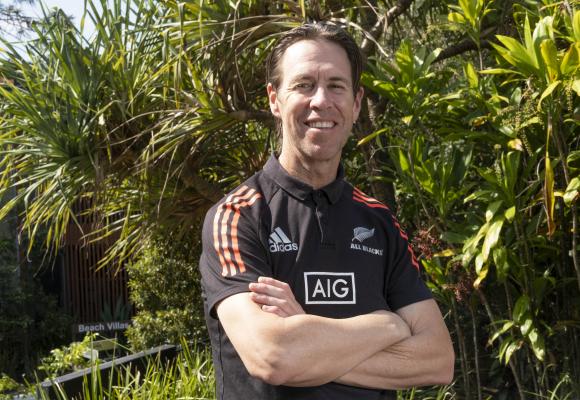
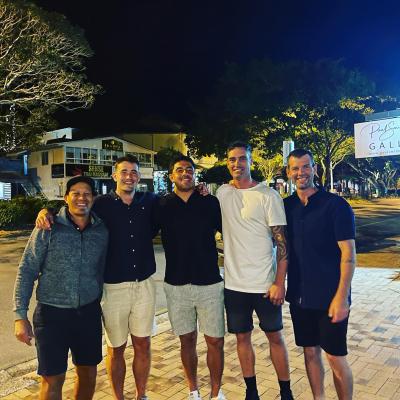
The manager of one of the world’s greatest sporting teams, and a veteran of hundreds of bungy jumps and numerous death-defying white-water experiences as an adventure sports guide in Queenstown before that, is chilling out in the gardens of Peppers Resort in Noosa while the 39 All Blacks players in his charge are spread out all over town enjoying a rare “unstructured” rejuvenation time.
Having lost the number one ranking to South Africa but won their 18th Rugby Championship, the All Blacks chose Noosa as their rest stop before resuming one of the most gruelling tours imaginable. Because of Covid travel restrictions, the All Blacks played all but one of their six matches in the championship in Australia and, with no time to quarantine at home before the next tour leg, spent almost a week in Noosa before going back into training camp last Monday, ahead of flying to Washington DC for one match against the US Eagles, then flying on to Europe to play Wales, Italy, Ireland and France at home.
To put this in context, in a normal year the All Blacks would play between 10 and 15 matches. In 2020, locked down for most of it, they played only six matches. On this Covid-adjusted tour they will be away from their families for 17 weeks and play 15 matches, while moving from a balmy Queensland spring to the onset of northern hemisphere winter. Okay, being an All Black comes with fame, money and almost godly status back at home, but you’ve got to admit, this is a tough gig. And while we hear a lot about the supposed concessions made for elite sporting teams in times of lockdown, we don’t hear so much about the enormous physical and emotional pressures the athletes have to endure to keep their game afloat.
Like everyone else present at the Noosa Surf Club sponsors’ breakfast last Friday, I was fascinated to hear guest speaker, the affable Shand, explain all of this, not to mention share his pre-rugby tales of derring-do, so I caught up with him later in the day for more.
Looking relaxed in the garden at Peppers, he says: “Our game relies big-time on broadcasting, and we have to fund it, so there’s no alternative but to tour and keep playing. Fortunately, there’s a certain adaptability within the All Blacks group which is expressed as, well, we love the game so we just have to get on with it. But it’s not just the All Blacks who have to buy into that. The other teams are faced with the same thing. We’re all making sacrifices to play, we’re all spending long periods away from home.
“What Covid has taught us is that everyone’s resilience falters, and some days it’s okay to not feel so good. We constantly monitor that situation without being overbearing about it. And the mood can change quite quickly. You can be having a great time in Queensland, then you suddenly have a loss and have to think about that, and then the next thing you know you’re in Europe where it’s only daylight from 10 to 4 and it’s cold!”
Darren Shand says the essential size of the playing squad due to travel restrictions is also a morale problem: “Not everyone is playing all the time. We have 39 players so there’s 16 who don’t play in any week, and they become the barometer for how the group is doing. If they’re still training well and pushing the other guys, then the team spirit is pretty good. If they’re struggling, we’re probably all going to struggle.”
Shand talks about “our game” but one of his strengths as the long-term manager and one of the key people in the All Blacks leadership group is that rugby is not really his game. He says: “I didn’t even play that much rugby as a kid. When I was at uni I was more interested in adventure sports like skiing and snowboarding, white-water rafting and wind-surfing. So after I graduated with a physical education degree I got into tourism, working as a guide in Queenstown. On your days off you’d go for a tramp or go skiing or rock climbing because it was right on your door step. I often reflect on that background in individual sports as opposed to where I am now in team sport, and I think one of the things I bring to this environment is that because I’m not so emotionally connected to rugby, I can be the rock solid guy, the problem solver, rather than being caught up with the emotion and the politics.”
Shand says one of his early mentors and inspirations was AJ Hackett, the Kiwi ski-bum and adventurer who watched the famous native land divers of Pentecost in Vanuatu in the early 1980s and turned it into a business opportunity, upgrading the vine cord used in the harvest ritual for a safety-approved elastic cord and creating the daredevil sport of bungy jumping. When Hackett opened a jump centre at the Kawarau Gorge Suspension Bridge in Queenstown in 1988, Shand went to work for him.
He says: “AJ was a hell of a character to work for, a fascinating guy. He was never a businessman but he had a charisma that drew you to him, a real people person. Unfortunately most of the time I worked for the company in Queenstown he was away building the brand overseas. But he gave me my first break as a manager and leader.”
On one of those brand-building trips AJ illegally set up a jump from the Eiffel Tower in Paris, for which he did a stint of jail time, but it created the company’s profile in Europe.
Says Shand: “I’ve met a few people in my life who’ve been able to take a slightly wider view of the world than most, and AJ was definitely one of them. It’s made me less risk-averse. Whenever things get problematic, I just think about AJ making a business out of throwing people off a bridge.”
One problematic moment came when a bugging device was found in the All Blacks hotel in Sydney in 2017. Shand says: “Things like that, I’ve tended to view as opportunities more than problems. You can learn a lot at those times and put it to good use. If you’re not learning you’re standing still. When something goes wrong in this group it tends to become global news, so we have to learn how to deal with things quickly and efficiently.”
Darren Shand came to rugby management when he turned 30 and was starting to tire of the extreme sports life in Queenstown. He saw an ad for a rugby marketing executive in Christchurch, applied and went to work for Steve Tew, later head of Rugby New Zealand, at the Crusaders rugby club. Tew, another mentor, worked alongside Shand throughout his rugby career until his retirement last year.
Shand, now 55, says his wife and sports-mad teenage daughters have grown used to him being away from home three months of the year, so he has no plan to give up the All Blacks management any time soon. He says: “I’m pretty committed now to go through to the end of this cycle, which will be the World Cup in France in 2023. After that I don’t know. For me it’s more a privilege than a job, and not something I ever imagined myself doing. I love my country and I love how well we punch on the world stage. Success can become a habit, and one of our key drivers is to keep it going, to keep writing history and creating a legacy.
“We would never say of ourselves that we were the ‘greatest of all time’, but when others are saying it, it helps get you out of bed in the morning!”