The allure of possums has been embedded in the minds of many Australian children by author Mem Fox through her popular book, Possum Magic.
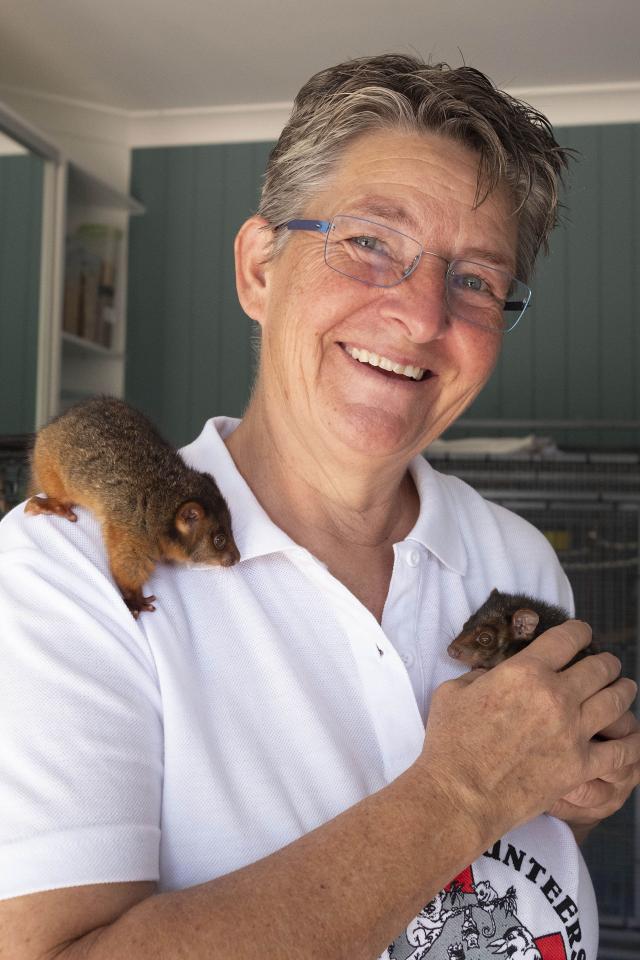
While not all adults share that affection for the cute and cuddly marsupials, Black Mountain Wildlife Volunteer Association (WILVOS) wildlife carers Susanne Scheuter and Jane Duxberry are enamoured by them and other wildlife, giving them a chance at life in the wild through their amazing efforts.
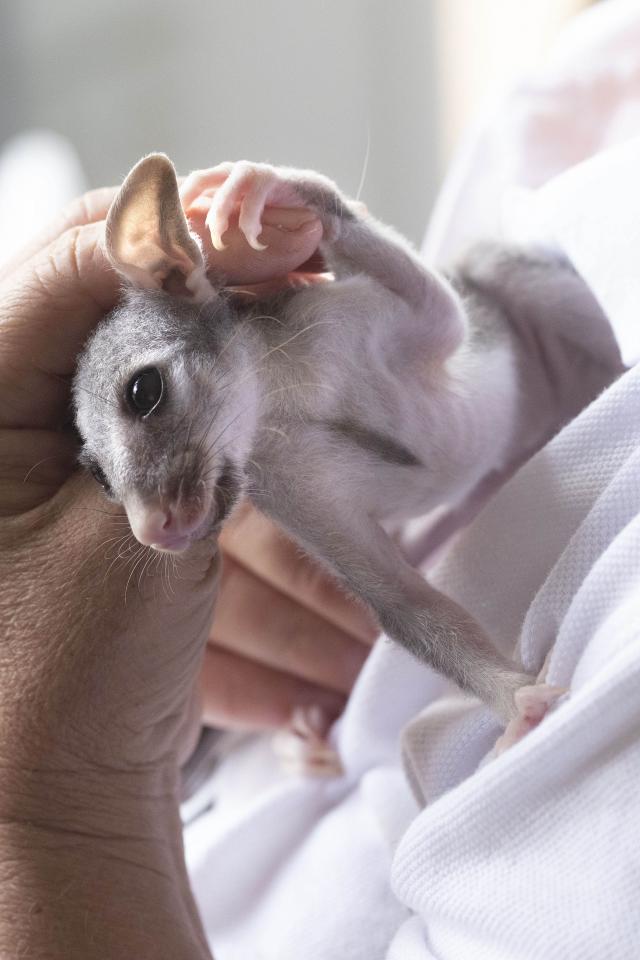
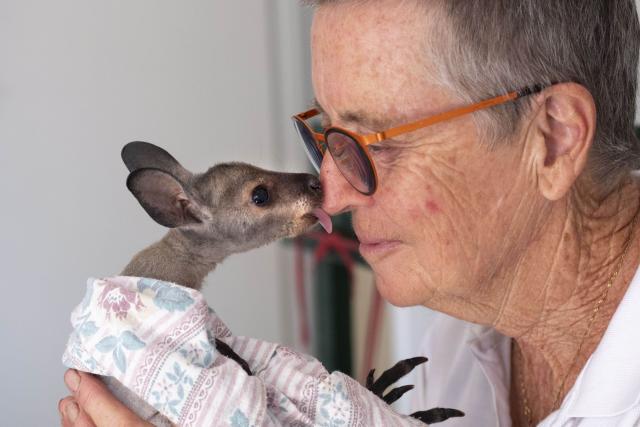
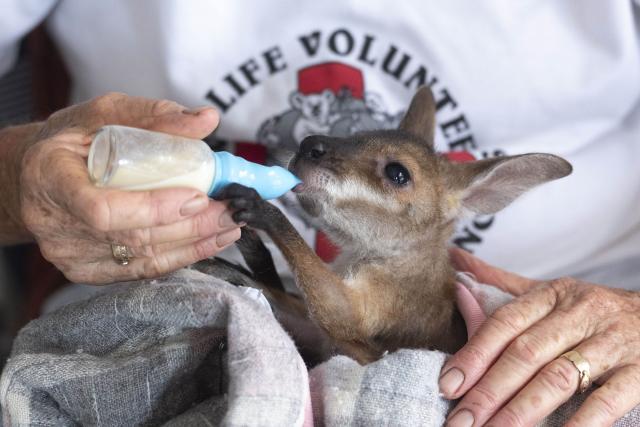
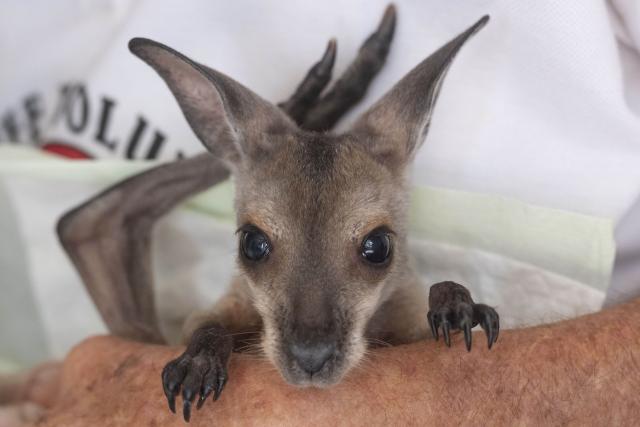
Their days are currently dominated by 18 wildlife – five joey ringtail possums, four juvenile ringtails, a very young brush tail possum in a humidicrib, an adult brush tail, two wallaby joeys and five squirrel gliders, as well as their own Airedale terriers.
Noosa Today visited this week to find out more about possums and the work of the carers.
It was Jane’s love and interest in wildlife that drew her to care for them for many years while living in Sydney.
“I wanted to learn more about wildlife – hands on is the best way to learn about them,” she said.
Suzanne had been a frequent holiday visitor to Australia for about 15 years when about 10 years ago she was burnt out from running her successful business in her native Switzerland and needed a break.
“I’d always loved animals, my grandparents had a farm, I’d had animals all my life,” she said. “I had an opportunity to come to work as an international volunteer at a koala hospital in Port Macquarie.” That was where Susanne met Jane.
“I got hooked, decided to change my l life and moved here. Since 2016 I’ve been looking after wildlife.”
“We’ve found possums one of the favourites, wallabies and bats are also things we lean toward,” Jane said.
The wildlife is housed in a nursery room set up in the house at their hilltop property with the animals transferred, when the time is right, to outdoor enclosures, most supplied by WILVOS, before being released back to the wild.
In the nursery is a young brush tail possum, five ringtail possums and two red-neck wallaby joeys.
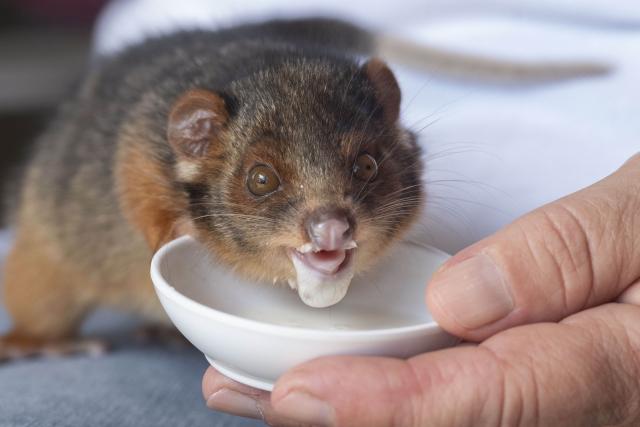
“The ringtail possums were all around 60-80gm when they came into care (about four months old),” Susanne said. “At that stage they would still be in mum’s pouch. They have all lost their mums, mainly by car accidents or the mum was attacked by cats or dogs.
“The stories of these guys are all different. One was sleeping with mum during the day in a mango tree. They sleep in trees, ringtail possums build their own nests out of leaves. The owner of the property was picking mangoes. The mum took off. The dog chased her. Usually the mum will come back for the young one.
“If we can reunite the young one with the mum we will do that. Unfortunately the mum didn’t come back, that’s how she ended up in care.
“The social structure between the species is different,” Jane said. “Common brush tail are solitary animals. That’s how we care for them. Ringtails live and thrive in groups. We try to have a group of 4-5. They like to snuggle up with each other. They accept each other very well. They grow up together and are released as a group.
“Ringtails are more difficult to raise when they’re really little, that’s why it’s important to have a group.”
The possums arrive, often with little information on what has happened to them and what injuries they may have sustained.
“You get to know their personalities, their characters,” Susanne said. “They grow very quickly. You only have them for short term.”
“These possums came about a month ago, will be here another 2-3 months. At this stage they’re still drinking milk (a special, lactose-free milk, the amount calculated according to their body weight).”
Already they have grown enough to cut out their night feed and they have started to nibble leaves.
“They would be riding on mum’s back at this age.
“We feed them five times a day, last at 11pm, first at 6am..
“We provide them good variety – all different species – Lilly pilly, wattle, they learn to eat leaf. In the wild they would also eat pollen and nectar. It’s difficult to supply pollen and nectar, we do support feed with apple, melon, some mealworms. Brushtails are the same. Squirrel gliders also live on insects, even small birds.”
Susanne and Jane know by the animals weight and behaviour when they’re ready to progress to a larger cage for more exercise and exploration and then to an outdoor enclosure and their ringtails are so active and agile it’s just about time to scale up.
In addition to food and shelter the carers are surrogate mothers to the young animals, giving them time and cuddles.
“They live close to the mother’s heart, you try to replicate that,” Jane said.
Not all animals are healthy when they come into care and some animals develop health issues in care, which is not their natural environment.
Stress is another big factor, being in an environment they don’t know, with people they don’t know, Susanne said.
When their little brush tail possum, they’ve named Sophie, arrived she weighed only 60gm, came in as pinkie (without fur) but very beautiful.
“She’s just starting to get fur, it’s like velvet,” Jane said.
“They’re completely different to the ringtails. Her eyes were still closed when she came in.”
“Her mum was poisoned with rat poison, she bled out, we couldn’t save the mum,” Susanne said. “Sophie didn’t show any symptoms of poison but developed an eye infection. It’s very unusual when their eyes are still closed, we’re not sure if it had something to do with the poison. She had antibiotics, oral and eye drops, but she’s doing really well.” Being kept in a humidicrib at a constant temperature of 32 Celsius, Sophie would, in the wild, still be in her mum’s pouch.
There has been a recent influx of animals coming into care, particularly possums, and carers, especially for the younger ones, are in demand, but the job can be a demanding one.
” In last two weeks it’s literally raining possums,” Susanne said.
“When people see what we do they say aw, how cute, I’d like to do that, but they don’t realise the time.
“It depends on the species and the age. With these guys being on five feeds a day you have a very regulated day. You do everything by the time – every four hours you have to feed. As they grow you reduce the number of feeds.”
Once the possums reach about a kilogram in weight they are weaned off milk and weaned off humans, sometimes being sent to another carer before release to assist in breaking the bond they have made with their human carers to prepare them for life in the wild.
Once they’re ready to go possums are released by a separate organisation which locates them in safe, authorised areas and maintains records of their release.
“Possums are territorial. Their home is their castle, that’s where they stay all their lives,” Susanne said.
“When they are moved to another territory that can be a death sentence for an animal. You can’t just push a possum into a habitat for another possum. It will most likely kill that possum. A young one they will accept.”
Wildlife carers build their knowledge of wildlife by observing and caring for the animals and attend courses and workshops annually.
Sadly, despite their efforts not all animals can be saved.
“You do lose animals in care,” Susanne said. “You have to realise you can’t save them all. Sometimes we have to make a decision to let an animal go, sometimes they get sick and die.
“It can be heartbreaking. We do cry when we lose animals. We do get sad.”
But it’s the satisfaction and reward of having an animal return to the wild that overcomes the hardship and hard work involved.
“We say once we finished, that’s great, they have a chance to be a wild animal. They wouldn’t have survived without the home care,” Susanne said.
“Some people think I could never let them go, but you can, it’s the most exciting thing when they go.
“You would like to protect them for the rest of their life. You can bond with them quite easily but they need to be out there. You know you have done a good job when they go. That’s what we want. They’re wild animals. We don’t want them to be like pets. They play a part in our environment. We make sure they can do that.”
For more information on WILVOS visit wilvos.org.au