By PHIL JARRATT
I’M A sucker for historical tourism. I love to walk the streets and fields of history, and when you find a place where you can do that as well as be astonished at the sights that greet you at every corner, and eat like a king for next to nothing … well, George Town, Penang had me at hello.
One visit turned into two, and we were still reluctant to leave. Now that we’ve left Malaysia, I find myself flipping through the photos on my phone and reliving every exquisite moment spent discovering “the pearl of the Orient”, this dot at the edge of the Andaman Sea that was once one of the world’s great transit and trading ports, linking the kingdoms and colonial empires of the Far East, the Middle East and Europe.
George Town is the major city of the otherwise unremarkable island of Penang, and the two names are virtually interchangeable, but it was originally named Betelnut Island by the Chinese traders who first began using it as a port in the 15th century. It was later claimed by the Islamic sultans of Sumatra, but in 1771 the sultan of Kedah signed an all-encompassing trading agreement with the British East India Company, and 15 years later (the world moved slower then), Captain Francis Light took possession of the island, renaming it Prince of Wales Island. Despite this unimaginative naming, Light turned out to be a progressive colonialist the equal of Raffles in Singapore, granting land title to anyone who would create an enterprise on it. A duty free port where liberalism was the watchword, Penang (no one ever called it Prince of Wales) thrived, attracting more than 10,000 settlers by 1800 and becoming the capital of the Straits Settlements, the loose alliance of the city states of Penang, Melaka and Singapore.
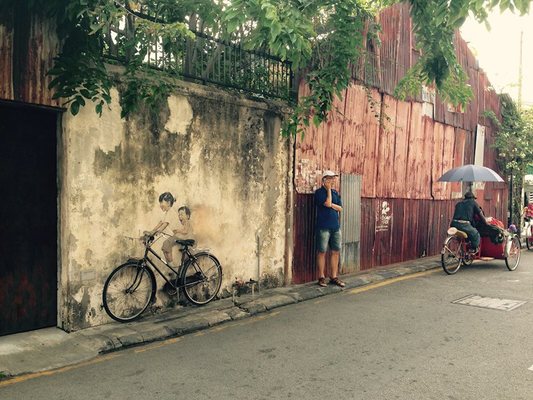
By the middle of the 19th century, it was all going on in George Town. The hub of the Chinese opium trade (which represented more than half the island’s revenue), its rickshaw-laden streets were peppered with drug dens and brothels. It was considered to be one of the most dangerous and exciting places in the East, and it keeps that rakish ambience today, although the reality is that its crime rate is one of the lowest in Malaysia.
We stayed both times in a modest hotel a few streets back from the ferry terminal on the edge of Little India. From there, you can walk through the city’s colonial past, arts-oriented present and techno future, marvelling at the mayhem and magic of the various ethnic quarters, salivating over the smells emanating from street carts and kerbside kitchens. After some wonderful eating experiences in Melaka, I was keen to delve further into nonya food, the Straits Settlement cuisine that has grown out of Malay, Chinese and Vietnamese influences. I managed to taste a bit here and there from street carts, but the draw of the city’s Indian restaurants proved too much. Including a breakfast roti, I ate five Indian meals on the trot (no pun intended), and they ranged from great to spectacular.
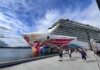
In 2008, the historic centre of George Town was declared a UNESCO World Heritage Site for its “unique architectural and cultural townscape without parallel anywhere in East and Southeast Asia”. Property prices went through the roof and there was a rush by developers to turn crumbling old buildings into boutique heritage hotels, while at the same time the entire city was given a facelift. The most visible aspect of this is George Town’s street art, which has been supported by the Penang government since 2010, commissioning murals by the likes of Lithuanian artist Ernest Zacharevic, whose bicycle mural on Lebuh Armenian is a work of great and simple beauty. But the most impressive restoration in George Town predates the World Heritage declaration by almost two decades, and has a story that typifies the romance of old Penang. The 38-room “Blue Mansion” was commissioned in the 1880s by Cheong Fatt Tze, a pauper from Guandong Province in China who arrived in George Town penniless in 1856 and took a job lugging buckets of river water to the homes of the colonialists. By the end of the century, he was known as “the Rockefeller of the East”, with a vast fortune built on property and trading, including opium and wine. When Cheong died in 1916, the Blue Mansion was bequeathed to his huge family, with the proviso that it could not be sold until the death of his youngest son, who had been born only two years earlier, to Cheong’s favourite concubine, and who lived until 1989. In the intervening years the family quarrelled and fell on hard times, the mansion was rented to more than 30 families and went to wrack and ruin. In 1990, it was purchased by a group put together by architects and philanthropists Laurence Loh and Lin Lee Loh-Lim, and the hard work began.
To walk through this stunning folly of Gothic windows, Scottish cast iron, Art Nouveau stained glass and Chinese porcelain today is a real treat, an insight into one man’s extraordinary life journey.
It’s one of about a hundred reasons I can think of to put George Town on your bucket list.