
It’s more than halfway through February and for many those hopeful new year’s resolutions to make some positive changes have fallen by the wayside.
A QUT neuroscientist may have the answer to sticking with them long-term.
Professor Selena Bartlett from QUT’s Institute of Health and Biomedical Innovation (IBHI) said many new year’s resolutions revolved around mental and physical health.
“Giving up smoking, drinking less alcohol, eating less sugar, losing weight, taking a break from social media, being less stressed or spending more time with family and friends rather than at work – these are all popular choices for resolutions,” Professor Bartlett said.
“Other popular goals are saving money, learning a new instrument or language, more ‘me’ time, reducing debt or doing more for charity.
“Unfortunately, while intentions may be noble, people do put themselves under enormous pressure and then experience depression and disappointment when they cave in to their impulses.
“This is because our brains control our behaviour in a way unchanged since prehistoric times.
“This is especially true of how we respond to stress but it is possible to override the ancient brain.”
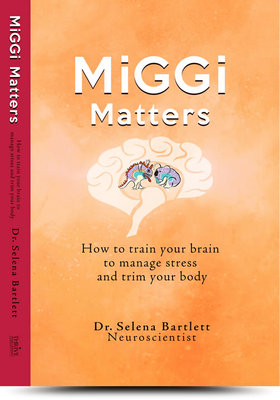
Professor Bartlett has just published a book – MiGGi Matters: How to Train Your Brain to Manage Stress and Trim Your Body.
“Our brain silently drives our behaviour as if we are still ancient humans living in prehistoric conditions and it feeds our addictive behaviours.
“So, when we are stressed our brain seeks pleasure which is quite often why new year’s resolutions are so easily broken.
“Everybody wants to start fresh with a new year but the brain has other ideas,” she said.
Professor Bartlett said the modern world was a stressful environment in which the pressures of work, finances, relationships, parenting and other responsibilities result in the body releasing stress hormones like cortisol.
Over time, stress hormones significantly reduce the number of synapses in the brain which can impact our rational brain and reduce impulse control.
“To counteract the damage caused by stress hormones, the ancient, emotional part of our brain drives us to find pleasure.
“When we experience pleasure, our body is flooded with hormones like dopamine, serotonin and endorphins.
“These bind to receptors in the brain and reduce the damaging effect of stress hormones,” she said.
Professor Bartlett’s book outlines five steps to help people be led by their rational brain rather than the ancient brain and therefore resist impulses to break healthy goals.
Be compassionate to the brain – it is an amazing, ancient organ that can be severely damaged by stress, especially in childhood while it is developing.
Get to know the brain – an awareness of how the ancient amygdala drives behaviour is critical to overriding unhealthy impulses.
Identify when amygdala is taking over or when there is a ‘MiGGi moment’ – in stressful situations acknowledge when the sudden urge to eat comforting food, smoke or drink alcohol.
Replace food and alcohol with a MiGGi movement – deep breathing, stretching, walking, running – any movement that feels good.
Reduce sugar and alcohol intake and increase cardiovascular and high intensity exercise – these will help to heal the brain of its stress-induced damage and build a strong, healthy body.
Resolve for long-term health
Digital Edition

Subscribe
Get an all ACCESS PASS to the News and your Digital Edition with an online subscription

Pink Ride tackles cancer
It’s a long and at times lonely journey but the Bony Mountain Pink Ride is always ready to be part of the fight against...